At a Glance
Khed to Varanasi: A Young Man Leaves Home
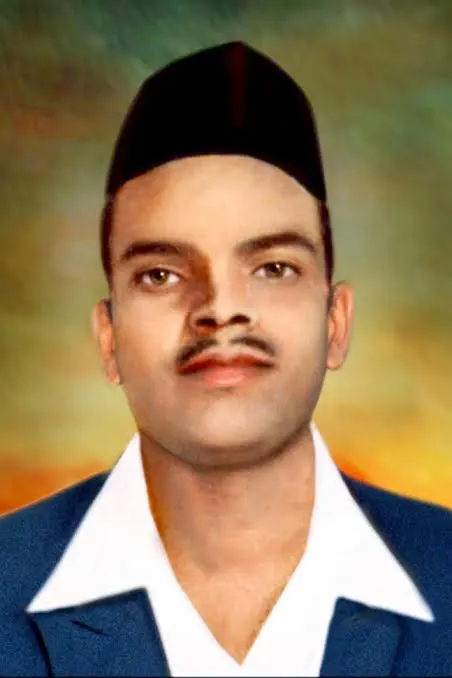
Shivaram Hari Rajguru was born on 24 August 1908 in Khed, a town in Ratnagiri District on the Konkan coast of Maharashtra — a region with a strong tradition of Brahmin scholarship and, in the early twentieth century, of militant nationalism. His family were Deshstha Brahmins; his father died when he was still a young child, and the family circumstances were modest. He grew up in Khed, showed aptitude as a student, and developed the physical strength and wrestling ability that would later make him valuable to the HSRA as a fighter.
As a teenager — the accounts vary, but he was probably sixteen or seventeen — he left Khed and made his way to Varanasi, the great city of Sanskrit learning and Hindu pilgrimage on the Ganges in the United Provinces. His reasons for leaving home are not entirely clear from the historical record: some accounts suggest an interest in Sanskrit and traditional learning that drew him to Varanasi's scholarly environment; others suggest that the political atmosphere in Maharashtra — the aftermath of Tilak's death in 1920 and the continuing presence of revolutionary nationalist networks in the region — had already radicalised him. What is certain is that in Varanasi he encountered the networks of the Hindustan Socialist Republican Association, which had its roots in the northern Indian cities of Varanasi, Allahabad, Kanpur, Lahore, and Agra, and that the encounter transformed his life entirely.
The HSRA: Ideology, Organisation, and the New Recruit
The Hindustan Socialist Republican Association in the late 1920s was an organisation under severe pressure and in rapid evolution. The Kakori train robbery of August 1925 — in which HSRA members had seized a train carrying government funds — had been followed by a massive government crackdown: the principal organisers, including Ram Prasad Bismil and Ashfaqullah Khan, had been captured, tried, and hanged in December 1927. The organisation had been partially dismantled; its surviving members were rebuilding it under Chandrashekhar Azad's military leadership and Bhagat Singh's ideological direction, now with an explicitly socialist dimension added to its nationalism.
Rajguru joined this rebuilt organisation and quickly distinguished himself as a marksman of exceptional ability. The HSRA's operational activities required members who could use weapons with skill and reliability — not simply to possess them, but to use them under the pressure of contested situations. Rajguru's training in wrestling had given him physical discipline and the capacity to perform under stress; his weapons training added specific technical skill. Chandrashekhar Azad, the organisation's most experienced fighting man, recognised his ability and mentored him. Within the HSRA's internal culture, Rajguru was known as its best shot.
Lala Lajpat Rai and the Decision to Retaliate
In October 1928, the Simon Commission — a parliamentary committee appointed to review the constitutional situation in India, composed entirely of British members with no Indian representation — arrived in Lahore. The Congress and the wider nationalist movement had called for a boycott of the Commission on the grounds that Indians had not been included in a body reviewing Indian governance. Lala Lajpat Rai — "Punjab Kesari," the Lion of the Punjab, one of the most respected nationalist leaders in northern India — led a peaceful protest march against the Commission's arrival. The Superintendent of Police, James Scott, ordered the police to charge the marchers with lathis. Lajpat Rai was struck repeatedly on the chest and head. He died on 17 November 1928 of cardiac complications that his supporters and the nationalist press attributed directly to the injuries from the police attack. He was sixty-three years old.
The HSRA's response was immediate and deliberate. The organisation resolved to kill James Scott — the officer who had ordered the lathi charge — in explicit retaliation for Lajpat Rai's death. Bhagat Singh, Sukhdev, Rajguru, and Chandrashekhar Azad were the principal planners and participants. The decision was not impulsive: the HSRA's leadership discussed and debated it, understood that it would intensify the colonial government's repression, and concluded that the moral and political imperative of responding to Lajpat Rai's killing outweighed the operational risks.
17 December 1928: The Saunders Killing
On 17 December 1928, Bhagat Singh, Rajguru, and Chandrashekhar Azad positioned themselves outside the District Police Headquarters in Lahore, waiting for James Scott. The man who emerged from the building was not Scott but John Poyntz Saunders, the Deputy Superintendent of Police — a junior officer, twenty-five years old, who had nothing personally to do with the Lajpat Rai incident. The HSRA men mistook him for Scott. Rajguru fired first — a shot to the head that killed Saunders almost immediately. Bhagat Singh fired additional shots. A police constable named Chanan Singh who pursued them was shot and killed by Chandrashekhar Azad to allow the others to escape.
The killing of the wrong man — Saunders instead of Scott — is a fact that the historical record preserves and that the HSRA's own subsequent communications acknowledged. The organisation posted notices across Lahore explaining the action and identifying it as retaliation for Lajpat Rai's death, but the notices stated that the intended target had been the officer responsible for ordering the attack. The misidentification did not diminish the political impact of the action — the colonial government and the nationalist press both understood what had been intended and why — but it has remained a morally complicated element of the event in historical assessments of the HSRA's campaign.
The escape from Lahore after the killing was one of the more remarkable operational achievements of the HSRA's history. Bhagat Singh and Rajguru, wanted by the police across northern India, left the city disguised — Bhagat Singh dressed as an English gentleman with his hair cut and his beard shaved, accompanied by Durga Devi Vohra, the wife of a fellow HSRA member, who posed as his wife, with Rajguru acting as their servant. They boarded a train and left Lahore. The disguise held. They were not stopped.
Fugitive Months and the Capture at Pune
After the escape from Lahore, Rajguru moved through the HSRA's networks across northern and western India, staying in safe houses, moving regularly to avoid detection, and continuing to participate in the organisation's activities. Bhagat Singh and Batukeshwar Dutt carried out the Central Legislative Assembly bombing in April 1929 and were arrested; the Lahore Conspiracy Case that grew from the Saunders killing was built around the prosecution of Bhagat Singh among others. Rajguru remained free, a fugitive under active police pursuit, for approximately nine months after the Saunders killing.
He was arrested in Pune — his home region of Maharashtra — in September 1929. The circumstances of his arrest reflect the operational reality of underground revolutionary work: the networks of informers and police intelligence that the colonial government maintained eventually found him. He was taken to Lahore and charged in the Lahore Conspiracy Case alongside Bhagat Singh, Sukhdev, and others. The trial — conducted by a Special Tribunal after the government concluded that a jury trial in Lahore was not going to produce convictions — proceeded through 1930 and into 1931.
The Lahore Conspiracy Case and the Death Sentence
The Lahore Conspiracy Case was one of the most politically charged trials of the colonial period. The defendants — Bhagat Singh, Rajguru, Sukhdev, and others — used the trial as a platform to argue their political positions, refusing to recognise the court's legitimacy, making speeches that were widely reported and that attracted enormous nationalist attention, and conducting themselves with a consistency and dignity that impressed even people who did not share their methods. The hunger strike that Bhagat Singh and others had conducted while awaiting trial — demanding political prisoner status — had already made them celebrated across India; the trial made them more so.
The Special Tribunal convicted Bhagat Singh, Rajguru, and Sukhdev of the murder of John Saunders and sentenced all three to death. The convictions were widely expected; the colonial government had committed itself to the prosecutions and had constituted the Special Tribunal precisely to ensure convictions that a regular jury might not have returned. Appeals failed. The Viceroy, Lord Irwin, declined to commute the sentences despite approaches from Gandhi and the Congress leadership. The executions were scheduled for 24 March 1931.
23 March 1931: The Gallows at Lahore
The British brought the executions forward. Rather than dawn on 24 March, the three men were hanged at approximately seven-thirty in the evening of 23 March 1931 — eleven hours early, in the darkness, without the public knowledge that the scheduled time would have generated. The decision to move the time forward reflected the colonial government's assessment of the political situation: Lahore and the surrounding Punjab were tense, nationalist feeling was running at extraordinary levels, and there was genuine concern about what the daylight hours of 24 March would bring if word spread that the executions were imminent.
Rajguru was twenty-two years old. He had been a member of the HSRA for approximately four years. He went to the gallows alongside Bhagat Singh and Sukhdev — three young men who had lived together, argued together, planned together, and now died together — and the three of them were cremated at Hussainiwala on the banks of the Sutlej River, their ashes immersed in the river. The government had feared a public funeral; the night cremation at a remote riverside site was intended to prevent one. It did not prevent what followed: the news of the executions, when it broke the next morning, produced an outpouring of grief and anger across India that the independence movement channelled and carried forward for the next sixteen years.
Legacy: The Inseparable Three
Rajguru is inseparable, in Indian memory and commemoration, from Bhagat Singh and Sukhdev. The three are represented together in the visual iconography of Indian revolutionary nationalism — in paintings, posters, murals, and photographs displayed in public spaces, political offices, schools, and homes across the country — as the martyrs of 23 March 1931, the young men who died together and who are remembered together. His individual biography — the Konkan origins, the Varanasi years, the marksmanship, the nine months as a fugitive — is less well known than Bhagat Singh's, partly because Bhagat Singh wrote more (the Assembly bomb case defence statements, the prison letters, the political essays) and partly because Bhagat Singh's subsequent cultural celebrity has given him a presence in Indian popular memory that inevitably overshadows his comrades. But Rajguru was not a secondary figure: he fired the first shot at Saunders, he escaped Lahore in arguably the most operationally brilliant of the three men's disguise operations, and he went to the gallows with the same composure and conviction that the historical record attributes to his comrades.
His home town of Khed in Ratnagiri District was renamed Rajgurunagar after independence — the most concrete geographical commemoration of his memory, an acknowledgement that the town that produced him should carry his name. A postage stamp was issued in his honour in 1968. The Hussainiwala memorial on the Sutlej, where all three men were cremated, is a major site of national commemoration — visited particularly on 23 March, the anniversary of their deaths, when the Punjab government organises official ceremonies and thousands of people come to honour the three men who were twenty-three, twenty-three, and twenty-two when they died, and who have been twenty-three, twenty-three, and twenty-two in the imagination of India ever since.