At a Glance
Chittagong and the Formation of a Revolutionary
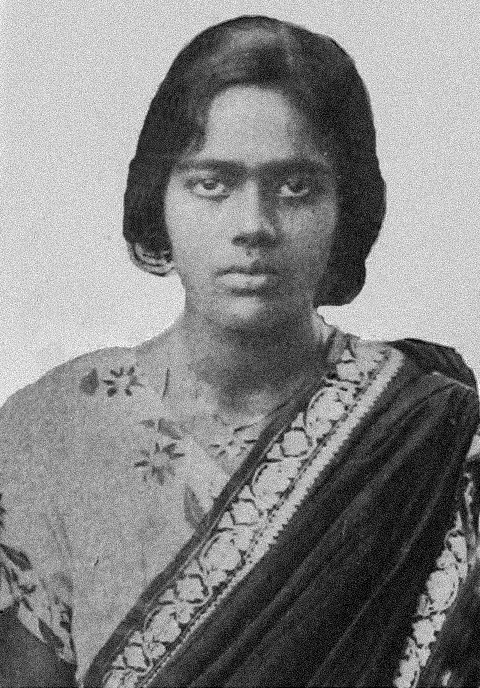
Pritilata Waddedar was born on 5 May 1911 in Dhalghat village near Patiya in Chittagong District — a port city in Bengal that was also, in the early twentieth century, one of the centres of the Bengali revolutionary movement. Chittagong had a long history of resistance to both Mughal and British authority, and its Bengali Hindu middle class in the early twentieth century was deeply engaged with the nationalist movement in both its constitutional and its revolutionary strands. The family into which Pritilata was born was of modest means — her father was a government clerk — and her education required both family sacrifice and her own exceptional ability.
She attended the Dr Khastagir Government Girls' School in Chittagong, where she was a student of outstanding ability, and went on to Bethune College in Calcutta — the pioneering women's college in Bengal that had educated a generation of Bengali women who went on to distinguished careers in public life and the independence movement. At Bethune she studied Philosophy and took her BA examination in 1929, achieving a first class that placed her among the top students of her year. She had been admitted to an MA programme but found that the underground activities she was now committed to made sitting the examination impossible. She returned to Chittagong, took up a position as headmistress of the Nandankanan Aparna Charan School, and used the position as the cover from which she organised for Surya Sen's Indian Republican Army.
The Chittagong revolutionary network that Surya Sen had built was deeply influenced by the Bengali revolutionary tradition that stretched back through Aurobindo Ghose and Barindra Kumar Ghosh's Anushilan Samiti to the revolutionary nationalism of the early twentieth century. It operated through a disciplined clandestine structure, demanded total commitment from its members, and combined ideological seriousness with practical training in weapons, explosives, and military tactics. The April 1930 Chittagong Armoury Raid — in which Surya Sen's group simultaneously seized the police armoury and the auxiliary force armoury, proclaimed a provisional revolutionary government, and held out in the Jalalabad Hills against a government counter-attack before dispersing — was the most dramatic act of armed resistance to British rule since 1857. Pritilata was not among the raiders of April 1930 — she joined the network in the period of clandestine reorganisation that followed the raid's suppression — but she absorbed its spirit completely.
The Indian Republican Army After 1930: Going Underground
The aftermath of the April 1930 Chittagong raid was a period of intense government repression and clandestine reorganisation for Surya Sen's group. Many of the raiders had been killed at Jalalabad; others had been captured and tried. Surya Sen himself was underground, moving between safe houses and organising the survivors into a continuing resistance. The colonial government mounted massive intelligence and police operations to find him and destroy the network.
It was into this atmosphere of clandestine organisation, constant danger, and the heightened moral seriousness that danger produces that Pritilata Waddedar entered the movement. She was recruited through the networks that connected the Indian Republican Army to the educated young women of Chittagong's Bengali Hindu middle class — networks in which Kalpana Dutta, another woman who would become one of the most celebrated figures of the Chittagong movement, also operated. Women participants in the movement were not decorative or auxiliary; they undertook the same training, accepted the same risks, and were expected to carry out the same operations as their male comrades. Pritilata trained in weapons and fieldcraft, memorised the organisation's security protocols, and maintained her teaching position as cover while building the double life that underground revolutionary work required.
She was assigned increasingly significant roles within the network as her competence and commitment became apparent. Surya Sen's assessment of her was, by all accounts, that she was one of the most capable members of the organisation — serious, disciplined, physically courageous, and intellectually clear about what she was doing and why. The assignment of leadership of the Pahartali European Club raid to Pritilata was not a gesture of symbolic inclusion. It was an operational decision by a military commander who believed she was the right person for the task.
The Pahartali European Club: A Chosen Target
The Pahartali European Club was a social institution of the kind that colonial Bombay and Calcutta had in abundance but that was particularly visible in a city like Chittagong — a gathering place for the British railway and port officials who administered the city, with the formal and informal exclusions of Indians that such clubs maintained as a matter of course. The sign reportedly displayed at its entrance — "Dogs and Indians not allowed" — was not unique to Pahartali; variants of it appeared at clubs and establishments across British India and the wider empire. It was the concentrated expression of the racial hierarchy that colonial rule required: the daily reminder, in the landscape of the city itself, that Indians were present in their own country on British sufferance and at British pleasure.
The choice of the European Club as a target was therefore not random. It was the choice of a symbol — the attack was on the colonial social apparatus, on the architecture of racial contempt, as much as on any military or administrative target. The Indian Republican Army had attacked armouries in April 1930; in September 1932 it attacked the social infrastructure of colonial privilege. The political meaning of the target was something that Pritilata understood clearly and expressed in the manifesto she wrote and carried on her person on the night of the attack.
23 September 1932: The Night of the Raid
The assault on the Pahartali European Club took place on the night of 23 September 1932. Pritilata led the party — dressed in male clothing, as male dress offered better freedom of movement and somewhat better cover in the dark — and the group carried weapons, incendiary materials, and the cyanide capsules that the Indian Republican Army's members carried as a standing provision against capture. The plan was to set fire to the club building, to engage any defenders or police response, and to withdraw under cover of darkness.
The assault party reached the club and began the attack. The building was set on fire. There was an exchange of fire with defenders and with police who responded to the alarm — in the engagement, one British woman was killed and several people wounded. Pritilata was hit by a bullet. With the police closing in and withdrawal becoming impossible, she swallowed the cyanide capsule. She died at or near the site of the attack. Her body was found when daylight came, and with it the manifesto she had written — a statement of the movement's politics and of her own understanding of why she had acted as she had.
The manifesto is one of the primary documents of the Chittagong revolutionary movement. It addressed itself to the Indian people, explained the movement's objectives, argued for the justice of armed resistance to colonial rule, and expressed Pritilata's personal acceptance of death as the price of the action she was taking. It was written with the clarity and conviction of a person who had thought through what they were doing and had no regrets about it — not a farewell note but a political statement, a document intended to communicate rather than to confess. Its recovery from her body ensured that it survived; it has been preserved, reprinted, and quoted in the literature of the Chittagong movement ever since.
What Her Death Meant: First Woman Martyr of Armed Resistance
Pritilata Waddedar was twenty-one years old when she died. She had been at the centre of the Indian Republican Army for approximately two years. She had achieved a first-class university degree in Philosophy. She had led an armed assault on a colonial installation, been wounded, and chosen death over capture. She was the first woman in the Indian independence movement to die in armed revolutionary action — a fact that the movement itself, and subsequently independent India and independent Bangladesh, recognised as requiring special commemoration.
The significance of that "first" is worth examining carefully. The Indian independence movement had women participants from its earliest stages — in the constitutional-petition tradition, in Gandhi's civil disobedience campaigns, in the mass politics of the Congress. But the armed revolutionary tradition — the tradition of the Anushilan Samiti and the Jugantar, of the HSRA, of Surya Sen's Indian Republican Army — had been predominantly male in its public figures, even when women were present in its underground networks. Pritilata Waddedar's death made the women's presence in that tradition visible and permanent. She demonstrated, by her action and by her death, that the commitment the revolutionary tradition required was not gendered — that a twenty-one-year-old woman from a modest Chittagong family was capable of exactly the same kind of total commitment that Bhagat Singh, Surya Sen, and Chandrashekhar Azad had demonstrated, and paid the same price for it.
The Chittagong revolutionary network was crushed in the years after 1932. Surya Sen was captured in February 1933, tried, and hanged in January 1934. Kalpana Dutta was captured, tried, and sentenced to life imprisonment — she was eventually released in 1939 and went on to marry the Communist leader P. C. Joshi and to a long post-independence life. Most of the other members of the network were killed, imprisoned, or transported. The movement they had built was destroyed as an organisation. But the memory it generated — and particularly the memory of Pritilata Waddedar, the first woman to give her life in arms for Indian independence — has survived and grown.
Commemoration Across Two Nations
Pritilata Waddedar is commemorated in both India and Bangladesh — the two successor states of the undivided Bengal in which she was born, lived, and died. In Bangladesh, where Chittagong is located, she is a figure of major national significance: the Bangladesh Postal Department has issued stamps in her honour, Chittagong University has a residence hall named after her, and she features prominently in the nationalist historiography through which Bangladesh constructs its own identity as a successor to Bengali resistance traditions. In West Bengal, the Indian state that shares her cultural heritage, she is commemorated in schools, roads, and public institutions, and her image appears regularly in the cultural productions — films, novels, theatrical works — through which Bengali civil society maintains its connection to the independence movement.
A Government of India postage stamp was issued in her memory, and numerous educational institutions across West Bengal bear her name. The annual commemorations on 23 September — the anniversary of the Pahartali raid and her death — are marked in both Chittagong and in Bengali communities across India. The recovered manifesto from her body, preserved and reprinted in multiple editions, continues to circulate as a document that speaks directly to the question of why someone would choose to die at twenty-one for a cause: not because they had to, not because they lacked the intelligence to find a safer path, but because they had decided, with full understanding of what they were deciding, that freedom was worth that price.