At a Glance
The Hidden Architects of Kenyan Nationalism
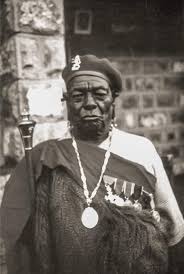
Jesse Kariuki belongs to the category of political figures who are easy to miss if history is told only through the people who became presidents, detainees, martyrs, or household names. Yet the early nationalist movement in Kenya did not begin with the famous names that dominate textbooks and public memory; it began with men and women who were trying to figure out, in the 1920s, how Africans under colonial rule could organise themselves into a political force strong enough to demand land, rights, dignity, and representation. Kariuki was one of those organisers. His importance lies not in a single dramatic event but in the construction of a political scaffold on which later movements could stand.
The Kenya that produced Kariuki was one in which the colonial state had already made its priorities unmistakably clear. Land alienation, labour exploitation, racial hierarchy, taxation, and administrative coercion were the basic facts of African life. A political movement that wanted to challenge such a system could not rely on state institutions or formal electoral channels, because Africans were denied real power in those channels from the beginning. The work had to begin elsewhere: in meetings, in associations, in petitions, in newspapers, in church-adjacent spaces, in informal networks of trust, and in the slow creation of a shared political vocabulary. Kariuki was part of that first hard stage, when movement meant persuasion, discipline, and courage more than anything else.
His name becomes especially important in connection with the Kikuyu Central Association, or KCA, which emerged in the mid-1920s as a successor to the earlier political agitation associated with Harry Thuku and the East African Association. The KCA represented a turning point. It inherited the energy of protest but gave it a more organised framework, one that could survive the loss of its most famous predecessor and continue articulating the grievances of the Kikuyu people in a more structured way. That structure mattered. A movement that is only a protest can be dispersed. A movement that becomes an association, with leaders, branches, and a programme, can endure.
From Thuku's Energy to KCA Discipline
The East African Association had shown that Africans in Kenya could gather politically and speak openly about the injustices they faced. But the colonial reaction to that early agitation made the risks of such organising plain. The state did not treat African mobilisation as a normal part of civic life. It treated it as a threat. The arrest and deportation of Harry Thuku in 1922, and the violence surrounding that episode, made it painfully obvious that political organisation would be met with force. The generation that followed had to learn how to continue the work in the shadow of that lesson.
That is where Jesse Kariuki enters the story. In the historical accounts that survive, he appears as one of the leading men of the KCA alongside Joseph Kang'ethe. The association picked up from the older Thuku-led politics, but it also transformed them. Its concern was not merely with grievance in the abstract. It was with land recovery, with political representation, with education for Africans, with labour exploitation on European farms, and with the abolition of oppressive taxes that reduced African life to extraction. The KCA made these demands legible as a political programme. Kariuki was part of the group that gave that programme shape.
That work may sound procedural, even mundane, but it was not. Colonial rule depended on fragmentation: Africans divided by district, clan, mission, language, employer, and fear. Organisers like Kariuki did the opposite work. They built common cause where the state wanted separation. They made it possible for a Kikuyu labourer, a trader, a teacher, and a church-goer to understand themselves as part of the same political problem. In that sense, Kariuki helped create not just an organisation but a political imagination.
The KCA and the Making of a National Grammar
The Kikuyu Central Association was not yet nationalism in the later, fully pan-Kenyan sense, but it was one of the crucial platforms from which nationalism would grow. It represented the Kikuyu almost exclusively, yet the politics it developed pointed beyond ethnicity into the wider conditions of colonial rule. The core issues it raised — land, labour, education, representation, dignity, and the right to collective African self-expression — were not uniquely Kikuyu concerns. They were the problems of colonial society itself.
That is why the KCA matters so much in the longer history of Kenya. It helped establish the terms in which later nationalist politics would be argued. When Jomo Kenyatta became associated with the movement, and when publications like Mugwithania became vehicles for political expression, the intellectual and organisational terrain had already been prepared by earlier activists. Kariuki belongs to that preparatory phase. He helped create the kind of movement that could later support larger demands and broader alliances.
The surviving record also suggests that Kariuki helped guide the KCA through the difficult transition from agitation to organisation. That transition is often overlooked, but it is where many movements succeed or fail. Anyone can be angry at injustice. Far fewer can build the meetings, committee structures, leadership habits, and communication networks required to keep a movement alive when the state is watching. Kariuki's significance is that he did that work early, before Kenyan nationalism had the protection of a larger historical wave.
Land, Representation, and the Moral Centre of the Early Movement
The political demands associated with Kariuki and the KCA were rooted in the real structure of colonial oppression. Land alienation was the deepest wound. European settlement had seized the most fertile areas, especially in the Central Province highlands and the Rift Valley, and African communities were pushed toward overcrowded reserves, labour migration, and precarious tenancy. Africans were told to work the land they once held, now as labourers or squatters. Political freedom was meaningless without land justice, and the early nationalist leaders understood that with clarity.
That is why the KCA pressed so hard on land recovery. It was not just an economic question. It was the basis of social survival, family continuity, and moral authority. If land could be taken away and never restored, then African life under colonialism would remain permanently subordinate. Kariuki's role in the movement therefore touched a core issue that would continue to define Kenyan politics long after his own era: who owns land, who profits from it, and who is allowed to live from it with dignity.
The KCA also campaigned for education and representation because colonialism worked by limiting access to both. Education created a tiny African elite, but it did not create equality. Representation existed in name but not in substance. African voices could be heard only to the extent that the colonial administration was willing to tolerate them. The early nationalist organisers were fighting not only for material rights but for the very idea that Africans had a legitimate political voice. Kariuki was part of that fight for legitimacy.
Repression and the Limits of the Colonial Opening
The colonial state eventually did what colonial states often do when faced with persistent African political organisation: it tightened the screws. By 1940 the KCA had been banned. Historical sources associate Jesse Kariuki with the leadership that attracted the colonial government's suspicion, and the banning of the organisation marked the end of one phase of African politics and the beginning of another. The lesson was brutal but clear. Even relatively moderate, petition-based African nationalism would be treated as dangerous if it became too effective.
This repression matters because it explains why Kariuki is remembered differently from later figures. He did not become famous through a trial or a prison memoir, and he did not emerge as a public symbol in the 1950s in the way that the Mau Mau generation would. Yet the repression that pushed his generation aside also made later radicalisation possible. The state had shown that even legalistic, organisational nationalism would be punished. That reality pushed the struggle forward into more confrontational forms. Kariuki stands at the beginning of that longer arc, not its end.
The historical record becomes thinner after the ban, which is itself a kind of historical violence. The colonial archive preserves what it wants to preserve. African organisers are often left as names, roles, and fragments. Still, the fragments are enough to show that Kariuki belonged to the inner circle of the early movement and that his importance was recognised by contemporaries and later historians alike. He was not incidental. He was one of the people who made the movement what it became.
The Bridge to Kenyatta
One reason Jesse Kariuki deserves a profile of his own is that he forms a bridge between generations. The political energy of the 1920s did not disappear; it was carried forward, reorganised, and inherited by the people who would later become more famous. Jomo Kenyatta's rise would have been impossible without the groundwork laid by the KCA generation. Kenyatta did not create Kenyan nationalism from nothing. He inherited a political world that leaders like Kariuki had already begun to build.
That is one of the essential truths of history: the visible leader is often standing on the labour of people history has hidden. Kariuki belongs to that hidden labour. He helped make the nationalist vocabulary normal. He helped make the demand for African rights thinkable. He helped make the KCA into a recognisable vehicle of protest. And by doing so, he helped create the conditions in which later political figures could act on a wider stage.
It is therefore a mistake to see the early KCA merely as a precursor or footnote. The movement was itself a major historical event, and Kariuki was one of its architects. The later names matter because the earlier names made them possible.
Why Jesse Kariuki Matters Now
Jesse Kariuki matters now because public memory often skips the builders and remembers only the climaxes. But nations are not built at climaxes alone. They are built in the long interval before victory, when a few people keep showing up, keep organising, keep arguing, keep linking local grievances to wider political meaning, and keep the idea of freedom alive when it would be easier to give up. Kariuki was one of those people.
His story also reminds us that the road to independence was not a clean line from oppression to freedom. It was a chain of displacements, reorganisations, bans, arrests, and reinventions. Every generation of Kenyan nationalism inherited a political world made by the one before it, and every one of those generations had its own unsung organisers. Kariuki is one of the earliest and most important among them.
He remains important because he demonstrates that political history begins long before the headline figures appear. The movement that would eventually produce detention camps, mass protest, Mau Mau, constitutional negotiations, and independence had to start somewhere. It started with people like Jesse Kariuki who understood that Africans in Kenya had to organise themselves into a political force if they were ever to recover land, dignity, and power. That insight was his contribution. It was enough to matter then, and it still matters now.