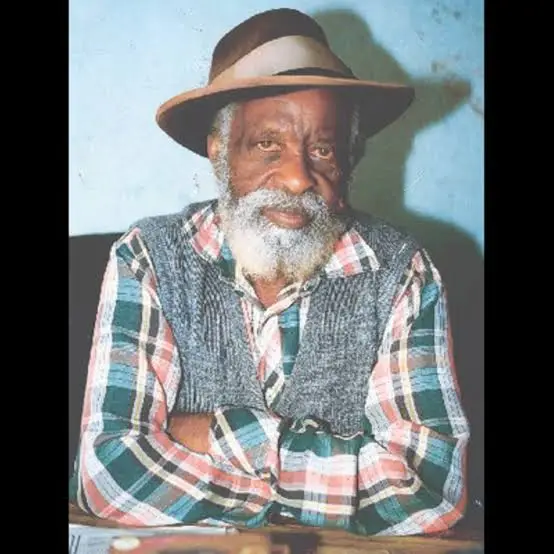
At a Glance
Kikuyu Country and the World That Made Bildad Kaggia
The Murang'a District of Kenya's Central Province, where Bildad Kaggia was born in 1921, was not a landscape of abstract political grievance. It was a landscape of stolen land. The British colonial administration had, since the formal establishment of the East Africa Protectorate in 1895 and the Crown Lands Ordinance of 1915, systematically alienated Kikuyu agricultural land to European settlers, converting African smallholders and pastoralists into squatters on what had once been their own farms or into labourers on European estates, bound to their employers by the hut tax, the poll tax, and the kipande pass system. In Murang'a, Kiambu, and Nyeri — the three districts of Kikuyu country — the dispossession was not a historical memory; it was a daily lived reality. Men who had farmed land their fathers had farmed watched white settlers acquire legal title to it. Young men with no land of their own moved to Nairobi to work as domestic servants, factory hands, and clerks, remitting money back to families who were themselves landless, and building in the process an urban working class with its own grievances, its own organisational capacities, and its own fury.
Kaggia grew up in this environment with the additional layer of Christian missionary education. His family were converts; he attended mission schools; he was literate and moderately educated by the standards of his generation and his community. The mission schools gave him English, gave him exposure to British political ideas, and gave him — paradoxically — the tools to understand why what was being done to his people was wrong by any standard the British themselves claimed to hold. This is a common pattern in the intellectual biography of African nationalists of his generation, and it does not make the conversion to anti-colonialism less genuine. The literacy that the missions provided was turned against the missionaries' imperial patrons with a consistency and thoroughness that the missionaries had not anticipated.
During the Second World War, Kaggia was recruited as a clerk into the British Army and served in the Middle East and in Britain. The experience was radicalising in multiple and specific ways. He saw white men who were not colonial officers, white men who were workers and sometimes socialists, white men who treated Africans as human beings rather than subjects. He encountered anti-colonial intellectual circles in London, absorbing the arguments about self-determination and the rights of colonial peoples that were circulating in the Pan-African networks around figures like Kwame Nkrumah and Jomo Kenyatta. He also encountered, with the sharpening clarity that physical distance sometimes provides, the complete disjunction between Britain's stated war aims — the freedom of peoples from tyranny — and the actual practice of the British Empire in Kenya and elsewhere. Men were being asked to fight for the freedom of Poles and Belgians while their own land remained alienated and their own political rights remained nonexistent. The contradiction was not subtle, and Kaggia was not a man who let contradictions pass without examining them.
The Trade Union Movement, the KAU, and the Road to the Mau Mau
Returning to Kenya after the war, Kaggia threw himself into the political and trade union activity that was transforming Nairobi's African working class into an organised political force. He joined the Kenya African Union, the main African nationalist organisation, and became aligned with its most radical wing — the faction that believed that polite petitioning of the colonial administration had achieved nothing and would achieve nothing, and that more confrontational methods were necessary. His closest political ally in this period was Fred Kubai, a militant trade unionist who had built the Transport and Allied Workers Union into a vehicle for political as much as industrial action, and together the two of them built the most radical faction within the KAU's Nairobi branch.
The relationship between Kaggia and Kenyatta in this period is important to understand, because it illuminates the contradiction that would later define Kaggia's post-independence career. Kenyatta was the KAU's president, the most prominent figure in Kenyan nationalist politics, a man of genuine international experience and cultural authority. Kaggia respected him and worked with him. But their political visions were not identical. Kenyatta was, at this period at least, a man who believed in negotiated constitutional progress towards self-government within a framework that would preserve existing property relationships. Kaggia believed that independence without land redistribution was not independence at all — it was simply the transfer of formal political power to an African elite that would administer the same economic arrangements that the British had established. These were not the same thing, and the difference between them would eventually split the post-independence nationalist movement.
In the years between 1950 and 1952, Kaggia became one of the most important organisers of the Mau Mau oath-taking ceremonies that were spreading through Kikuyu communities in Nairobi and in the Central Province. The Mau Mau oaths were not simply rituals of commitment; they were acts of political organisation that created the sinews of a mass movement. To take the oath was to commit to the liberation of Kenya land and to take on obligations of secrecy and mutual support that turned individuals into a network. Kaggia was one of the systematisers of this process, working to standardise the ceremonies and to extend them beyond the Kikuyu heartland. His administrative skills — the same skills that had made him a useful army clerk — were now deployed in the service of revolution.
Kapenguria: Trial, Imprisonment, and the Creation of a Legend
When Governor Evelyn Baring declared the State of Emergency on 20 October 1952, Kaggia was among the first wave of nationalist leaders arrested. He was taken in the same sweep that arrested Kenyatta, and he was among the six men — Kenyatta, Kaggia, Fred Kubai, Paul Ngei, Kungu Karumba, and Ramogi Achieng Oneko — who were transported to the remote northern town of Kapenguria for trial on charges of managing the Mau Mau. The trial was a judicial farce, presided over by a judge, Ransley Thacker, who had been paid a bonus by the colonial government before the proceedings began and who admitted after his retirement that the conviction had been a foregone conclusion. The testimony of the prosecution's key witness, Rawson Macharia, was subsequently shown to have been fabricated and rewarded with money and a scholarship. None of this mattered at the time.
The Kapenguria Six, as they came to be known, were convicted in March 1953 and sentenced to seven years' hard labour followed by indefinite restriction. For Kaggia, as for the others, imprisonment was a long ordeal in remote and deliberately uncomfortable conditions — Lokitaung prison in the far north, a place chosen for its isolation and its harsh climate. He was kept separate from Kenyatta for much of the time, in conditions designed to break will and maintain ignorance of events in the outside world. He was not broken. He read everything he could obtain, maintained his political convictions, and used the years of imprisonment as a period of deepening analysis. By the time he was released in 1961, as Kenya moved towards independence, he had lost none of his radicalism; if anything, nine years of contemplation had intensified it.
The Kapenguria detention was simultaneously a colonial atrocity and a political education, not for Kaggia alone but for the broader liberation movement. The men imprisoned there had time to think through the implications of what they were fighting for in ways that the pressures of active political life did not normally permit. Kaggia's conclusions were clear and, as events would show, prescient: independence without land reform would be a betrayal of everything the Mau Mau had died for. The question was whether the political leadership that took power at independence would agree.
Independence, Land, and Betrayal
Kenya achieved independence on 12 December 1963, with Jomo Kenyatta as Prime Minister. Kaggia was elected to parliament and took his seat as a member of KANU, the ruling party. For a brief period, it appeared that the disagreements of the pre-independence years might be resolved within the framework of the new government. They were not. The central question was the same one that Kaggia had been raising for a decade: what would happen to the land that the colonial government had alienated to European settlers? Would it be redistributed to the landless Kikuyu families who had fought the Mau Mau precisely because they wanted their land back? Or would it be sold at market prices through a government scheme that required purchase — meaning that those who had fought hardest and sacrificed most were still unable to own land because they remained too poor to buy it?
The Kenyatta government chose the latter. The Million Acre Settlement Scheme, financed partly by the British government, purchased European farms and resold them to Africans at prices that effectively excluded the genuinely landless poor and benefited instead the African middle class — including, prominently, members of the political elite and their families. The men and women who had been squatters on European farms, or who had spent years in the forest as Mau Mau fighters, or who had been imprisoned in the colonial detention camps, received nothing or received inadequate allocations. The promise of land freedom that the Kenya Land and Freedom Army had been fighting for was converted into a real estate transaction that enriched those who were already relatively well positioned.
Kaggia was explicit and unrelenting in his condemnation of this policy. His challenge to Kenyatta in parliament became one of the most famous confrontations in Kenyan political history. When Kenyatta mocked him by suggesting that while his fellow Kapenguria detainees had used their political positions to acquire wealth and property, Kaggia had "nothing to show" for independence, Kaggia's response cut to the heart of the matter: he had nothing to show because he had not stolen anything from the people he was supposed to represent. He had not acquired farms at preferential prices, had not used government connections to extract money from public funds, had not treated independence as a personal business opportunity. His poverty, in other words, was his credential. The exchange became legendary in Kenyan political culture, a moment at which the hypocrisy of the independence settlement was stated plainly and on the public record.
The Kenya People's Union and Second Detention
Alienated from KANU and from Kenyatta's increasingly authoritarian and economically conservative government, Kaggia joined Oginga Odinga in forming the Kenya People's Union in 1966. The KPU was the closest thing Kenya had to a left-wing opposition party — committed to land redistribution, to policies that would benefit the rural and urban poor, and to a form of African socialism that actually meant something rather than functioning as a rhetorical cover for capitalist accumulation. It attracted the most principled figures of the independence generation: people who had not made their peace with the betrayal of the Mau Mau's promise.
The KPU was tolerated uneasily by the Kenyatta government and then banned in October 1969 following the Kisumu incident, in which security forces fired on crowds welcoming Odinga during a presidential visit. Kaggia was detained without trial, for the second time in his life — the first time by a colonial government, the second time by the independent government that the liberation struggle had brought to power. The irony was not lost on him or on observers. He was released in 1971 but remained under political surveillance and faced consistent harassment. Without the KPU as a vehicle, his organisational options were severely limited.
The experience of second detention clarified for Kaggia, if further clarification were needed, the class character of the Kenyan state. It was not that independence had failed because of bad decisions by well-meaning leaders; it was that the independence settlement had been structured from the beginning to serve the interests of an emerging African property-owning class that had more in common, economically, with the European settlers it had replaced than with the landless Kikuyu farmers whose struggle had made independence possible. The colonial state had been replaced by a post-colonial state that used the same instruments — detention without trial, banning of opposition parties, co-option of potential critics — in the service of the same fundamental interests.
Later Years and the Writing of Memory
In the years after his release, Kaggia wrote his memoir, Roots of Freedom: 1921–1963, published in 1975. It is one of the most important documents of the Kenyan liberation struggle — direct, unsparing, and analytically sharp in ways that the official narrative of independence never could afford to be. Kaggia wrote about oath-taking and military organisation with a frankness that the government-sanctioned histories of the Mau Mau avoided. He wrote about what the landless poor had actually wanted from the independence struggle and what they had received instead. He documented the Kapenguria trial with the detail of someone who had been there and understood precisely how the judicial process had been corrupted. The book is a counter-history of Kenyan independence written from the bottom up — from the perspective of the landless, the detained, the forgotten fighters rather than from the perspective of those who had acquired farms and cabinet posts.
Kaggia lived into old age in Nairobi, by the standards of those who had used political office to accumulate wealth a poor man, by his own standards a man who had not compromised the principles he had sworn to uphold. He remained a figure of moral authority for Kenya's political left and for the surviving generation of Mau Mau veterans, many of whom had received even less recognition than he had. When he died in March 2005, he was eighty-three years old and had outlasted Kenyatta, Oginga Odinga, Tom Mboya, and most of the other major figures of the independence generation. He was buried with recognition that fell well short of what the scale and integrity of his contribution merited, in a country that still had not fully reckoned with the promises made to its landless poor.
The Question That Kaggia Never Stopped Asking
What distinguishes Bildad Kaggia from most of the other major figures of Kenyan independence politics is not his courage under colonial detention — many of them were brave — or his organisational skill — several of them were skilled organisers — but his refusal to accept the independence settlement as the final answer to the question that the liberation struggle had been asking. The question was simple: to whom does the land of Kenya belong? The colonial answer was: to whoever holds legal title under British law. The Mau Mau answer was: to the people who live on it, work it, and whose communities have occupied it since before the British arrived. The independence settlement gave a third answer: to whoever can afford to buy it from the government scheme, on terms structured to benefit those already advantaged.
Kaggia's contribution to Kenyan political history lies precisely in his consistent refusal to accept that third answer as either inevitable or legitimate. He named it as a betrayal. He organised against it at the cost of personal wealth, political safety, and eventually his freedom. He wrote about it with the precision of a man who had been present at every stage of the process he was describing. And he did all of this without the bitterness that might have been expected of someone twice imprisoned, once by colonialism and once by independence. His memoir reads as the work of a man who was angry about injustice, certainly, but whose primary emotion was analytical rather than personal — he wanted to understand why the liberation struggle had produced the outcome it had produced, and to leave a record that might help future generations do better.
That record exists. Roots of Freedom sits in libraries and on the shelves of Kenyan political activists who continue to ask the question that Kaggia never stopped asking. The land question in Kenya remains unresolved. The children and grandchildren of the Mau Mau fighters are still, in many cases, landless. The promise that the Kenya Land and Freedom Army fought for remains a promise. Bildad Kaggia's life is an argument — made not in words alone but in the way it was lived — for why that promise continues to matter.