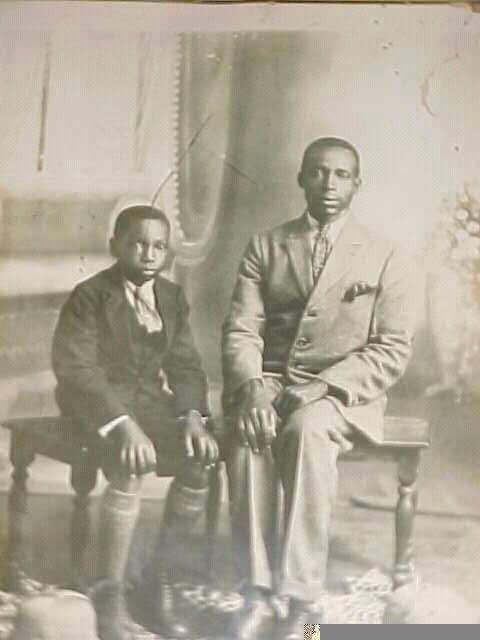
At a Glance
The First Generation: Building Nationalism Before the Template Existed
James Beauttah belonged to the founding generation of Kenyan nationalism — the group of men and women who organised political resistance to British rule in the early 1920s before there was any established template for what such resistance should look like, before the success of any comparable movement elsewhere had demonstrated that colonial rule could be ended, and before the international political environment of decolonisation had created the external pressures that would eventually support African independence. They were building something new under conditions of active suppression, and the fact that anything was built at all is testimony to the political courage and organisational skill of the individuals involved.
The Kenya of the early 1920s was not a society in which African political organisation was treated as a legitimate activity. The colonial government's response to Harry Thuku's East African Association — deportation and massacre — established clearly that organised African political activity would be met with force. The choice facing men like Beauttah after March 1922 was whether to continue organising in the knowledge that the colonial government would use violence against them, or to withdraw into the private life and the economic activities that the colonial system offered its African subjects as an alternative to political engagement. The fact that Beauttah continued — that he remained involved in nationalist organisation through the 1920s, 1930s, 1940s, and into the independence era — reflects a choice that was not without personal cost and risk.
The political landscape of the 1920s after Thuku's deportation was shaped by the fragmentation that the loss of the EAA's central leadership produced. The Kikuyu Central Association emerged as the main vehicle of Kikuyu political work, narrower in its ethnic scope than the EAA had been but more durable as an organisation precisely because its ethnic base gave it social roots that the more ambitious pan-ethnic EAA had not had time to develop. Beauttah navigated this landscape with the practical flexibility that survival in colonial political conditions required — maintaining connections across organisational boundaries, building the personal networks that outlasted any individual organisation's lifespan, and preserving the broader sense of purpose that the nationalist project required to sustain itself through years without visible progress.
The Long Work: Decades of Organisation Under Colonial Surveillance
The history of movements that achieve liberation after long struggle is always partly the history of the people who sustained the movement through its difficult middle years — the period after the founding energy has dissipated and before the final push that produces visible results. For Kenyan nationalism, this middle period stretched from the mid-1920s to the late 1940s — roughly twenty-five years during which the movement existed, organised, petitioned, protested, was harassed and occasionally suppressed, and continued to exist and organise and petition and protest. The public history of this period is sparse compared with the drama of the Mau Mau years; the private history — the meetings, the correspondence, the networks of mutual support and shared political conviction that sustained the movement through years without obvious progress — is mostly unrecorded.
James Beauttah operated within this private history. His contribution was organisational rather than intellectual, practical rather than dramatic, and it accumulated value over time rather than generating the immediate recognition that a single dramatic act produces. He recruited people into the movement, maintained relationships with existing members, communicated information between different parts of the nationalist network, and did the unglamorous work of keeping an organisation functional under conditions that made functionality difficult. These are not activities that generate the biographical materials — the speeches, the manifestos, the court testimonies, the prison memoirs — on which historical reconstructions typically rely, and the relative sparseness of the historical record about Beauttah's specific activities reflects this.
What the record does show is his sustained presence across the full arc of the nationalist movement's development. He was there with Thuku in 1921. He was there with the KCA in the 1930s. He was there with the KAU in the 1940s. He was there when Jomo Kenyatta returned from Britain in 1946 and transformed the KAU from an elite organisation into a mass movement. He was there during the years when the movement's radical wing — Bildad Kaggia, Fred Kubai, and their allies — was building the underground infrastructure that would become the Mau Mau. This continuous presence across a period of thirty-plus years, through the full range of conditions from relative tolerance to active suppression, is itself a significant form of political contribution.
The KAU Years and the Radicalisation of the Movement
The Kenya African Union that Beauttah participated in from its founding in 1944 was a different kind of organisation from the EAA he had joined in 1921. It was larger, more formally structured, and operating in a political environment that had been transformed by the Second World War and its aftermath — a world in which the principle of self-determination had been formally proclaimed in the Atlantic Charter, in which India was moving towards independence, in which the Pan-African movement was gathering momentum, and in which the African population of Kenya had been exposed, through military service and through the wider circulation of political ideas, to a broader range of possibilities than the colonial system acknowledged.
The KAU's evolution through the late 1940s — from a constitutional petition organisation to a movement that contained within itself both the moderate, constitutionalist current and the radical, revolutionary current that would eventually break out as the Mau Mau — placed all of its members in a position of increasing political complexity. The moderate wing, associated with figures like Eliud Mathu and, in his post-exile politics, Harry Thuku, believed that constitutional progress through negotiation with the colonial government was both possible and preferable to confrontation. The radical wing, associated with Kaggia, Kubai, and the oath-taking movement, believed that the colonial government had demonstrated its unwillingness to make meaningful concessions and that armed resistance was the only realistic path to liberation.
Beauttah's own position within this tension is not easily characterised from the historical record. He was a KAU figure, associated with the organisation's mainstream rather than explicitly with either its most conservative or most radical tendencies. His long experience of the movement — stretching back to 1921, before any of the younger radical figures had entered political life — gave him both the authority of a founding generation member and the pragmatic flexibility of someone who had seen the movement adapt to multiple different political environments over three decades. He understood, from direct experience, both the costs of confrontation with the colonial government and the costs of accommodation — the 1922 massacre had demonstrated the former, and the three decades of modest incremental progress since Thuku's return from exile had demonstrated the latter.
Survival, Continuity, and the Transmission of Political Memory
One of the most significant things about James Beauttah's career is simply that he survived — that he was not deported like Thuku, not detained like the Kapenguria Six, not killed like Dedan Kimathi or Tom Mboya or Pio Gama Pinto, not pushed into permanent exile by a post-independence government that found his politics inconvenient. His survival across six decades of nationalist politics was not accidental — it reflected the same kind of political intelligence and practical caution that had kept him active and out of the colonial government's most extreme suppressive measures through the 1920s, 1930s, and 1940s.
This survival mattered because it made him a living repository of the movement's history. By the time of independence in 1963, the founding generation of Kenyan nationalism had been severely depleted: Thuku was alive but politically marginalised; many of the EAA generation were dead or had long since left political life; the Kapenguria Six had been imprisoned and released but were now navigating the complex politics of the independent state. Beauttah, who had been active from the EAA's founding and who had maintained his involvement through all the subsequent phases, was one of the very few people who could provide first-hand testimony about the full arc of the movement from 1921 to independence — a span of more than forty years during which the political landscape had been transformed beyond recognition.
The transmission of political memory — the passing of knowledge about what a movement was, where it came from, what it sacrificed, and what it achieved — is an important function that historians and archivists can partly but never fully replace. The people who lived through a movement carry knowledge that does not fully make it into the written record: the texture of the experience, the emotional reality of what it meant to organise under suppression, the informal networks and relationships that sustained the movement between its public moments, the sense of why it mattered that sustained participants through years without visible progress. Beauttah was one of the carriers of this knowledge for Kenyan nationalism, and his longevity meant that more of it survived than might otherwise have been the case.
The Undervalued Dimension of Liberation History
James Beauttah's relative obscurity in the official narrative of Kenyan independence reflects a broader pattern in how liberation history is remembered and how it is forgotten. The movements that end colonial rule are represented primarily through their most dramatic figures — the military commanders, the martyrs, the founding fathers who become heads of state, the orators whose words are preserved in archives and anthologies. The organisers, the sustaining figures, the people who kept the movement alive through its long difficult middle years without generating the dramatic biographical materials that historical memory requires, tend to fade from the picture.
This is a distortion. The dramatic figures — Kimathi, Kenyatta, Mboya — could not have done what they did without the organisational infrastructure that men like Beauttah spent decades building and maintaining. The Mau Mau forest war required networks of support that stretched back decades into the history of Kikuyu political organisation. The independence negotiations that Kenyatta conducted required a mass political movement behind him that had been built, person by person and meeting by meeting, over forty years. The political credibility that the KAU possessed when Kenyatta returned from Britain in 1946 was built on the work of the founding generation — Thuku, Beauttah, and their contemporaries — who had kept nationalist politics alive through the years when it was most dangerous and least rewarded.
A complete understanding of how Kenya achieved independence requires acknowledging this infrastructure — the long, patient, dangerous organisational work that created the conditions in which the dramatic events of the Mau Mau years and the independence negotiations could occur. James Beauttah was part of that infrastructure, and his career across half a century of Kenyan nationalist politics is a necessary part of the full story of how colonial Kenya became independent Kenya.