At a Glance
The Goan Community, Colonial Nairobi, and the Choice to Cross the Line
The Goan community of colonial Nairobi occupied a specific and complicated position in the racial architecture of colonial Kenya. Goans — Catholic Christians of Indian origin from the Portuguese colony of Goa on India's western coast — had been part of East Africa's commercial and administrative life since the nineteenth century, brought by the British as clerks, administrators, and skilled workers whose literacy, familiarity with colonial bureaucratic systems, and intermediate position in the racial hierarchy made them useful to the colonial economy. In colonial Nairobi, the Goan community was small, relatively prosperous, and socially distinct both from the larger Indian community and from the African majority.
The racial hierarchy of colonial Kenya placed Goans and other Asians in a middle category — above Africans in the legal and social classification that determined access to housing, education, employment, and public facilities, but below Europeans in the same system. This middle position was simultaneously privileged and constrained: privileged compared to the experience of Africans who lived under the full weight of colonial discrimination, constrained by the awareness that the privileges were conditional on the maintenance of a racial order that was itself unjust. For some members of the Asian communities of colonial East Africa, this middle position produced accommodation — a calculation that the relative privileges of the middle tier were worth defending, that the risks of challenging the racial order outweighed the moral obligations to do so. For others, it produced the opposite: a recognition that the system was wrong regardless of one's position within it, and a commitment to challenging it.
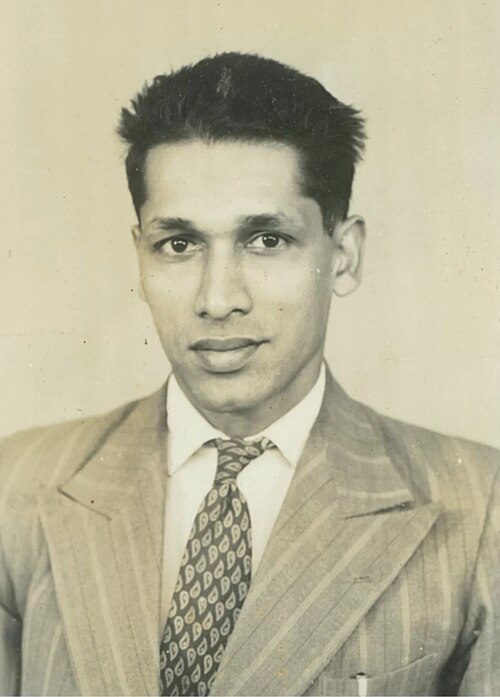
Pio Gama Pinto was, decisively, among the latter. His political consciousness developed through exposure to socialist and anti-colonial ideas in both Kenya and Britain — where he spent time in the 1940s and absorbed the intellectual currents that were making London one of the most important centres of anti-colonial thinking in the world. His contact with the KAU's radical wing in the early 1950s and his decision to support the Mau Mau movement placed him outside the comfortable middle position of colonial Nairobi's Goan community and made him a marked man for the colonial security apparatus. The decision was costly and he took it anyway, because his analysis of colonialism concluded that the correct response to a system of racial oppression was not to benefit from your position within it but to work for its abolition.
Supporting the Mau Mau: The Urban Underground and the Asian Left
Pinto's support for the Mau Mau movement during the colonial period was not the passive sympathy of someone who wished the movement well from a safe distance; it was active, practical, and dangerous. His position within the Goan community of Nairobi gave him access to resources, spaces, and networks that the African activists at the centre of the movement could not easily access themselves. Money needed to be moved — for the legal defence of detained fighters, for the families of those imprisoned, for the operational requirements of the urban underground that connected Nairobi's African working-class areas to the forest fighters. Documents needed to be produced and circulated — political materials, communications, the propaganda of the movement that was being disseminated in defiance of Emergency regulations. Information needed to flow between the urban networks and the forest command, and that flow required trusted intermediaries who could move between the racial and social worlds of colonial Nairobi without attracting immediate suspicion.
Pinto performed these functions. His Goan identity and his access to the relative freedom of movement that his racial classification provided were practical assets that the movement could use, and he used them deliberately and consistently. He was not the only Asian or Goan supporter of the Mau Mau — there was a small but politically significant group of Asian left-wingers in colonial Nairobi who shared his commitments — but he was among the most active and most important. The colonial government recognised this. When the mass arrests of October 1952 swept through the nationalist movement's networks, Pinto was among those detained. He was held without trial under the Emergency regulations — the same detention-without-trial that had been used against Thuku in 1922 and was being used against the Kapenguria Six at Lokitaung.
His detention confirmed, if further confirmation were needed, that his support for the Mau Mau was understood by the colonial government as genuinely important rather than merely peripheral. The colonial security apparatus did not waste detention resources on marginal figures; the people detained were those who had been identified as significant contributors to the movement's capacity. Pinto was significant, and the colonial government's response to his significance was imprisonment.
Independence, the Radical Press, and the Marxist Analysis of Neo-Colonialism
When Kenya achieved independence in December 1963, Pinto was one of the small number of political figures who entered the independence era with a fully formed Marxist analysis of what independence did and did not mean for ordinary Kenyans. While the celebrations of Uhuru were genuine and the political achievement of independence from colonial rule was real, Pinto's analysis — consistent with the neo-colonialism framework that Kwame Nkrumah was developing in Ghana at the same time — held that political independence without economic transformation was a limited and potentially illusory freedom. The colonial economy's structure — its land ownership patterns, its patterns of investment and extraction, its labour market hierarchies — could persist under an African government as effectively as under a British one if the political independence was not accompanied by genuine economic restructuring.
He made this argument through journalism — through the publications he wrote for and helped produce in the early months of independence, which made the Marxist case against the direction the Kenyatta government was taking with a directness and intellectual rigour that the government found deeply uncomfortable. The Kenyatta government was, from its earliest months, committed to a broadly capitalist economic path: welcoming foreign investment, maintaining the property rights of European settlers who chose to remain, and using the state's resources for development in ways that prioritised economic growth over redistribution. Pinto's journalism interrogated each of these choices, connecting them to the interests they served and the people they failed.
He was associated with Sauti ya Mwafrika — Voice of the African — and other radical publications that served the left wing of the independence movement. His writing connected Kenya's specific political situation to the broader international context of the Cold War, decolonisation, and the debates within African socialism about what genuine economic independence required. He was intellectually equipped to make these connections in ways that most Kenyan political figures of the period were not — his Marxist formation gave him an analytical framework that the political establishment's pragmatism lacked, and his commitment to applying that framework consistently to the specific conditions of independent Kenya made his journalism both more illuminating and more threatening than the gentler criticism of the independence settlement that other figures offered.
The Target: Why the Kenyatta Government Killed Pio Gama Pinto
The Kenyatta government's decision to have Pinto killed — for the evidence, circumstantial but overwhelming in its convergence, points to state involvement — was driven by a combination of factors that the early months of independence had brought into sharp relief. Pinto was closely associated with Oginga Odinga's political circle — the Vice-President whose disagreements with Kenyatta over the direction of economic policy were already serious and would result in his resignation from the Vice-Presidency in 1966. He was the most intellectually formidable figure in the left-wing current within Kenyan politics, capable of articulating the critique of the independence settlement in terms that combined journalistic accessibility with Marxist analytical depth. And he was, by temperament and by conviction, immune to the accommodations that the political system offered to those who would soften their criticism in exchange for access, position, or financial benefit.
The combination of these characteristics — association with the leading opposition figure, intellectual sophistication, and absolute incorruptibility — made him uniquely dangerous from the perspective of a government that was managing the consolidation of power in the post-independence period. He could not be bought. He could not be co-opted. He could not be easily marginalised through the administrative and political mechanisms that the government used against less formidable critics. He had to be silenced by other means.
On the morning of 24 February 1965 — his wife's birthday — Pinto was shot in the driveway of his Nairobi home. He was thirty-seven years old. The gunman was never identified or prosecuted. No investigation produced charges against anyone who ordered the killing. The impunity was complete and was, in its completeness, a deliberate message: that the government could kill its critics and face no legal consequences for doing so. That message was received clearly by everyone in Kenyan political life who understood what it meant.
The Pattern: Pinto, Mboya, Kariuki
Pio Gama Pinto's assassination in February 1965 was the first in a sequence of political killings that defined Kenya's independence era and established the pattern of violence against inconvenient figures that would persist through the Kenyatta and Moi years. Tom Mboya was assassinated in July 1969 — shot outside a Nairobi pharmacy, the most electrifying political murder in Kenyan history, in circumstances that implicated but never prosecuted those responsible. JM Kariuki was abducted and killed in March 1975, his body left at the Ngong Hills. The pattern across these three murders — and the others that accompanied them — was consistent: the victim was a figure whose political effectiveness and moral authority made them threatening to those controlling state power; the murder was carried out with professional competence; the investigation was systematically obstructed; no prosecutions resulted; the impunity was total.
Pinto's murder was the prototype. It demonstrated that the new Kenyan state was prepared to use assassination as a tool of political management with the same willingness that the colonial state had used detention and exile. It demonstrated that the legal system would not produce accountability for state-ordered political killings. And it demonstrated that the left in Kenya — the voices that were making the most intellectually rigorous argument that independence had not delivered freedom — was specifically targeted, because those voices were the most threatening to the version of independence that the Kenyatta government was consolidating.
The Goan Kenyan Who Chose Africa
Pinto's significance for Kenyan liberation history has an additional dimension that goes beyond his specific political contributions and his place in the sequence of political assassinations. He was Goan — a member of a community that colonial Kenya had classified as Asian and had placed in the middle tier of its racial hierarchy, with the privileges and the limitations that position entailed. His choice to commit his political life to the African liberation cause, to support the Mau Mau at personal risk, to spend years in colonial detention for his support, and to devote his journalistic career after independence to the most uncompromising advocacy for the landless poor — was a choice to reject the racial categorisation that colonial society had assigned him and to define his political identity by commitment rather than by birth.
This choice was not straightforward in a political context where ethnic and racial identity were powerful organising principles, where the post-independence government was increasingly organised around Kikuyu patronage networks, and where a Goan who had committed himself to African liberation could find himself politically isolated from both the Asian community he had left behind and the African political establishment that had other priorities than honouring the contributions of leftist intellectuals. Pinto navigated this isolation with the consistency of someone who had made a decision he believed in and was not going to unmake it for the sake of personal comfort.
He died for that consistency. Kenya has not fully honoured him for it — his name is less widely known in Kenya than his contribution warrants, and the political assassination that ended his life at thirty-seven has not received the official acknowledgement and accountability that justice requires. But the record of what he did and why he was killed is clear, and it belongs in any honest account of who Kenya's liberation required and what it cost.