At a Glance
Nairobi's African Working Class and the Conditions That Made Kubai
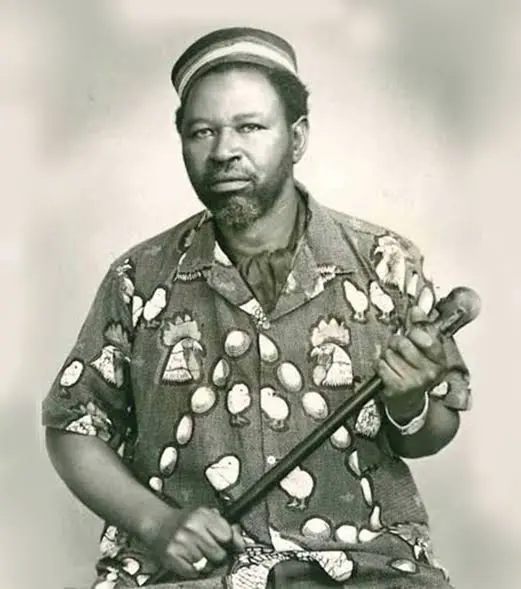
Fred Kubai was formed by Nairobi in a way that most of his contemporaries in the nationalist movement were not. While figures like Bildad Kaggia and Dedan Kimathi had come to Nairobi from the Central Province's Kikuyu highlands, bringing with them the specific grievance of land alienation that drove the Mau Mau's rural and forest dimensions, Kubai was a city man — born in Nairobi, shaped by its rhythms, its racial hierarchies, its labour markets, and its particular forms of colonial oppression. The Nairobi he grew up in was a city in which racial segregation was enforced not just in law but in geography: Africans lived in the designated African quarters — Pumwani, Shauri Moyo, Eastlands — while Europeans occupied the leafy western suburbs and Asians the commercial districts in between. Movement between these zones was regulated by the pass laws and by curfews that restricted African presence in the European areas to working hours and working purposes.
The African labour market in colonial Nairobi was structured to keep wages low and workers dependent. Domestic service was one of the largest employers, putting African men — women were largely excluded from formal employment — into European households as cooks, cleaners, gardeners, and housekeepers at wages set far below any standard of living comfort. The transport and docking trades, the construction industry, the light manufacturing that was beginning to develop around the city's periphery — all employed African labour at the bottom of a hierarchy where European and Asian workers occupied supervisory and skilled positions at wages that reflected racial status rather than skill or experience. The kipande pass system meant that workers could not easily leave an employer who mistreated them or simply move to seek better wages: the pass required an employer's signature for an African to change jobs, creating a form of labour bondage that was not slavery in the legal sense but functioned like it in practice.
It was in this environment that Fred Kubai came to labour organising. The trade union movement among African workers in Kenya was suppressed, tolerated uneasily, or outright illegal through much of the colonial period, and the organisations that existed operated in the knowledge that colonial authorities and European employers were watching them with active hostility. Building a union in these conditions required exactly the kind of practical intelligence, organisational persistence, and ability to inspire trust and commitment among workers who had every reason to be cautious that Kubai possessed. He built the Transport and Allied Workers Union from this unpromising material into an organisation that could call effective strikes and that commanded genuine loyalty from its membership.
The Fusion of Trade Unionism and Anti-Colonial Politics
What distinguished Kubai from many trade union organisers in colonial settings was his explicit fusion of industrial grievance with political argument. It was not enough, in his analysis, to win better wages for transport workers in Nairobi, though that mattered; the problem was the colonial system itself, which structured wages, conditions, and life opportunities in terms of race, and which would continue to do so regardless of whatever incremental improvements individual unions might win through industrial action. The logical conclusion of this analysis was that trade union organisation and anti-colonial political organisation were not separate activities but two dimensions of the same project: to organise the African working class was simultaneously to organise the political constituency that the liberation movement needed.
This fusion brought Kubai into close alliance with the radical wing of the Kenya African Union — the faction around Kaggia that believed the KAU's moderate leadership was insufficient to the urgency and scale of what was required. Kubai and Kaggia worked together from the late 1940s onward to build what amounted to a parallel political infrastructure within the KAU's nominal framework: an urban network of oath-takers and activists who were committed to armed resistance rather than constitutional petition, and who were preparing the ground for the confrontation with colonial power that both men believed was coming.
The relationship between the two men — similar in political conviction, complementary in temperament and organisational strength — was one of the most important partnerships in the history of the Mau Mau. Kaggia brought administrative precision and ideological clarity; Kubai brought organisational muscle and trade union networks. Together they built, in the years between 1948 and 1952, the urban infrastructure that connected the Nairobi working class to the liberation movement and that provided the supply networks, the recruitment channels, and the political solidarity without which the forest fighters could not have sustained their campaigns. The Mau Mau was not simply a rural Kikuyu uprising; it was a movement that required urban organisation to function, and that urban organisation was very substantially Kubai's work.
Building the Underground: Oaths, Networks, and the Preparation for War
The Mau Mau oath ceremonies that spread through Nairobi's African quarters in the late 1940s and early 1950s were among the most politically important activities Kubai organised. The oaths — misrepresented systematically by the colonial press and government as barbaric ritual, understood correctly by those who administered and took them as acts of political commitment and community formation — transformed individual workers and residents into network members, bound by obligations of mutual support, secrecy, and resistance. To administer oaths at scale required organising the ceremonies, maintaining secrecy, managing the risks of informers and police infiltration, and ensuring that the process extended consistently through the city's African residential areas and workplaces.
Kubai's trade union networks were essential to this extension. The Transport and Allied Workers Union gave him access to workers across the city — in the bus depots, the railway workshops, the dock facilities at Kilindini — and the organising skills and the trusted relationships with workers that his union work had built were directly transferable to the political organisation of the oath-taking movement. Workers who trusted Fred Kubai as their union representative were prepared to trust him with the more dangerous political commitment of the Mau Mau oath. The overlapping networks of the union and the movement reinforced each other, creating an organisational density in Nairobi's African areas that the colonial government initially underestimated.
Beyond oath-taking, Kubai was involved in the construction of the supply chains that would prove essential once the forest war began. Food, weapons, medicines, and information needed to move between the city and the Aberdare forests and Mount Kenya. These supply chains required trusted individuals at every node — people who could obtain goods, move them without attracting police attention, and deliver them to the forest fighters' contacts at the margins of the forest. Building and maintaining these chains was unglamorous, dangerous work that received none of the dramatic recognition accorded to forest fighters, but without it the forest armies could not have survived.
Kapenguria: The Trial That Revealed Colonial Fear
When Governor Evelyn Baring declared the State of Emergency on 20 October 1952, Fred Kubai was among the first wave of arrests. He was taken, along with Kenyatta, Kaggia, Paul Ngei, Kungu Karumba, and Ramogi Achieng Oneko, and transported under military guard to Kapenguria in the remote Northern Province for trial on charges of managing the Mau Mau. The selection of this remote location — far from Nairobi, inaccessible to the public and the press, in a region where the legal and logistical obstacles to mounting an effective defence were maximal — was a deliberate choice by a colonial government that wanted to convict these men without the scrutiny that a trial in Nairobi would have attracted.
The Kapenguria trial was, as has been extensively documented since, a judicial process in which the outcome was predetermined. Judge Ransley Thacker had been paid a bonus by the colonial government before the trial began; the prosecution's key witness, Rawson Macharia, was subsequently shown to have given fabricated testimony and to have been rewarded for it with money and educational opportunities; the defence team, including the distinguished English lawyer D.N. Pritt, faced consistent obstruction in their attempts to prepare and present their case. Kubai and his co-accused were convicted and sentenced to seven years' hard labour followed by indefinite restriction, and were transported to Lokitaung — a maximum-security facility in the far north, in the Turkana desert, deliberately selected for its isolation and its harsh conditions.
Kubai's imprisonment at Lokitaung lasted the full sentence period and beyond. He was kept separate from the other Kapenguria detainees for much of his detention, in conditions of physical hardship and information deprivation that were designed to break the will and the political capacity of the men imprisoned there. That the Mau Mau continued to fight in the forests throughout the detention period — that the movement had sufficient organisational depth to sustain itself after the arrest of its urban leadership — was a testament to the quality of the infrastructure that Kubai and his colleagues had built before 1952. They had created something that did not depend on any individual's continued freedom to function.
The Organiser's Legacy: What Gets Built Versus What Gets Remembered
Fred Kubai was released in 1961 as Kenya moved through the constitutional negotiations that would lead to independence. He re-entered political life, was elected to parliament, and continued as a figure in Kenyan politics for several years after independence. But the political environment of independent Kenya was one in which the radical land-justice politics that he and Kaggia had championed were increasingly marginalised by a government that had settled for the property relationships the colonial period had established. Like Kaggia, he found himself on the uncomfortable side of a settlement that had delivered flag independence without the economic transformation that the liberation movement had promised.
His long-term legacy is the legacy of the organiser: less visible than the legacy of the military commander or the martyr, but in some ways more fundamental. Revolutions are not won by the actions of dramatic individuals alone, however important those individuals are. They are won by the patient, dangerous, often invisible work of building organisations — creating the networks of trust, the systems of communication and supply, the political consciousness and commitment among ordinary people that turns individual grievance into collective action and individual courage into sustained resistance. Fred Kubai was one of the most effective practitioners of this kind of work in the history of Kenyan liberation. The movement he helped build was more important than any individual act of resistance, and its effectiveness was substantially his achievement.
He died in 1996, more than three decades after independence, having lived long enough to see both the achievement of political freedom and the failure to deliver the economic justice that the liberation struggle had promised. His name is less widely known than Kenyatta's or Kimathi's or even Kaggia's, but anyone who asks how the Mau Mau actually worked — how it organised, how it recruited, how it maintained itself under conditions of extreme colonial repression — will find Fred Kubai at the centre of the answer. The urban underground that made the forest war possible was very substantially his creation, and Kenya owes him a debt that its official memory has been slow to acknowledge.