At a Glance
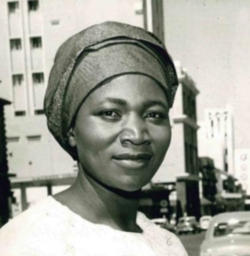
Kisumu, the Lakeshore, and the World That Shaped Grace Onyango
Kisumu, where Grace Onyango was born in 1924 and where she built her career, is the principal city of western Kenya — a Lake Victoria port that had been established as a railway terminus in 1901 at the end of the Uganda Railway that the British built from Mombasa to the lake, and that had grown in the subsequent decades into the administrative, commercial, and educational centre of the Nyanza Province and the Luo community. Its position on the lake gave it connections to Uganda and Tanzania across the water, and its role as a transport hub made it more economically integrated into the wider East African economy than most Kenyan towns of comparable size. It was a city where multiple ethnic communities — Luo, Luhya, Kisii, as well as Asians and a small European population — had established themselves, and where the intersections of trade, administration, and mission education had created an African professional class with somewhat different characteristics from the Kikuyu-dominated nationalism of the Central Province.
The Luo community of Nyanza had a political tradition of its own that was distinct from but connected to the Kikuyu-centred mainstream of Kenyan nationalism. The grievances were different — Luo land alienation was less severe than in the Central Province, and the Luo community had experienced colonial rule with somewhat different emphasis — but the political aspirations were broadly similar: self-determination, genuine political representation, an end to the racial discrimination that structured every dimension of colonial life from wages to education to movement. The Luo women's social organisations — the collective work groups and mutual support networks that were a feature of Luo community life — provided a cultural infrastructure that, while not straightforwardly political, demonstrated women's capacity for collective organisation and created the social networks within which a political career like Onyango's could be built.
Onyango's professional training as a nurse placed her within one of the very few formal occupational categories available to educated African women in colonial Kenya. The colonial system had created extremely limited professional opportunities for African women — teaching and nursing were the principal ones, domestic service and agricultural labour the mass realities — and the nursing profession combined professional status with community service in ways that gave its practitioners both credibility and connections. A nurse in Kisumu in the 1940s and 1950s was not simply a healthcare worker; she was a community figure who moved through households, who was trusted with intimate knowledge of family health and vulnerability, and who had access to the practical concerns of women's lives in a way that male politicians rarely did. These were, as Onyango would demonstrate, exactly the qualities and connections that political effectiveness required.
The Barriers to Women's Political Participation in Post-Independence Kenya
When Kenya achieved independence in December 1963, the political structures that independence created were overwhelmingly male. The National Assembly was composed almost entirely of men. The Cabinet was entirely male. The civil service senior ranks, the judiciary, the military, the police — all were male-dominated institutions that had been built by the colonial administration on assumptions of male authority and that were perpetuated without significant challenge by the independence government. This was not unique to Kenya; it was the pattern across the post-colonial African states that emerged in the independence decade. The liberation movements had, with a few exceptions, been led by men, and the states they created reflected the gender politics of those movements and of the societies from which they had emerged.
The formal legal barriers to women's political participation were limited. There was no explicit prohibition on women standing for parliament or for local government office. But the practical barriers were extensive and in some ways more powerful than formal legal exclusion: the expectations that political candidacy was a male activity; the control of party structures by male networks that did not easily extend resources or endorsement to female candidates; the attitudes of male voters who questioned whether a woman had the qualities required for political leadership; the double burden of domestic and professional responsibilities that left women with less time for the organisational work that political careers required; and the social disapproval that was directed at women who stepped outside the roles that both traditional and colonial-era social structures had defined for them.
Grace Onyango navigated these barriers not by arguing against them in the abstract but by building a record of practical achievement that made the objections to her candidacy increasingly difficult to sustain. Her mayoral career in Kisumu demonstrated that she could manage a city. Her community work as a nurse and civic organiser demonstrated that she understood the practical needs of her constituency. Her political networks, built over years of engagement with the Kisumu community, demonstrated that she had the organisational capacity to compete. When she stood for parliament in 1969, she was not asking Kisumu voters to take a risk on an untested candidate; she was asking them to endorse a record that spoke for itself.
The 1969 Election: Making History in Kisumu Town
The 1969 general election in Kenya was held in a context of considerable political tension. The assassination of Tom Mboya in July 1969 had inflamed ethnic tensions between the Luo and Kikuyu communities, and the banning of the Kenya People's Union in October 1969 following the Kisumu incident had returned Kenya to effective single-party rule under KANU. The political environment was not one that favoured challengers or novelty; the party machinery and the patronage networks of the ruling establishment shaped electoral outcomes in ways that could be difficult for independent or unconventional candidates to overcome.
Within this environment, Onyango's victory in Kisumu Town constituency was a genuine political achievement. She was competing against male candidates in a seat that she had not previously held at the parliamentary level, in a constituency whose political dynamics were shaped by the turbulent Luo politics of the post-Mboya period. Her victory reflected the strength of her local reputation, the organisational networks she had built through her nursing career and civic work, and the ability of Kisumu voters to distinguish between genuine community service and the patronage politics that characterised much of KANU's electoral activity. She won on merit and on record, which is the most durable foundation for political success.
Her arrival in the National Assembly as its first elected female member was a moment of genuine historical significance, though it was received at the time with a mixture of congratulation and scepticism. The congratulation was from those who understood what the precedent meant — that women could compete and win in Kenyan electoral politics, that the assumption of male political monopoly was not a natural fact but a constructed barrier that could be overcome. The scepticism was from those who saw her election as an anomaly, a freak result in an exceptional constituency, rather than as a harbinger of change. The subsequent history of women's political representation in Kenya — which improved, slowly and unevenly, over the following decades — suggests that the congratulators were right and the sceptics were wrong, though the pace of progress was far slower than the significance of Onyango's achievement warranted.
Parliamentary Work and the Advocacy for Women's Rights
Grace Onyango's parliamentary career extended across multiple terms, and her work in the National Assembly was focused consistently on the issues that her background and her constituents' needs identified as most important: public health, education, women's rights, and the welfare of the urban and semi-urban population of Kisumu and its surroundings. She was not a theoretical feminist in the academic sense — her politics were rooted in practical experience of what women's lives actually required rather than in abstract analysis of gender relations — but she was an effective practical advocate for women's interests in a legislature that rarely considered them adequately.
Her presence in the Assembly had effects beyond the specific legislation and debates she participated in. She was a visible demonstration that women belonged in the institution — not as tokens or concessions but as legislators whose participation improved the quality of representation. The issues she raised, the questions she asked, the perspectives she brought to debates on health, education, and welfare enriched the Assembly's deliberations in ways that were impossible without female participation. This sounds obvious to contemporary readers, but in the Kenya of the 1970s it needed to be demonstrated, and Onyango demonstrated it through her sustained performance over years of parliamentary work.
She was also, through her visibility, a direct inspiration for other Kenyan women who aspired to political careers. The knowledge that a woman had won a parliamentary seat, had served effectively as a legislator, and had not been diminished or marginalised by the experience was politically important information for women who were considering whether to stand, whether to organise, whether to ask their communities to support their candidacies. Representation is self-reinforcing when it works: the presence of women in institutions demonstrates to other women that presence is possible, and that demonstration is itself a form of political action.
Kisumu, the Luo Community, and the Gendered Dimensions of Liberation
Onyango's significance for the Luo community specifically, and for the broader question of women's role in the liberation and post-liberation politics of Kenya, deserves particular attention. The Luo political tradition had produced men of towering stature — Oginga Odinga as a national political figure of the first rank, Tom Mboya as a Pan-Africanist leader and trade unionist of international reputation. But the women of the Luo community, who had been participants in the economic and social life of the lakeshore region throughout the colonial period, had not produced — or rather had not been allowed to produce — equivalent public figures in the formal political structures of the colonial and early independence periods.
Onyango's emergence as a parliamentary pioneer was therefore also a statement about the Luo community's capacity to produce female political leadership — a demonstration that the tradition of women's social organisation and civic engagement that existed in Luo community life could be translated into formal political representation when the opportunity was created. She was not emerging from nowhere; she was drawing on resources of community trust, practical competence, and social connection that her nursing career and her civic work had built over decades. The political achievement was hers, but it was achieved in and through a community whose structures made it possible.
Her death in January 2004 came at a moment when Kenya was in the final stages of transitioning from Moi's authoritarian government to the Kibaki era — a period of renewed hope for democratic deepening that would eventually produce the 2010 constitution with its constitutional guarantee of a one-third minimum female representation in elected and appointed bodies. Onyango did not live to see that constitutional provision enacted, but the achievement it represented was partly built on the foundation that her parliamentary career had laid. The argument that women's political representation was not a concession but a right — an argument that she had made through the fact of her career rather than through formal advocacy — was now written into Kenya's constitutional framework.
The Pioneer's Place in Kenyan Memory
Grace Onyango's place in Kenyan political memory is secure but not always prominent. She is acknowledged in discussions of Kenya's political history as the first elected female parliamentarian, as the first female mayor of a major Kenyan city, and as a pioneer of women's political representation in East Africa. These acknowledgements are accurate and they matter. But the full significance of what she achieved is sometimes lost in the compression that historical memory requires — in the tendency to reduce a career to a first and to overlook the sustained work over decades that made that first meaningful rather than merely symbolic.
What distinguished Onyango was not just that she was the first but that she was effective — that she used her position to do things, to raise issues, to advocate for her constituents and for women across Kenya, to demonstrate through performance as well as presence that women in parliament were not novelties but necessities. The first women in any male-dominated institution face a particular burden: they are expected not only to do the job but to justify the idea that the job is one that women can do, to represent their sex as well as their constituents, to be simultaneously a politician and a symbol. Onyango carried this burden with the combination of practical focus and political courage that her career in nursing and civic organisation had prepared her for, and she carried it without complaint and without the self-consciousness that can sometimes make pioneers more interested in their pioneering than in their work.
She deserves to be remembered not only as the first but as a genuine political figure whose contribution to Kenya's democratic development extended well beyond the symbolic significance of a historic first — a woman who served her constituency, advocated for her community, and opened a door through which many subsequent Kenyan women have walked, building on the foundation she created in the Kisumu Town constituency on election day in 1969.