At a Glance
Kiambu, the Telephone Exchange, and the Conditions That Made a Nationalist
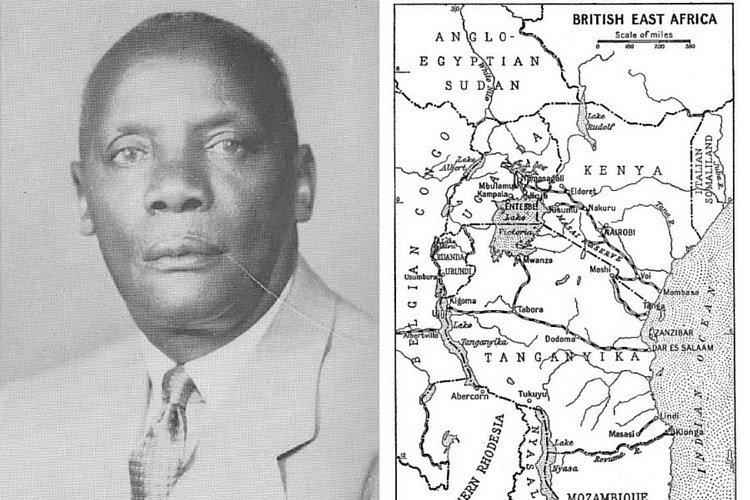
Harry Thuku was born in 1895 in Kiambu District, one of the areas of Kenya's Central Province where the impact of British colonialism on Kikuyu land and labour was most concentrated and most visible. Kiambu sits between Nairobi and the highland agricultural country to the north, and in the first decades of the twentieth century it was a landscape undergoing the transformation that colonial land alienation imposed everywhere in the Kikuyu highlands: African families who had farmed particular tracts of land for generations found that land being surveyed, titled, and allocated to European settlers under the Crown Lands Ordinance, while they themselves were converted into squatters on what had been their own farms or into migrant labourers in the rapidly expanding city of Nairobi.
Thuku's family background was modest, and his education came through the mission schools that had established themselves in Kiambu in the early years of the colonial period. Mission education gave him literacy and gave him English, the language of colonial power, and it placed him within the small stratum of Africans who were qualified for the clerical and technical positions in the colonial economy that were above the mass of unskilled labour but well below the professional and administrative positions reserved for Europeans. He worked first as a typesetter for a colonial newspaper, then found employment as a telephone exchange operator for the colonial government in Nairobi — a position that gave him access to the communication infrastructure of the colonial state and, more importantly, to the information that flowed through it.
The Nairobi that Thuku inhabited as a young working man in the years immediately after the First World War was a city of sharp racial hierarchies, pervasive economic exploitation, and growing African political consciousness. The war had taken African labour and African lives — the Carrier Corps, in which hundreds of thousands of East Africans had been conscripted to carry supplies for British military operations in German East Africa, had suffered enormous casualties from disease and exhaustion — and the men who survived had returned with an experience of the wider world and a reduced tolerance for the colonial arrangements they had left behind. The immediate post-war years brought not improvement but deterioration: wages were cut, the hut and poll taxes were increased, and the kipande pass system was tightened, making it harder for African workers to move between employers or to leave employment without their employer's permission.
The East African Association: Building Kenya's First Mass Movement
The East African Association that Thuku founded in 1921 was something genuinely new in Kenya's political landscape. Previous African political organisations had been ethnically specific — the Kikuyu Association, founded in 1920, represented the interests of the more established Kikuyu landowners and operated within a framework of respectful engagement with the colonial administration — or confined to the educated elite. The EAA was different in both its organisational ambition and its political tone. Thuku made a deliberate effort to build an organisation that crossed ethnic lines, reaching out to Luo, Kamba, and other communities alongside the Kikuyu majority, and that spoke to the concerns of ordinary workers, squatters, and farmers rather than exclusively to the educated professional class.
The EAA's demands were straightforward and directly connected to the daily material conditions of African life under colonialism: the abolition or reduction of the kipande pass system that controlled African labour mobility; reductions in the hut and poll taxes that extracted money from communities that had little money to give; an end to the forced labour that colonial administrators could still require from African men for public works projects; improvements in wages for the African workers whose labour built and maintained the colonial economy; and — most fundamentally — the return or at least the recognition of African land rights that had been eroded and in many cases extinguished by the Crown Lands Ordinance and subsequent legislation.
Thuku communicated these demands not only through formal meetings and written petitions to the colonial government but through the direct and immediate channels that his telephone exchange position gave him access to and that his organisational energy deployed: travel through the Kikuyu countryside to speak at meetings, correspondence with African political organisations in South Africa and elsewhere, contact with sympathetic missionaries, and communication with the Indian political organisations in Kenya that were themselves pressing for greater rights and that saw some common cause with the African movement. He also wrote directly to the Colonial Office in London — bypassing the local colonial administration in a way that enraged the local officials — and made contact with figures in Britain who were interested in colonial affairs.
The response of the colonial government to the EAA's rapid growth was alarm followed by suppression. Within months of the organisation's founding, the colonial administration was monitoring Thuku's activities, intercepting his correspondence, and pressuring chiefs and headmen to discourage participation in the movement. When these measures failed to slow the EAA's growth — membership was expanding rapidly in both Nairobi and the Central Province — the colonial government decided on more direct action.
The Arrest, the Crowd, and the Massacre of 1922
On the night of 14 March 1922, police arrived at Harry Thuku's home in Nairobi and arrested him. He was taken to the Norfolk Prison — the building that served as the Central Police Station — and held there pending deportation. The colonial government had decided, as it would decide again thirty years later with Kenyatta, that the most effective way to suppress the movement was to remove its leader from the country entirely. Thuku was to be deported to Kismayu in what is now southern Somalia, placed under administrative restriction at a location so remote that he could neither organise nor communicate effectively with the movement he had built.
What the colonial government had not anticipated was the speed and scale of the response. Word of Thuku's arrest spread through Nairobi's African population overnight, and by the morning of 15 March a crowd had gathered outside the Norfolk Prison that grew through the day to several thousand people. Contemporary accounts describe the crowd as mixed — men and women, workers and traders, people from multiple ethnic communities — united by their support for Thuku and their determination to protest his arrest. The presence of women was particularly notable: accounts of the events describe women in the crowd calling out derisively to the men around them that if the men would not act to free Thuku, the women would act themselves. One woman, Mary Muthoni Nyanjiru, is reported to have made this challenge explicitly and publicly.
The colonial government's response to the crowd was to order it dispersed, and when dispersal did not occur, to open fire. The shooting began at some point on 16 March 1922 and the death toll has been disputed ever since: official colonial figures acknowledged approximately twenty killed, but contemporary African accounts and subsequent historical research suggest the number was considerably higher — possibly one hundred or more. The bodies were removed, the crowd was dispersed, and Thuku was put on a train and subsequently a ship to Kismayu. The colonial administration characterised what had happened as the necessary suppression of disorder. Those who witnessed it from the crowd's side understood it as a massacre — a demonstration of colonial willingness to kill Africans who assembled to protest peacefully.
The events of March 1922 entered Kenyan political memory as one of the foundational acts of colonial violence against African resistance, and the specific figure of Mary Muthoni Nyanjiru — the woman who challenged the men's hesitation and was killed in the subsequent shooting — became a symbol of female courage in the liberation struggle that resonated across the following decades. The massacre did not suppress the movement; it deepened the sense of grievance and established that the colonial government would not respond to African political organisation with the respectful engagement that the EAA had hoped for. The lesson was not lost on subsequent generations of Kenyan nationalists.
Nine Years in Kismayu: Exile, Moderation, and Return
Harry Thuku spent nine years in administrative detention in Kismayu, from 1922 to 1931, without trial and without access to the legal processes that might have challenged the legality of his detention. Kismayu was chosen for its remoteness — it was far from Kenya's political centres, communication with Kenya was difficult, and the isolation was intended to prevent Thuku from continuing to organise or to maintain his political networks. The strategy was partially successful: the direct leadership that he had provided to the EAA was obviously removed, and the organisation itself fragmented in his absence. But the political consciousness that the EAA had helped create and the grievances it had articulated did not disappear; they were absorbed into the Kikuyu Central Association and other organisations that continued to operate during Thuku's absence.
The experience of nine years in exile had a complex effect on Thuku's politics. He had time to reflect, to read, and to reconsider the confrontational approach that had led to his deportation. When he returned to Kenya in 1931, he was a changed politician — not in his commitment to African rights, which remained genuine, but in his assessment of how those rights could most effectively be advanced. He joined the Kikuyu Central Association, the ethnically-based organisation that had become the main vehicle of Kikuyu political work during his absence, and he operated within its more moderate constitutional framework. His politics became progressively more aligned with the position that incremental reform through negotiation with the colonial government was more realistic than direct confrontation — a position that would eventually place him at odds with the more radical currents that developed in the late 1940s.
This moderation has sometimes been characterised as a betrayal of his earlier radicalism, and there is some justice in that characterisation: the Harry Thuku of 1921 and the Harry Thuku of 1940 were significantly different political figures. But the moderation also reflected a realistic assessment of what had happened to the confrontational approach — the 1922 massacre and his nine years of exile were persuasive evidence that the colonial government would pay a high cost to suppress direct challenge, and that the cost of that suppression was borne primarily by ordinary Africans rather than by the colonial authorities. Whether moderation was the right response to that evidence is a question about which reasonable people can disagree, and Thuku's subsequent career suggests that he was not entirely at peace with the choice he had made.
The KAU, Independence, and the Contested Memory of the Pioneer
Thuku's co-founding of the Kenya African Study Union in 1944 — which became the Kenya African Union — brought him back to the centre of formal nationalist organisation for the first time since his return from exile. He was one of the senior figures present at the KASU's founding, alongside Eliud Mathu and James Gichuru, and his presence lent the organisation both historical authority and the credibility of a man who had suffered for the cause before most of its younger members had entered political life. When Jomo Kenyatta returned from Britain in 1946 and took over the KAU's presidency, Thuku was among the founding generation who acknowledged Kenyatta's leadership and supported his elevation to the presidency of the organisation.
But as the KAU's radical wing grew in the late 1940s and as the oath-taking movement and the preparation for armed resistance accelerated in the early 1950s, Thuku found himself increasingly at odds with the direction the movement was taking. He was not involved in the Mau Mau's military organisation and was not sympathetic to the turn to armed resistance. He spoke publicly against the oath-taking movement and was critical of the tactics of Bildad Kaggia, Fred Kubai, and the other Nairobi militants. This put him in the uncomfortable position of being simultaneously honoured as the movement's pioneer and criticised as insufficiently committed to its most urgent phase.
When the State of Emergency was declared in 1952 and the Mau Mau war began in earnest, Thuku was not detained — his moderate politics and his public criticism of the militant wing had made him, in the colonial government's assessment, a potentially useful counterexample to the nationalist mainstream rather than a threat. This was a deeply uncomfortable position for a man who had been deported for his nationalist activities thirty years earlier, and it placed a shadow over the last phase of his political reputation that has not entirely lifted.
He died in June 1970, a year after independence, having written his autobiography and having seen the country whose liberation he had been the first to seriously organise achieve the political freedom that the 1922 massacre and nine years of exile had not succeeded in making him abandon. His place in Kenyan history is secure: he was the father of Kenyan nationalism, the first mass organiser, the first person the British considered dangerous enough to remove from the country. The questions about his later moderation do not erase that founding contribution — they complicate it, as the full biographies of complex historical figures in complex political situations always complicate the simpler narratives that public memory prefers.
The 1922 Massacre and the Long Memory of Resistance
The events of March 1922 — the arrest, the crowd, the shooting — occupy a particular place in the history of Kenyan resistance to colonialism that goes beyond their immediate political significance. They established, at the very beginning of organised African political life in Kenya, that mass resistance was possible and that the colonial government would respond to it with lethal force. Both of these facts were politically important and both were remembered.
The possibility of mass resistance — demonstrated by the spontaneous gathering of thousands of Africans outside the Norfolk Prison within hours of Thuku's arrest — showed that the network of political consciousness that the EAA had built was real and that it could mobilise people quickly and across ethnic and occupational lines. This was valuable political information that the subsequent generation of Kenyan nationalists absorbed and built upon. The Mau Mau oath-taking movement of the late 1940s was in many ways the next stage of the mass organisation that Thuku had pioneered in 1921 and 1922 — more systematic, more radical in its methods and its demands, but drawing on the same fundamental insight that the political mobilisation of ordinary Africans was both possible and necessary.
The colonial willingness to kill was equally important information, though of a different kind. It told the movement that the path to liberation would cost lives — not metaphorically but literally — and that those lives would be paid by the people in the crowd rather than by the people who gave the orders. Every Kenyan nationalist of the subsequent generation grew up with knowledge of the 1922 massacre. It was part of the emotional and political inheritance of the movement, a foundational demonstration of what colonial rule was willing to do to protect itself. That knowledge deepened conviction and sharpened the movement's understanding of what it was actually confronting.
Harry Thuku did not fully inhabit the radical conclusions that this knowledge supported. His later moderation meant that he did not follow the movement to its most confrontational phase. But the foundation he laid — the first mass organisation, the first deportation, the first massacre, the first demonstration that Africans would gather in their thousands to resist colonial power — was the foundation on which everything that followed was built. Kenya's liberation did not begin with the Mau Mau. It began with Harry Thuku in 1921, with the East African Association, and with the crowd outside the Norfolk Prison on a March morning in 1922 that refused to go home until the police made them.