At a Glance
Meulaboh and the Making of an Acehnese Commander
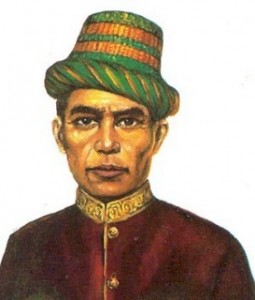
Teuku Umar was born around 1854 in Meulaboh — a coastal town on the west coast of Aceh, the sultanate at the northwestern tip of Sumatra that had maintained its independence against Dutch colonial expansion through much of the nineteenth century. His family were uleebalang — the Acehnese noble warrior class that occupied the intermediate position between the sultan and the ordinary Acehnese people, administering local districts, commanding local militias, and providing the military leadership that the Acehnese resistance would draw on when the Dutch finally invaded in force.
The Aceh Sultanate had been, for most of the nineteenth century, strategically important enough to the balance of European colonial power in Southeast Asia that the Dutch had left it formally independent — the Anglo-Dutch Treaty of 1871, which gave the Dutch a free hand in Sumatra in exchange for other concessions, removed the British constraint that had previously prevented Dutch action, and in 1873 the Dutch launched the first of what they expected to be a rapid conquest of Aceh. They were wrong. The first expedition was repulsed; the commanding general was killed; the Dutch returned in greater force but found themselves engaged in exactly the kind of prolonged guerrilla war in difficult terrain against a population with deep religious and cultural motivations for resistance that no colonial power has ever found easy to suppress.
Teuku Umar was in his early twenties when the Dutch invasion began and emerged over the following decade as one of the most capable Acehnese military commanders — a man who combined the traditional martial skills of the uleebalang class with an intelligence about the possibilities and limits of guerrilla warfare that made him consistently dangerous to the Dutch forces attempting to pacify the region. By the late 1880s he was the figure the Dutch most wanted to neutralise, which is why, when he appeared to offer submission in 1893, they were so ready to believe it.
The Marriage to Cut Nyak Dhien and the Partnership in Resistance
Teuku Umar married Cut Nyak Dhien around 1880 — she was the widow of Teuku Ibrahim Lamnga, an Acehnese noble killed by Dutch forces in 1878, who had refused Dutch offers of accommodation after her first husband's death and joined the resistance. The marriage was a union of the resistance's most formidable figures: she brought an uncompromising commitment to the fight and deep roots in the Acehnese noble networks that sustained the resistance; he brought the military command experience and the strategic intelligence that made him the resistance's most effective operational commander.
Their partnership in the jungle years of the 1880s and 1890s — living the itinerant guerrilla life in the Acehnese interior, moving between camps, maintaining contact with the dispersed resistance networks, conducting operations against Dutch military installations — is one of the more remarkable partnerships in the history of anti-colonial resistance. They were not simply husband and wife but co-participants in a shared project, and the accounts of their life together that survive through Cut Nyak Dhien's subsequent testimony and through Dutch colonial records suggest a relationship in which both the personal and the political were fully integrated.
1893: The Feigned Submission
The strategic calculation behind Teuku Umar's 1893 submission to the Dutch was simple in concept and extraordinarily difficult in execution: the resistance needed weapons and ammunition that it could not manufacture or acquire through any other means; the Dutch had weapons and ammunition in quantities that the resistance could not match; the only way to get those weapons from the Dutch was to make the Dutch give them. To make the Dutch give them, someone the Dutch trusted enough to arm had to be willing to pretend to be trustworthy — to sustain the pretence long enough to acquire sufficient weapons to make the subsequent defection worthwhile, while not arousing the suspicion that would lead to arrest or assassination before the defection could happen.
Teuku Umar walked into the Dutch colonial headquarters and surrendered. He was received with considerable satisfaction: the capture or submission of the most dangerous Acehnese commander was a significant achievement, and the Dutch were willing to believe that a man of his pragmatic intelligence had calculated that the resistance was unwinnable and that accommodation offered better prospects. He accepted the Dutch commission, the title "Johan Pahlawan" — Hero of the War, a title whose irony he must have savoured — and authority to recruit and command a force on the Dutch side. He was given weapons and ammunition for that force. He recruited men. He accumulated resources.
The Dutch intelligence system watched him, of course — they were not naive enough to arm a former guerrilla commander without surveillance. What they found, apparently, was consistent with a man who had genuinely switched sides: he did his work for them, he provided intelligence about the resistance, he appeared cooperative and loyal. Whether he actually provided genuine intelligence about the resistance or false intelligence designed to protect his former comrades while keeping the Dutch satisfied remains uncertain — the Dutch records suggest that some of what he provided was genuine, which would have been the price of maintaining the deception's credibility. Three years is a long time to sustain a pretence of this kind at this level of risk, with the consequences of discovery being death. He sustained it.
January 1896: The Defection
In January 1896, Teuku Umar deserted the Dutch service. He took with him approximately 800 soldiers, 500 rifles, 8 cannons, and 100,000 rounds of ammunition — the weapons and the men that the Dutch had given him to fight the resistance on their behalf, now converted in a single movement into the most significant addition to the resistance's military resources in years. The Dutch called it verraad — treachery. The Acehnese called it strategy. The question of what to call it is ultimately a question about whose side you are on, which is precisely the question that Teuku Umar's actions forced everyone to answer.
The Dutch response was fury and embarrassment. General Johannes van Heutsz — who would later become the most effective military commander in the Aceh War and the man who eventually broke the organised resistance — wrote of the Teuku Umar defection that it was the most damaging single event of the entire campaign from the Dutch perspective, not merely because of the weapons lost but because it demonstrated publicly and humiliatingly that the colonial government's intelligence about the Acehnese was insufficient to detect a deception of this scale being conducted by a man they had been watching for three years. The defection forced a complete revision of Dutch intelligence methods, a reassessment of every Acehnese figure who had been regarded as collaborating with the colonial administration, and an intensification of the pacification campaign that would ultimately, under Van Heutsz's direction, succeed in suppressing the organised resistance.
The Final Three Years and the Ambush at Meulaboh
The weapons Teuku Umar brought back to the resistance in 1896 gave the Acehnese forces a significant tactical boost, but the Dutch response — more aggressive operations, better intelligence networks, Van Heutsz's systematic mapping and village-by-village pacification — gradually eroded the resistance's ability to operate effectively across wide areas. By 1898 and into 1899, the Dutch intelligence capacity had improved sufficiently that Teuku Umar's movements were being tracked with a precision that had not been available earlier in the war.
On 11 February 1899, Teuku Umar's force was moving through the coastal region near Meulaboh — his home area, the coast he had grown up on. A Dutch military force was waiting. The ambush had been set based on intelligence from an informer — someone who knew Teuku Umar's intended route and passed it to the Dutch. He was shot in the engagement and killed. He was approximately forty-five years old. He had been fighting the Dutch for more than twenty years.
His death at Meulaboh is one of the most significant moments in the Aceh War's history — not because it ended the resistance, which Cut Nyak Dhien continued for six more years, but because it removed the one commander who had demonstrated a capacity for strategic thinking at a scale that genuinely threatened the Dutch pacification effort. The commanders who followed him were brave and committed but they did not have his combination of military experience, tactical deception capability, and the specific knowledge of Acehnese terrain and society that had made him so difficult to contain. The resistance continued; it never again had someone quite like him directing it.
Cut Nyak Dhien's Six Years and the Meaning of Both Lives
Cut Nyak Dhien continued the resistance after Teuku Umar's death — moving through the Acehnese jungle with a shrinking band of followers, suffering from worsening rheumatism and deteriorating eyesight, maintaining the fight for six years until her capture in 1905. Her six years of resistance after his death are the measure of the commitment that the partnership between them had been built on: she was not continuing because he had been there but because she had always believed in the cause independently of him. His death removed the man she loved and the military commander she had fought alongside; it did not remove the reason she was fighting.
Together, Teuku Umar and Cut Nyak Dhien represent the fullest expression of Acehnese resistance to Dutch colonialism — the commander whose strategic intelligence found creative ways to fight a superior military force, and the wife whose moral intelligence found the courage to keep fighting after the strategies had failed and the commander was gone. They are declared National Heroes of Indonesia, commemorated in schools and streets and institutions across the archipelago, and studied as a pair in the Indonesian national curriculum as the emblematic couple of the Aceh resistance. The Aceh War — the longest and most costly colonial conflict in Dutch East Indies history — cost an estimated one million Acehnese lives before the Dutch could declare it won. Teuku Umar and Cut Nyak Dhien are the names that stand for those lives in the national memory: the two people who found the most human ways to resist the least human of enterprises, and who paid the full price for doing so.