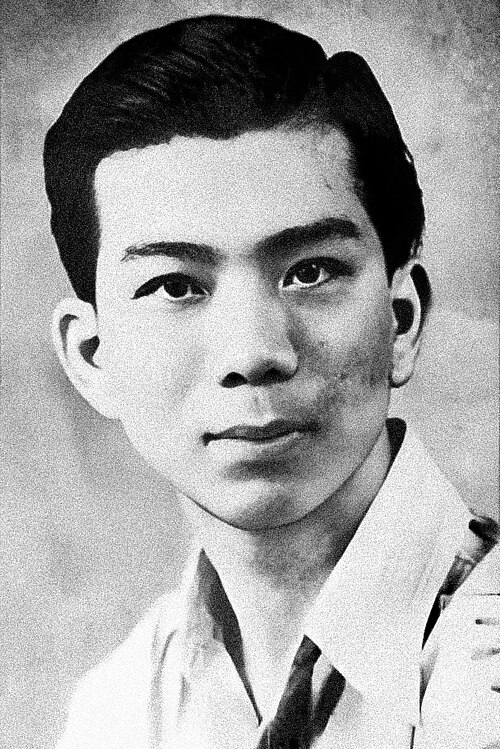
At a Glance
Sitiawan: A Chinese Malaysian in British Malaya
Chin Peng was born Ong Boon Hua on 21 October 1924 in Sitiawan, a small town in Perak on the west coast of the Malay Peninsula. Sitiawan was a settlement of Foochow Chinese migrants — his family were Hokkien — who had come to Malaya in the waves of migration that the British colonial economy had encouraged throughout the nineteenth and early twentieth centuries to provide the labour for the tin mines and rubber plantations that made the Federated Malay States one of the most profitable territories in the British Empire. His father ran a bicycle repair shop: modest, self-employed, part of the Chinese petty bourgeoisie that formed the economic backbone of Malayan Chinese community life.
He was educated at Chinese-medium schools — the Chinese community maintained its own educational institutions, in Mandarin and the various Chinese dialects, in parallel with the English-medium colonial schools — and was radicalised early by the political currents running through the Chinese community in the 1930s: the Japanese invasion of China in 1937, the wave of anti-Japanese feeling that swept overseas Chinese communities across Southeast Asia, and the Malayan Communist Party's active recruitment among politically conscious young Chinese men. He joined the MCP as a teenager — probably around 1939 or 1940 — and was an active party organiser by the time the Japanese invaded Malaya in December 1941.
The Japanese Occupation and the Allied Partnership
The Japanese invasion of Malaya in December 1941 and the fall of Singapore in February 1942 — the single greatest military defeat in British imperial history — transformed the political landscape of the peninsula overnight. The British colonial administration collapsed; the Japanese military government established itself with considerable brutality, targeting the Chinese population in particular for collective punishment, forced labour, and the systematic violence known as sook ching (purification through elimination) in which tens of thousands of Chinese Malayans were killed in the weeks following the fall of Singapore.
The Malayan Communist Party and its military arm, the Malayan People's Anti-Japanese Army, were the primary organised resistance force in the peninsula during the Japanese occupation. The British, returning to Malaya via Force 136 — the Special Operations Executive's Far East section — found the MPAJA already in the field and actively fighting the Japanese, and established a working partnership with it. Chin Peng was one of the most effective young organisers in the MPAJA's Perak state structure, rising to significant command responsibility during the occupation years. The partnership was real: the British supplied weapons, training, and communications; the MPAJA supplied the networks, the knowledge of the terrain, and the fighting force that Force 136 needed.
When Japan surrendered in August 1945, Chin Peng was one of the MPAJA commanders invited to participate in the victory parade in London — a formal recognition of the MPAJA's wartime contribution. He was awarded the Officer of the Order of the British Empire, a Burma Star, and the 1939–45 Star. He was twenty years old, a decorated allied commander, and about to discover that the British had no intention of allowing the anti-colonial political implications of the wartime partnership to carry over into the post-war settlement.
From Ally to Enemy: The Emergency Begins
The British returned to Malaya after Japan's surrender intending to resume colonial administration and to move the peninsula toward a managed, gradual process of self-governance under continued British supervision — not toward the immediate independence that the wartime rhetoric of the Allied cause had seemed to promise. The Malayan Communist Party, whose membership was overwhelmingly Chinese, found the post-war settlement doubly unacceptable: it preserved British colonialism, and the constitutional arrangements it proposed gave political pre-eminence to the Malay community through the Malay sultanates and the United Malays National Organisation, marginalising the Chinese and Indian communities that together made up nearly half the population.
The MCP attempted initially to pursue its objectives through legal political activity — trade union organisation, strikes, political agitation. The colonial government responded with increasing repression, and in June 1948, following the killing of three British estate managers by MCP members in Perak, declared a State of Emergency across Malaya. The MCP was banned; its leaders went underground; its military wing was reactivated as the Malayan National Liberation Army. Chin Peng became Secretary-General of the MCP in 1947, aged twenty-three, and now found himself the commander of an insurgency against the same British administration that had decorated him two years earlier.
The Malayan Emergency — officially designated as such rather than as a war, partly for insurance reasons affecting the rubber and tin companies whose estates were the primary targets of MNLA operations — lasted from 1948 to 1960. At its peak, the MNLA had approximately 8,000 armed fighters operating from jungle bases, conducting ambushes, assassinating colonial officials and estate managers, and attempting to build a liberated zone in the peninsula's interior. The British counter-insurgency response — the Briggs Plan, the resettlement of half a million rural Chinese into "New Villages" that separated the guerrilla forces from their civilian support networks, the systematic intelligence operations, and the "hearts and minds" programme of providing services and political reforms in exchange for loyalty — was eventually effective in military terms. By 1954 the MNLA was in retreat; by 1960 the British could declare the Emergency over.
The Baling Talks: A Negotiation That Failed
In December 1955, Chin Peng met Tunku Abdul Rahman — the leader of the Alliance coalition that was moving Malaya toward independence and who would become its first Prime Minister — at Baling in Kedah for peace negotiations. The talks were the most serious attempt to end the Emergency through negotiation rather than military suppression, and their failure is one of the significant turning points of Malayan history. Chin Peng's account and Tunku's account diverge on the details, but the fundamental obstacle was clear: the MCP demanded recognition as a legal political party and amnesty for its fighters, conditions that Tunku considered equivalent to rewarding the insurgency; Tunku demanded unconditional surrender and the formal dissolution of the MCP, conditions that Chin Peng considered a capitulation that would leave his fighters defenseless. Neither side would move far enough. The talks collapsed. The military campaign continued.
Malaya became independent on 31 August 1957 — without a negotiated settlement with the MCP, without any accommodation of the political claims that had motivated the insurgency, and with the Emergency still formally in progress. The British declared it over in 1960, after the MNLA had been reduced to a small force in the Thai-Malay border jungle. Chin Peng moved his remaining forces across the border into southern Thailand, where they continued a low-level guerrilla presence for three more decades — a shadow insurgency that was more political symbol than military reality, maintained in the border jungle while Chin Peng himself eventually moved to Beijing and then to Thailand.
The Hat Yai Agreement and the Decades of Exile
The formal end of the MCP's armed struggle came with the Hat Yai Peace Agreement of 2 December 1989, signed by the MCP, the Malaysian government, and the Thai government. The agreement provided for the laying down of arms, the dissolution of the MCP as an armed organisation, and the resettlement of the remaining fighters — mostly in southern Thailand. Chin Peng signed the agreement and gave up the armed struggle that had defined his adult life. He was sixty-five years old. He had been fighting, or directing the fight, for nearly fifty years.
What the agreement did not provide was the right to return to Malaysia. Chin Peng's applications to return — through diplomatic channels, through the Malaysian courts, through sustained legal proceedings that eventually reached the Federal Court — were all rejected. The Malaysian government's position, maintained consistently across multiple administrations, was that his return would be a security risk and would be offensive to the families of those killed during the Emergency. The Federal Court rejected his final application in 2009, ruling that he had failed to prove his Malaysian citizenship to the court's satisfaction — a technical ground that many legal observers found inadequate given the documentary record of his birth in Sitiawan and his wartime service under British command.
16 September 2013: Malaysia Day
Chin Peng died in Bangkok on 16 September 2013 — Malaysia Day, the anniversary of the formation of the Malaysian federation in 1963. The date was either a coincidence or the kind of historical irony that seems too neat to be accidental. He was eighty-eight years old. He had spent the last sixty-five years of his life either fighting for, negotiating about, or being refused entry to the country where he was born. His ashes were reportedly divided — part scattered in Thailand, part reportedly smuggled back into Perak by supporters and buried there, in a final act of defiance against the government's refusal to allow him home.
His memoir, My Side of History, published in 2003, is one of the few primary-source accounts of a major post-war insurgency written by the insurgency's commander. It is candid about the MCP's failures, about the costs of the guerrilla strategy, about the mistakes made during the Emergency, and about the personal experience of decades in the jungle and then in exile. It is not a self-justifying document — it is too intelligent for that — but it is a defence of the principle that the MCP's cause was legitimate, whatever the methods through which it pursued it.
The question of how to assess Chin Peng's legacy is genuinely difficult and genuinely contested. He led an armed insurgency that killed thousands of people — soldiers, police officers, estate managers, civilians caught in the violence of a guerrilla war. He did so in pursuit of a communist political programme that, had it succeeded, might have produced a state no more free than the colonial administration it replaced. He was also a man who was decorated by the British for fighting Japanese colonialism and then fought British colonialism with the same commitment, and who was denied by his own country the right to die where he was born. Both of these things are true. The tension between them is not resolved by choosing one and ignoring the other.