At a Glance
Bukittinggi and the Minangkabau Formation
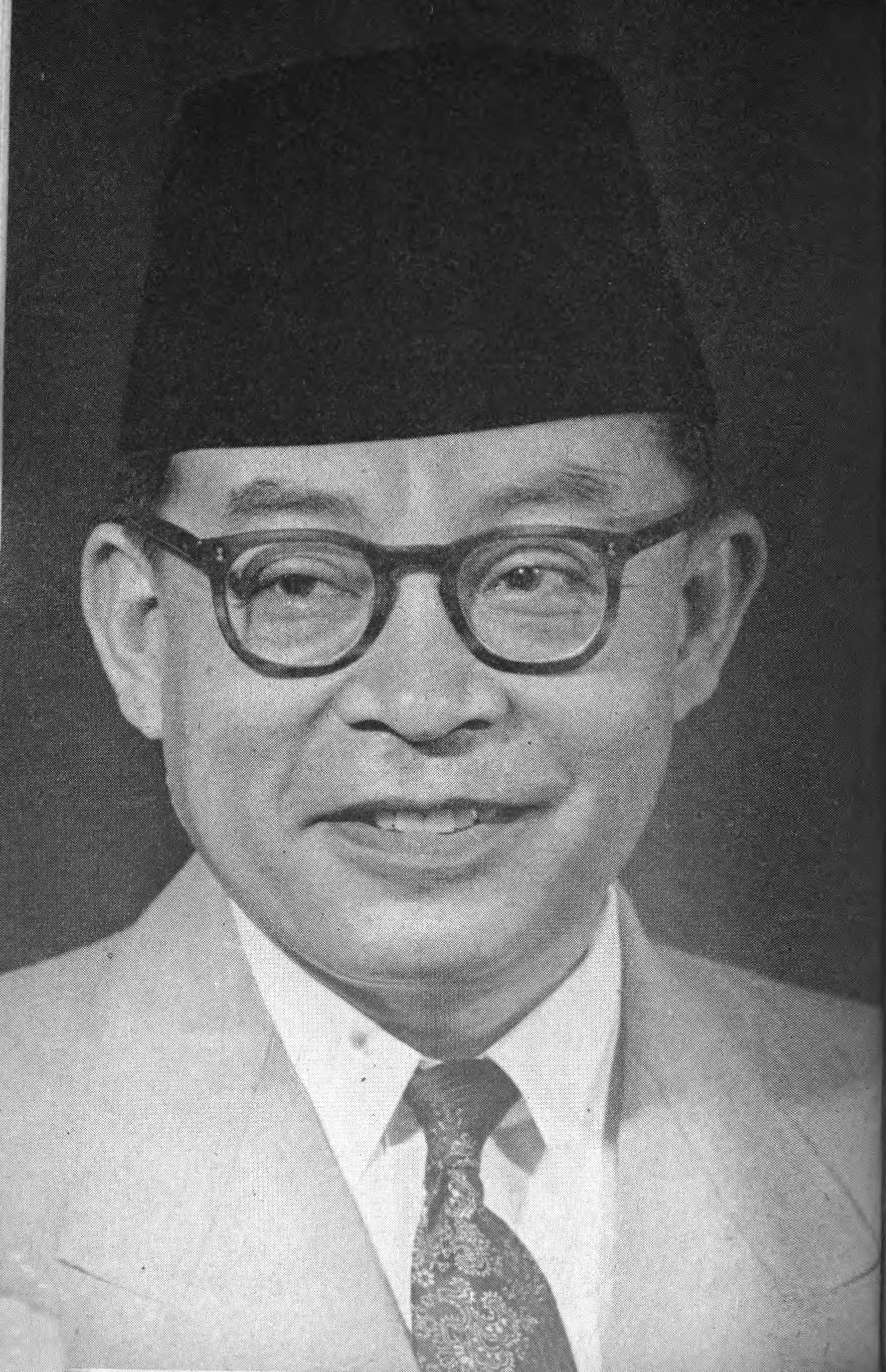
Mohammad Hatta was born on 12 August 1902 in Fort de Kock — now Bukittinggi — in West Sumatra, the heartland of the Minangkabau people. The Minangkabau are one of the most distinctive cultures in the Indonesian archipelago: a matrilineal society with a tradition of Islamic scholarship, commercial enterprise, and the practice of merantau — the deliberate departure of young men from their home region to seek education, trade, and experience elsewhere before returning to contribute to their communities. The combination of Islamic learning, matrilineal social structure (property passes through the female line, giving women unusual economic status), and the merantau tradition of outward-looking mobility produced an intellectual and commercial culture that was disproportionately represented in the Indonesian independence movement and in Indonesian professional life generally.
Hatta's father was a religious scholar — a haji who had made the pilgrimage to Mecca — and his early education was shaped by Islamic learning alongside the Dutch-medium schooling that his father's connections in Padang's commercial and administrative circles made available to him. He was a student of exceptional ability and seriousness, and he went to the Netherlands in 1921 — at nineteen — to study at the Rotterdam School of Economics, where he spent eleven years obtaining first his degree and then his doctorate in economics. The time in the Netherlands was as formative politically as it was academically: he became deeply engaged with the Dutch socialist movement, with international anti-colonial politics, and with the Indonesian student community in the Netherlands, which he led as chairman of Perhimpunan Indonesia — the Indonesian Association — from 1926.
Arrested in the Netherlands: The Den Haag Trial
In September 1927, the Dutch colonial government ordered the arrest of Hatta and three other Perhimpunan Indonesia leaders in the Netherlands — the arrest was executed on Dutch soil, a measure of how seriously the colonial government took the nationalist activities of Indonesian students in the metropolis. The charge was incitement to rebellion. Hatta was tried at Den Haag in March 1928 in a proceeding that he turned, with considerable skill and intelligence, into a platform for the Indonesian nationalist cause.
His defence speech at the Den Haag trial — delivered in Dutch, before a Dutch court, to a Dutch audience — is one of the significant documents of Indonesian nationalist thought. It argued, systematically and with legal precision, that Indonesian nationalism was not sedition but the natural and legitimate expression of a people's right to self-determination; that the Dutch colonial administration had no moral or legal authority to criminalise the advocacy of independence; and that the association of Indonesian students in the Netherlands was exercising the same freedoms of political association that Dutch citizens enjoyed. He was acquitted. The acquittal was a legal victory that amplified rather than ended his nationalist activities, and the Dutch colonial authorities were not done with him.
Exile and the Years Away from Home
Hatta returned to Indonesia in 1932, threw himself into nationalist politics, and was arrested again by the Dutch colonial government in February 1934. This time there was no trial in the Netherlands with Dutch liberal opinion watching — he was exiled administratively, without formal charge or conviction, to Boven Digoel in the swampy interior of Dutch New Guinea. Boven Digoel was the Dutch colonial government's political prison in the jungle — a place specifically designed to remove political prisoners from the Indonesian social and political environment by depositing them in a location as remote as possible, with endemic malaria, poor conditions, and no connection to the outside world.
He spent two years at Boven Digoel before being transferred in 1936 to the Banda Islands — the famous spice islands in the Maluku archipelago that had been the original focus of Dutch colonial interest and that remained, in the twentieth century, a place of comfortable exile for political prisoners whom the Dutch did not want to martyr but needed to keep away from the Indonesian nationalist movement. He was in the Banda Islands when the Japanese invaded the Dutch East Indies in 1941–42, and the Japanese released him and other political exiles when they took control of the archipelago.
The Proclamation: 17 August 1945
The night of 16–17 August 1945 was one of the most consequential nights in Indonesian history. Japan had surrendered to the Allies on 15 August; the colonial power that had administered the Dutch East Indies for the preceding three and a half years was finished. The Dutch intended to return and resume colonial rule. Indonesian nationalists understood that the window between Japan's defeat and the Allied forces' arrival was the moment when independence had to be proclaimed — before the Dutch could re-establish administrative control and before the Allies could treat the question of Indonesian sovereignty as settled in the Dutch favour.
Hatta and Sukarno — who had worked together within the Japanese-sponsored nationalist organisations during the occupation, navigating the complex position of nationalists who needed the Japanese to leave but also needed to avoid being entirely identified with a losing power — drafted the proclamation together in the early hours of 17 August, in the house of a Japanese naval officer who was sympathetic to the nationalist cause. The text they produced was deliberately minimal: two sentences announcing that Indonesia had proclaimed its independence and that matters concerning the transfer of power would be arranged in an orderly manner. Two sentences that changed the political status of 70 million people and initiated four years of revolutionary war to make the change stick.
They read it at 10 AM on 17 August 1945, at Sukarno's house on Pegangsaan Timur street in Jakarta, before a small crowd of nationalist leaders and ordinary Jakartans who had gathered at short notice. Sukarno read it; Hatta stood beside him. The Indonesian flag was raised. The proclamation was broadcast by radio. Indonesia existed.
Vice-President, Prime Minister, and the Independence War
Hatta served as Indonesia's first Vice-President from the proclamation of independence in August 1945 and as Prime Minister from January 1948 to August 1950 — the period of the most intense Dutch military pressure on the young republic. In December 1948, the Dutch launched their second "police action" — a military offensive that overran large parts of Java and Sumatra and captured Sukarno, Hatta, and the republican cabinet. Both leaders were exiled by the Dutch — Sukarno to Prapat on Lake Toba in Sumatra, Hatta to Bangka island — in an attempt to decapitate the republican government.
The exiles became, paradoxically, a political asset: international pressure on the Netherlands from the United States, from newly independent Asian nations, and from the United Nations Security Council mounted through 1949, and the image of the Dutch imprisoning the democratically elected leaders of a widely recognised republic was damaging to Dutch standing internationally. The Dutch agreed to negotiate; the sovereignty transfer was completed on 27 December 1949; Sukarno and Hatta returned to Jakarta as the recognised leaders of the independent Republic of Indonesia.
The Resignation: Democratic Conscience Against Guided Democracy
The partnership between Sukarno and Hatta — "Dwitunggal," the inseparable pair — began to fracture in the early 1950s as the constitutional parliamentary democracy that Indonesia had adopted under the 1950 constitution produced the fragmented, unstable party politics that Sukarno found increasingly frustrating and that Hatta defended as the necessary price of genuinely democratic governance. Sukarno wanted a more directed, more unified national politics; Hatta believed that the pluralism of parliamentary democracy, however messy, was the only legitimate form of governance for a nation as diverse as Indonesia.
When Sukarno announced his concept of Guided Democracy in 1957 — a system that would concentrate executive authority in the presidency, sideline the political parties, and impose a national consensus that Sukarno would define — Hatta had already been out of the vice-presidency for a year. He resigned on 1 December 1956, the only person ever to resign the Indonesian vice-presidency, in a deliberate act of principled protest that he explained publicly and without ambiguity: he did not believe that what Sukarno was moving toward was compatible with the republic's constitutional foundations, and he was not willing to provide it the legitimacy of his continued presence in the government.
The resignation cost him power. He never held office again. He continued to write, to advise, to participate in public debates — his opinions on economics, on governance, on the direction of Indonesian development remained widely respected even by those who did not follow them — but the centre of Indonesian political life moved away from the constitutional democratic principles he had championed and toward the authoritarian structures that Sukarno's Guided Democracy and then Suharto's New Order would build. He watched it, commented on it, and maintained, quietly and without bitterness, the positions he had always held.
The Democratic Legacy of the Economist
Mohammad Hatta died on 14 March 1980 in Jakarta, aged seventy-seven. He was buried at Tanah Kusir Cemetery. His face appears on the 1,000-rupiah banknote alongside Sukarno, the two men inseparable in commemoration as they were inseparable in the founding act of the republic. The Soekarno-Hatta International Airport in Jakarta is named after both of them.
His economic legacy is embedded in Article 33 of the 1945 Indonesian Constitution, which he drafted: the provision that Indonesia's economy should be based on cooperatives — economic units that distribute ownership and benefit among their members rather than concentrating them in private capital or in the state. The cooperative principle reflects both his Minangkabau communitarian background and his economic training in the Dutch democratic socialist tradition, and it has been a reference point in Indonesian economic debates ever since, honoured in principle if not always in practice.
His democratic legacy is the more contested and more important one. The Indonesian reformasi movement of the late 1990s — the democratic transition that ended Suharto's authoritarian New Order and established the constitutional democracy that Indonesia has maintained since — recovered Hatta's arguments and his example as the founding intellectual resource for Indonesian democratic politics. He had argued that democracy was not a Western imposition on Indonesia but an expression of Indonesian values — of musyawarah (deliberation) and mufakat (consensus) — and that the concentration of power in the hands of a single leader, however charismatic, was incompatible with the kind of Indonesia he had proclaimed in 1945. Reformasi proved him right. The Indonesia that exists today is closer to what Hatta wanted than to what either Sukarno or Suharto built. Bung Hatta was patient about being right. He had practice.