At a Glance
Suliki and the Minangkabau Radical
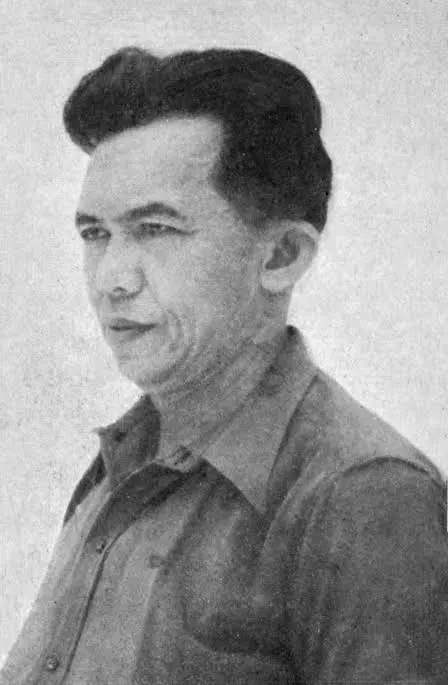
Tan Malaka was born Ibrahim Datuk Sutan Malaka on 2 June 1897 in Nagari Pandam Gadang, near Suliki, in the West Sumatran highlands of the Minangkabau people. Like Hatta and Sjahrir, he came from the Minangkabau intellectual and commercial tradition that produced a disproportionate share of Indonesia's independence movement leadership — the matrilineal, Islamic modernist, merantau culture of West Sumatra that sent its young men out into the world and expected them to return transformed. He was sent to the Netherlands in 1913 at sixteen, attended a Dutch teacher-training college in Haarlem, and returned to Indonesia in 1919 with a commitment to communism that the experience of living in the Netherlands — watching the Dutch socialist movement, reading Marx and Lenin, encountering the anti-colonial politics of the European left — had given him.
He taught school briefly in the plantation belt of Deli in North Sumatra — the region of vast Dutch tobacco and rubber estates worked by indentured Javanese and Batak labourers under conditions of severe exploitation — and the experience of the plantation system confirmed and deepened his radicalism. He became involved in the Partai Komunis Indonesia, the PKI, which was building from the early 1920s onward into the first mass communist party in Asia outside the Soviet Union, and was elected its chairman in 1921. He organised strikes, agitated among plantation workers, and made himself sufficiently dangerous to the Dutch colonial administration that he was arrested and expelled from the Dutch East Indies in 1922.
Twenty Years as a Fugitive: The Comintern Years
The twenty years between his expulsion in 1922 and his return to Indonesia after independence in 1945 constitute one of the most extraordinary personal odysseys in the history of the Asian communist movement. He travelled to Moscow, met Lenin, and was appointed the Comintern's representative for Southeast Asia — a role that took him to the Philippines, China, Thailand, Singapore, Burma, and back again, always under assumed names, always moving before the colonial police and the Comintern's own factional politics could close in on him.
In Manila he lived as Elias Fuentes and organised Philippine communist networks. In China he operated as Ong Song Lee and Huang Zhi-cheng. In Thailand as Mr. Tan. In Singapore and Burma as Ramli. Each identity was a practical necessity — the Dutch had placed him on their most-wanted list, the British and American colonial police in Southeast Asia cooperated in the surveillance of communist agitators, and the Comintern itself was an increasingly dangerous institution to be associated with as Stalin's purges reached into its Southeast Asian networks. He broke with the Comintern in the late 1920s over its policy toward nationalist movements in Asia — he argued that communists in colonial countries should support bourgeois nationalist movements against colonialism rather than treating them as class enemies, a position that put him at odds with the Comintern's more rigid class-struggle orthodoxy and that anticipated by decades the policy shifts the international communist movement would eventually make.
He wrote throughout these years of fugitive existence — political pamphlets, strategic analyses of the Asian revolutionary situation, correspondence with Indonesian communist networks at home that he maintained despite the distances and the dangers. The most important work he produced in this period was Madilog — Materialisme, Dialektika dan Logika — written in Bangkok and Manila and Singapore between approximately 1942 and 1943, a philosophical work that argued for dialectical materialism as the intellectual foundation for Indonesian political thought, and that challenged what he saw as the mystical and idealist elements of Javanese political culture that he believed were obstacles to genuine liberation. Madilog was smuggled into Indonesia in contraband copies and read by a generation of Indonesian radicals who found in it an intellectually serious engagement with the question of what Indonesian independence should actually mean in philosophical terms.
Return to Indonesia: 100% Independence
Tan Malaka returned to Indonesia in October 1945, two months after the independence proclamation. He was forty-eight years old and had been away from Indonesia, by his own account, for more than twenty years — a fugitive returning to a country that had just become something it had never been before. His first political act was characteristic: he immediately attacked the diplomatic approach that Sjahrir was pursuing with the Dutch, arguing that the republic should demand 100% independence — no concessions, no transitional arrangements, no Netherlands-Indonesian Union — and that any negotiated settlement short of complete sovereignty was a betrayal of the independence that had been proclaimed.
The position was politically purist and strategically questionable. The Indonesian republic in late 1945 was a state that controlled most of Java and Sumatra but had no international recognition, no functioning tax base, no reliable armed forces, and was facing a Dutch colonial government backed by the returning Allied forces that had just defeated Japan. Sjahrir's diplomatic approach — seeking international recognition through negotiated compromise — was the pragmatist's response to this situation. Tan Malaka's 100% independence position was the idealist's, and the Indonesian nationalist mass public in 1945–46, energised by independence and not yet worn down by war, found it more inspiring than Sjahrir's careful compromises.
He built the Persatuan Perjuangan — Struggle Union — a broad coalition of nationalist, Islamic, and leftist organisations united by opposition to the Linggadjati negotiations, and briefly became the most politically prominent figure in Indonesian politics outside the Sukarno-Hatta-Sjahrir leadership. The coalition had sufficient mass support to create a genuine political crisis for the Sjahrir government. It did not have the institutional backing — the army, the bureaucracy, the diplomatic relationships — to replace that government, and when Sjahrir and Sukarno moved against it in March 1946, Tan Malaka was arrested.
Arrest, Escape, Recapture, and Execution
He was imprisoned from March 1946 to September 1948 — two and a half years in the jails of the republic he had dedicated his life to creating, held without trial, without formal charge, on the authority of a government that found his political activities threatening but could not prosecute him for them without creating a political martyr. He was released in September 1948 and immediately resumed political activity, founding the Partai Murba — the Proletarian Party — as a vehicle for his non-Stalinist communist nationalism.
The Madiun Affair of September 1948 — a left-wing uprising against the Sukarno-Hatta government that was associated with the PKI and that the army crushed with considerable violence — created a political atmosphere in which leftists of any tendency were dangerously exposed. Tan Malaka was not directly involved in the Madiun uprising, but the post-Madiun atmosphere in the Indonesian army — deeply anti-communist, suspicious of any leftist politics — made his continued presence in East Java increasingly precarious. In early 1949, soldiers of the Siliwangi Division captured him in the Kediri area of East Java.
He was executed in February 1949. The exact date and the exact location were concealed; the Indonesian government acknowledged his death only gradually, and the circumstances remained disputed for decades. His grave was not identified until 2009, when DNA testing confirmed the location of a grave in Selopanggung near Kediri as his. He was approximately fifty-one years old. He had been executed without trial by the army of the independent Indonesia he had spent his life working toward.
National Hero, Unresolved History
President Sukarno declared Tan Malaka a National Hero of Indonesia in 1963 — fourteen years after his execution by the Indonesian army, six years before the New Order that Suharto's coup established would make the commemoration of communist figures in Indonesia politically impossible. The declaration was an acknowledgement of the extraordinary scope of his contribution to Indonesian nationalism and of the injustice of his execution. It was not accompanied by any formal accounting for how he died.
After 1965, when Suharto's New Order systematically suppressed Indonesian communist and leftist history, Tan Malaka's national hero status was awkward for an anti-communist regime. His commemoration was muted; Madilog and his other writings were effectively banned; the complex truth of his life — the Comintern agent and the Indonesian nationalist, the pan-Asian revolutionary and the democratic critic of Soviet orthodoxy — was suppressed in favour of the simpler narrative of anti-communist Indonesian history that the New Order required.
The reformasi era and the decades since have partially recovered his story. Madilog is back in print. His autobiography Dari Penjara ke Penjara (From Prison to Prison) — a primary source of remarkable richness for the history of the underground communist and nationalist movement across Southeast Asia — is read by Indonesian historians and political activists. The question of what his execution meant — what the Indonesian republic revealed about itself when it killed, without trial, the man who had spent twenty years as a fugitive building the movement that made the republic possible — remains open and important. The Indonesian revolution produced extraordinary people and killed some of them. Tan Malaka is the most dramatic case of a republic executing a founder, and the most unresolved.