At a Glance
Calamba and a Childhood of Exceptional Formation
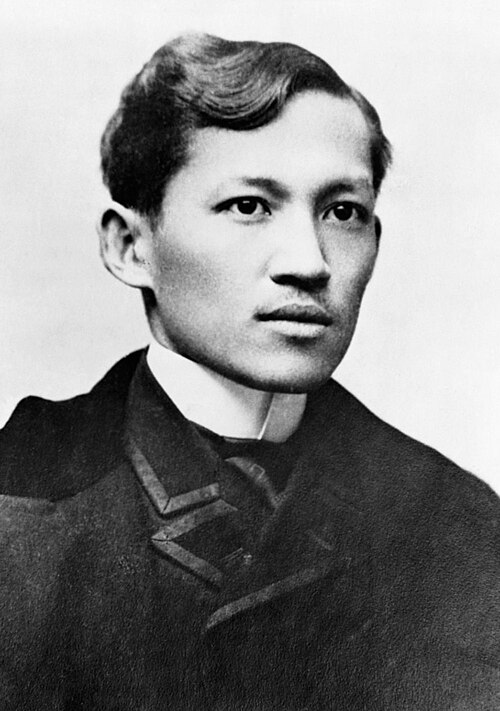
José Rizal was born on 19 June 1861 in Calamba, a lakeside town in Laguna province south of Manila, the seventh of eleven children of a Chinese mestizo family of moderate prosperity. His father, Francisco Rizal Mercado, was a tenant farmer on land owned by the Dominican friars — a relationship that placed the family in the structural dependence on the friar orders that Rizal would later anatomise in his novels with such devastating precision. His mother, Teodora Alonzo, was by all accounts a woman of exceptional intelligence and education — she taught him to read, introduced him to classical Spanish literature, and shaped the intellectual formation that the schools would later refine.
He entered the Ateneo de Manila at nine years old and was, from the beginning, a student of preternatural ability. He graduated with the highest honours in every subject, won prizes for poetry and for science, and pursued his interests with an intensity that produced a profile of accomplishment that was genuinely extraordinary even by the standards of gifted students: fencing champion, sculptor, watercolour painter, multi-linguist, naturalist, poet, and — eventually — ophthalmologist trained in Europe. He was not performing achievement for an audience; he was driven by a curiosity and a discipline that made mastery seem natural to him and that gave him, in his adult life, the intellectual resources to engage with the Spanish colonial system at every level — philosophical, legal, literary, and scientific.
Europe and the Novels That Changed Everything
Rizal went to Europe in 1882, ostensibly to study medicine but in practice to encounter the broader world of European liberal and nationalist thought that was transforming political consciousness across the colonised world in the late nineteenth century. He studied at the University of Madrid, took a second doctorate in medicine at the University of Heidelberg — specialising in ophthalmology — and lived in Spain, France, Germany, and England across a decade of European residence that gave him both the technical education and the political formation that his novels required.
In Berlin in 1887, he published Noli Me Tángere — "Touch Me Not," from the Vulgate Gospel of John. The novel is a realistic depiction of Philippine colonial society — its corruption, its cruelty, its systematic humiliation of Filipinos, the overwhelming power of the friar orders over every aspect of daily life — rendered through characters whose lives the reader is made to care about deeply. The protagonist, Crisostomo Ibarra, returns from Europe to the Philippines with reformist ideals and encounters the full weight of the colonial system's resistance to any change that threatens the power of the friars and the Spanish administration. The novel is not a revolutionary text in the sense of calling for armed uprising — it is a text about what colonial rule does to the people it governs, how it degrades them, how it corrupts the church that should defend them, and how the people it degrades are nevertheless worth more than the system acknowledges. It was banned in the Philippines immediately. Contraband copies circulated everywhere.
El Filibusterismo — "The Subversive," published in Ghent in 1891 — is darker. Ibarra has returned as Simoun, a jeweller and agent of disorder who has abandoned reform for revenge, and who plans a violent revolution against the colonial system. The novel does not endorse Simoun's violence — Rizal's authorial position remains reformist — but it understands it, and the understanding is more disturbing than endorsement would have been. The Spanish who read it, or had it read to them, found it more threatening than the first novel. They were right to. It described, in fictional terms, the exact trajectory of radicalisation that the Spanish colonial system was producing in Filipino intellectuals: the reformist who becomes a revolutionary because reform has been made impossible.
La Liga Filipina and the Exile to Dapitan
Rizal returned to the Philippines in 1892 and founded La Liga Filipina — a civic organisation aimed at building Filipino unity and pursuing legal, constitutional reform. The organisation was explicitly reformist: it sought representation in the Spanish Cortes, civic rights for Filipinos, the reform of the church's role in Philippine governance. It was not a revolutionary organisation. It did not advocate armed resistance. Andrés Bonifacio attended its founding meeting and concluded, on the night that Rizal was arrested, that it was not enough — and founded the Katipunan instead.
The Spanish colonial authorities arrested Rizal within days of La Liga Filipina's founding, exiled him to Dapitan in Mindanao — the remote southern island that was about as far from Manila as it was possible to get within the Spanish Philippines — and kept him there for four years. In Dapitan, he practiced medicine, established a school, conducted scientific research (the lizard subspecies named after him was identified during this period), corresponded with scientists in Europe, and wrote. He was in effective house arrest, supervised by the Jesuits, prohibited from political activity, and watched by the Spanish authorities with the careful attention that a man capable of writing Noli Me Tángere deserved and received.
The Revolution Begins Without Him
In August 1896, the Katipunan's existence was betrayed to the Spanish. The revolution began. Rizal was in Dapitan, having already received and accepted permission to travel to Cuba as a military physician for the Spanish — a request that, in retrospect, looks like either a genuine attempt to serve or an attempt to get as far from the Philippines as possible before the violence that he had been predicting but not advocating began. He was intercepted at sea before he could reach Cuba, returned to Manila, and imprisoned in Fort Santiago. The Spanish needed someone to blame for the revolution, and the man who had written the novels that had radicalised a generation of Filipinos was the obvious candidate.
He was tried by a military tribunal on charges of rebellion, sedition, and founding illegal associations. The evidence against him was thin — he had explicitly distanced himself from the Katipunan and had advocated only legal reform — but the tribunal was not conducting a rigorous legal proceeding. It was performing the colonial state's need to execute the man most responsible for Filipino political consciousness, regardless of whether he had technically committed the acts charged. He was convicted. He was sentenced to death.
30 December 1896: The Luneta
The execution was public — held on the Luneta, the large open space along Manila Bay where the Spanish colonial administration staged its most important public events. A large crowd was present; the Spanish intended the execution as a demonstration of authority and a warning against further resistance. Rizal was given the opportunity to recant his writings and convert formally to Catholicism before his execution — he underwent a last-minute ceremony that the Church recorded as a formal reconciliation, though the precise terms of what he accepted have been disputed by historians for more than a century. He wrote a final poem — "Mi Último Adiós" (My Last Farewell) — and hid it in an alcohol lamp that he gave to his sister after a final meeting with his family.
He was shot by a Filipino firing squad at Spanish command — the colonial government's deliberate use of Filipino soldiers to execute their most celebrated compatriot was itself a statement about the structures of colonial power. He had asked to be shot facing the firing squad rather than away from it. The Spanish refused, ordering him to face away. He managed, in falling, to turn his body so that he faced upward — toward the sky — rather than face-down in the dirt. The gesture, witnessed by the crowd and reported in every subsequent account, became part of the execution's symbolism: the man who could be killed but not made to bow.
The Martyr Who Made the Revolution
The execution of Rizal on 30 December 1896 accelerated the Philippine Revolution that was already underway and transformed its character. Before his death, the revolution was a popular uprising led by the Katipunan — powerful, widespread, but without the moral and intellectual legitimacy that the death of the Philippines' most celebrated thinker and writer conferred on it. After his death, it was a national war of independence with a martyr whose stature was beyond question. The Spanish had created, in killing him, exactly the thing they had tried to prevent: a symbol that unified Filipino feeling across class, education, and regional lines, a face for the independence cause that the world outside the Philippines could recognise and respond to.
The American colonial authorities who replaced the Spanish in 1901 declared Rizal the National Hero of the Philippines — a choice that some historians have noted with suspicion, arguing that the Americans preferred the reformist Rizal to the revolutionary Bonifacio because a dead reformist is safer than a dead revolutionary. There is something to this argument. But it does not diminish what Rizal actually was and what his novels actually did: they gave the Philippine independence movement its intellectual and emotional foundation, made colonialism's costs visible in narrative terms that political argument could not match, and demonstrated to the Filipino people that one of their own could write with more power, more intelligence, and more humanity than anyone the colonial system had produced. That demonstration was, in its way, as revolutionary as anything the Katipunan did with weapons.