At a Glance
Kawit and the Making of a Revolutionary Commander
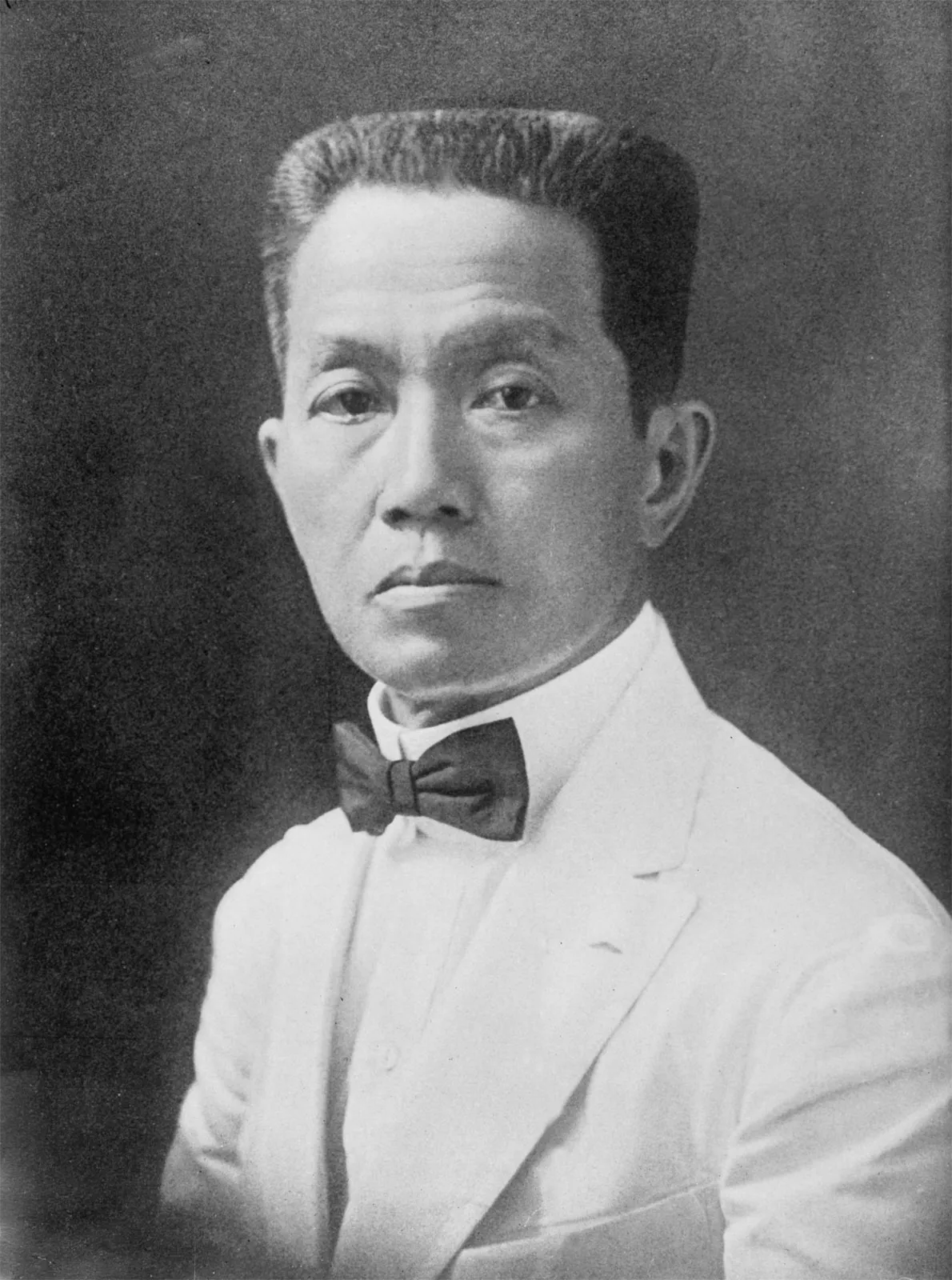
Emilio Aguinaldo was born on 22 March 1869 in Kawit, a town in Cavite province on the southern shore of Manila Bay. His family were prominent in Cavite's local politics — his father had served as the gobernadorcillo, the Spanish-appointed local governor of Kawit — and the social position of a mestizo family with local administrative standing gave Aguinaldo both the education and the social networks that would shape his political career. He attended San Juan de Letrán College in Manila but did not complete his studies, returning to Kawit where he became, at the unusually young age of twenty-three, the gobernadorcillo of his hometown — the same office his father had held, obtained through the combination of family standing and personal capability.
His contact with the Katipunan — Andrés Bonifacio's revolutionary secret society — came in 1895, when he was twenty-six years old and had been Kawit's local governor for three years. The Cavite networks of the Katipunan were distinct in social character from those of Manila and Tondo: where Bonifacio's Katipunan drew heavily from the urban working class and the artisanal trades, the Cavite membership was more heavily weighted toward the local landowning elite, the principalia families who occupied positions like the one Aguinaldo's family held. This social distinction would matter enormously when the revolution's internal politics came to a crisis.
The 1896 Revolution: Cavite's Military Success
When the Katipunan's existence was betrayed to the Spanish in August 1896 and the revolution began, the Cavite forces under Aguinaldo's command achieved the most significant early military successes of the entire uprising. While Bonifacio's Manila forces struggled against the Spanish defences of the capital, Aguinaldo's Cavite fighters swept through the province, winning engagements at Imus, Noveleta, Kawit, and other towns, establishing Cavite as the revolution's stronghold and Aguinaldo as its most successful military commander. The contrast between Cavite's successes and Manila's reverses gave Aguinaldo's faction within the Katipunan an argument for leadership that was rooted in military achievement as much as social standing.
His military effectiveness during this period was genuine and substantial. He understood the terrain of Cavite, commanded the loyalty of his soldiers, and demonstrated tactical intelligence in the engagements he directed. The Spanish were unable to retake Cavite despite repeated attempts, and the province became the model of what a successful provincial uprising could achieve — a demonstration that the Spanish military was not invincible and that organised Filipino resistance could hold its ground.
Tejeros, Bonifacio, and the Price of Power
The Tejeros Convention of March 1897 — convened to unify the revolutionary movement under a single government — produced the crisis that defined Aguinaldo's historical reputation. The election held at Tejeros gave Aguinaldo the presidency of the new revolutionary government. Bonifacio was elected to a lesser position, and immediately had his qualifications challenged by an Aguinaldo ally who questioned whether a man without a law degree was suitable for the role. Bonifacio — furious at both the result and the challenge — declared the convention's proceedings invalid and walked out.
What followed was the decision that no biography of Aguinaldo can avoid: Bonifacio was arrested by Aguinaldo's forces in late April 1897, tried by a military tribunal at Naic on charges of sedition and treason against the revolutionary government, convicted, sentenced to death, and executed on 10 May 1897 alongside his brother Procopio. Aguinaldo initially commuted the sentences under pressure, then reinstated them. The execution of the revolution's founder, ordered by the man who had displaced him, is the act that historians and Filipinos have argued about ever since.
The arguments in Aguinaldo's defence — that Bonifacio had genuinely destabilised the revolutionary government at a critical moment, that a unified command was necessary for military effectiveness, that the charges were not entirely fabricated — have some validity. The arguments against — that the class dynamics of the Tejeros Convention represented the ilustrado elite's seizure of a movement built by the working class, that Bonifacio was killed for being inconvenient rather than for genuine treason, that the new republic's first act was the judicial murder of its founder — have more. Aguinaldo lived with this shadow for ninety-four years. It has not left Philippine historical memory.
Biak-na-Bato and the American Gamble
By December 1897, the revolutionary military situation had deteriorated significantly. The Spanish counter-offensive had pushed Aguinaldo's forces from their Cavite strongholds, and the revolutionary government was operating from the mountains of Bulacan. Governor-General Primo de Rivera offered peace terms, and Aguinaldo accepted them: the Pact of Biak-na-Bato provided for the exile of the revolutionary leadership to Hong Kong, with a Spanish payment of 400,000 Mexican pesos, in exchange for a ceasefire and an end to armed resistance. Aguinaldo and the other revolutionary leaders went to Hong Kong in late December 1897.
The Pact was controversial then and has been contested ever since — Apolinario Mabini opposed it as a capitulation; others saw it as a tactical retreat that preserved the movement's leadership for future action. What gave it retrospective significance was what happened next: in April 1898, the Spanish-American War began, and in May 1898, American Commodore George Dewey destroyed the Spanish fleet in Manila Bay. The United States needed Filipino support for its campaign against the Spanish land forces, and sent for Aguinaldo in Hong Kong. He returned on an American vessel, believing — on the basis of conversations with American officials that are still disputed as to their exact content — that the United States would support Philippine independence once Spain was defeated.
Independence Proclaimed and the Republic Betrayed
On 12 June 1898, Aguinaldo stood on the balcony of his family's house in Kawit, Cavite, and declared the Philippines independent — the first declaration of independence by an Asian nation against a European colonial power. The Philippine flag was unfurled for the first time. A march composed for the occasion — now the Philippine national anthem — was played. The declaration was made in the presence of the Filipino revolutionary leadership and of a handful of American officers, whose government would spend the next three years attempting to reverse it.
The First Philippine Republic was formally established with the Malolos Constitution on 23 January 1899, with Aguinaldo as President and Apolinario Mabini as his chief adviser and effective head of government. The republic lasted less than two years in any meaningful sense: on 4 February 1899, two days before Aguinaldo was to be inaugurated under the new constitution, fighting broke out between American and Filipino forces at the San Juan Bridge in Manila. The Philippine-American War had begun.
The Philippine-American War: Resistance and Surrender
The Philippine-American War was brutal and protracted. The United States eventually deployed 126,000 soldiers; the Filipino forces were outgunned from the start, lacking artillery, ammunition, and any external support. Aguinaldo initially attempted conventional warfare, then shifted to guerrilla tactics as the conventional resistance collapsed. He moved from province to province through 1899 and 1900, maintaining a mobile headquarters, issuing proclamations, directing what resistance he could, while the American military systematically dismantled the republican government's structures and hunted the revolutionary leadership.
He was captured on 23 March 1901 — the American General Frederick Funston led a daring operation in which American soldiers disguised as prisoners and Filipino scouts pretending to be their captors infiltrated Aguinaldo's headquarters at Palanan in Isabela province and seized him. He was taken to Manila, where he swore allegiance to the United States on 1 April 1901. He then issued a proclamation calling on his remaining forces to lay down their arms and accept American sovereignty — an act that effectively ended the organised resistance, though scattered fighting continued for years.
Sixty-Three More Years: The Long Aftermath
Aguinaldo lived for sixty-three years after his surrender — from 1901 to 1964 — watching the country he had led through its revolutionary founding pass through American colonial administration, the Commonwealth period, Japanese occupation (during which his cooperation with the Japanese authorities damaged his reputation further), and the independence that the United States finally granted on 4 July 1946. He ran for president in 1935 against Manuel Quezon and was decisively defeated, receiving less than fifteen percent of the vote — a measure of how thoroughly his moment of political leadership had passed. He retired to Kawit, maintained the shrine to Philippine independence that his family home had become, gave interviews, attended commemorations, and outlived everyone who had shared the revolution's founding years.
He died on 6 February 1964, aged ninety-four, the last general of the Philippine Revolution. His house in Kawit — where Philippine independence was proclaimed on 12 June 1898 — is now the Aguinaldo Shrine, a national historical landmark visited by millions of Filipinos. Philippine Independence Day is celebrated on 12 June, the date of his declaration, rather than on 4 July, the date of the American grant of independence — a choice made in 1962 that represents a decision about which independence declaration the Philippines considers genuine. That decision honours Aguinaldo's act at Kawit, whatever one thinks of the other acts that preceded and followed it.