At a Glance
Hakka Guangdong: A Merchant's Son with a Sword for a Name
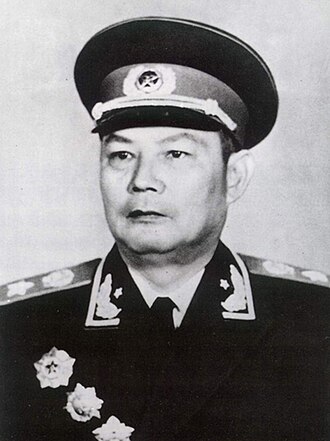
Ye Jianying was born on 28 April 1897 in the village of Yanyang in Jiaying County — now Meixian District in Meizhou — in the northeastern corner of Guangdong Province. The Hakka people of this region, descended from Han Chinese migrants who had moved south over centuries and maintained a distinct cultural and linguistic identity, were known for a fierce independence and a cosmopolitan practicality born of centuries of migration and adaptation. Ye's family were Christian Hakka merchants — wealthy, educated, and connected to the broader commercial networks that linked Guangdong to Southeast Asia. Ye spent portions of his childhood and adolescence in Singapore and Hanoi, gaining a direct experience of the world beyond China's borders and a facility with different cultural environments that would prove valuable throughout his diplomatic career.
His name itself carries significance: Ye Jianying means "Ye the Sword Hero" — a name chosen or adopted to express the martial aspiration that his subsequent career fulfilled. He attended Dongshan Middle School in Meixian — an institution with a strong tradition of progressive politics — where he served two consecutive terms as student union president and came into contact with the anti-imperial nationalist ideas that were reshaping Chinese political life. In 1917 he enrolled at the Yunnan Military Academy in Kunming, one of the finest military educational institutions in republican China, graduating in 1919 at twenty-two with the formal military training that complemented his cosmopolitan education and political awakening.
Sun Yat-sen, Whampoa, and the Day He Chose a Side
After graduating from the Yunnan Military Academy, Ye joined Sun Yat-sen's revolutionary government in Guangzhou, serving in the campaigns against the warlord Chen Jiongming that consolidated Nationalist authority in Guangdong during 1920–1922. By 1924 his reputation was such that he was invited — at the recommendation of Liao Zhongkai, one of the Kuomintang's senior figures — to participate in preparing the new Whampoa Military Academy that the Soviet Union was helping the Nationalist government establish. He was appointed Deputy Director of the Faculty Department and taught Weapons Science to the first cohort of students — a faculty position that brought him into daily contact with the political department being run by Zhou Enlai.
The friendship Ye and Zhou formed at Whampoa lasted until Zhou's death in January 1976 — over fifty years of close collaboration, mutual trust, and shared political purpose. Britannica notes that Zhou called Ye his closest comrade in a lifetime of revolution. The bond was forged in the peculiar conditions of Whampoa in 1924–1925, when Communist and Nationalist officers worked alongside each other in the shared project of building a modern Chinese military, and both men understood that the alliance was conditional and potentially temporary even as they committed themselves to it with full professional energy.
When the White Terror came — Chiang Kai-shek's 12 April 1927 massacre of Communists in Shanghai and the subsequent wave of killings that swept through Guangdong and other Nationalist-controlled areas — Ye Jianying made his choice immediately. On the very day that Ji'an, the city where he had been assigned command, descended into martial law and the suppression of trade unions, peasant associations, and student organisations, Ye defected to the Communist side. The timing was not coincidental: it reflects a man who had been watching events carefully, who had his networks of information, and who moved precisely when the moment of decision could no longer be deferred. He joined the CCP that year and participated in the ill-fated Guangzhou Commune Uprising of December 1927 before eventually making his way to Moscow for study at the Soviet military institutions from 1929 to 1930.
The Long March Maps: A Theft That Saved the Revolution
Ye's most celebrated individual act of the Long March period was an act of intelligence rather than battlefield command. When Mao Zedong's First Front Army and Zhang Guotao's Fourth Front Army met at Maogong in June 1935, Ye was serving as Chief of Staff under Zhang — a position that gave him access to the Fourth Front Army's operational planning documents, maps, and order-of-battle intelligence. When Zhang Guotao's factional conflict with Mao escalated to the point where Zhang was apparently considering using his forces against Mao's weakened column, Ye took the Fourth Front Army's military maps and secretly delivered them to Mao's headquarters. The maps gave Mao's forces the intelligence they needed to understand Zhang's positions, capabilities, and likely movements — a decisive informational advantage at a moment of maximum vulnerability.
Xu Xiangqian, who commanded Zhang's forces, had refused the direct order to attack Mao. Ye, from his position as chief of staff, removed the maps. Together, these two acts — one of command refusal, one of covert intelligence transfer — prevented what could have been a catastrophic armed clash between the two largest Red Army formations at the lowest point of the Long March's fortunes. Mao never forgot what Ye had done. The trust it established — a loyalty demonstrated at maximum personal risk — underwrote Ye's position in the party's inner circle for the next four decades.
Wartime Diplomat: Xi'an, Nanjing, Chongqing
During the Anti-Japanese War, Ye served as Chief of Staff of the Eighth Route Army and simultaneously as the principal Communist liaison officer to the Nationalist government — first in Xi'an following the famous Xi'an Incident of December 1936 (when Chiang Kai-shek was kidnapped by his own generals and the Second United Front was negotiated), then in Nanjing as the Nationalist capital, and finally in Chongqing when the wartime government moved there after the fall of Nanjing. He worked alongside Zhou Enlai in these liaison roles, representing the Communist Party to the Nationalist government and to the foreign diplomatic community — American, British, Soviet — that was gathering in Chongqing as the war's international dimensions multiplied.
Ye was an exceptionally effective diplomat — his cosmopolitan background, his fluency in the conventions of formal communication, and his personal warmth and humour made him persuasive in settings where rigid ideological posturing would have been counterproductive. He was also a genuine strategic planner: his Eighth Route Army Chief of Staff role made him the central figure in coordinating Communist military operations across North China, integrating the outputs of the multiple field armies and base areas into a coherent operational picture that Zhu De, as commander, could direct. He was elected to the Central Committee in 1945 — formal recognition of his position in the party's inner leadership.
Civil War and Building Guangdong
During the Civil War, Ye served as deputy chief of general staff of the Communist armed forces — the position that made him the principal military planner and coordinator working under Zhu De and alongside Mao Zedong. After the Communist victory in 1949, he was assigned the vast and complex task of establishing Communist rule in Guangdong Province and the city of Guangzhou — his home region, with its deep commercial connections to Hong Kong, Southeast Asia, and the overseas Chinese communities, and its particular sensitivity given the proximity of still-Nationalist-held Taiwan.
He served as party secretary and military-political commissar of Guangdong from 1949 to 1954, overseeing land reform, the absorption of former Nationalist military units into the PLA, and the management of the province's unusually complex external relationships. His approach — characteristically pragmatic and less brutal in its treatment of the landlord class than campaigns in other provinces — earned him a criticism from above for excessive leniency, but the relative stability of Guangdong's transition compared to more violently managed regions suggested that his calibrated approach was not without merit.
The Cultural Revolution: Surviving by Strategic Withdrawal
When the Cultural Revolution erupted in 1966, Ye Jianying participated in the February Countercurrent — the collective protest by senior marshals at the Huairen Hall meetings in February 1967, where he alongside Tan Zhenlin, Chen Yi, Xu Xiangqian, Nie Rongzhen, and Li Xiannian confronted the Central Cultural Revolution Group and denounced its methods. Ye reportedly slammed the table and accused the CCRG of systematically destroying the party, the government, and the army. Like the others, he was forced into self-criticism and partial marginalisation; in October 1969, he was exiled from Beijing to the Guangdong countryside.
He survived the Cultural Revolution more intact than most of his contemporaries for reasons that were partly structural and partly personal. His alignment with Zhou Enlai — the one figure whose indispensability to the functioning of the state protected him from complete destruction — gave Ye an institutional shelter. His military role as an administrator and planner rather than a factional chieftain meant he had fewer enemies who saw his destruction as a personal or political necessity. And his legendary capacity for patience — the diplomat's virtue of waiting for the right moment — served him well in a period when premature action was fatal and survival itself was the prerequisite for subsequent effectiveness.
In the final years of the Cultural Revolution, as Mao's health declined and the power struggle over his succession intensified, Ye aligned himself with Zhou Enlai and then with Deng Xiaoping — whose first rehabilitation in 1973 and subsequent second purging in 1976 Ye watched and navigated with the care of a man who understood that every political position he took was being observed and evaluated by multiple competing factions. He was appointed Defence Minister in 1975, giving him formal control over the military instrument that would prove decisive in the succession struggle. Zhou Enlai died in January 1976. Deng was purged again in April 1976 after the Tiananmen Incident. Mao Zedong died on 9 September 1976.
The October 6 Coup: One Night, No Shots Fired
In the three weeks between Mao's death and the arrest of the Gang of Four, the power struggle reached its crisis. The Gang — Jiang Qing, Zhang Chunqiao, Yao Wenyuan, and Wang Hongwen — controlled the party's propaganda apparatus, had their own urban militia forces in Shanghai, and believed that the succession was theirs. Against them stood the "old guard faction" represented by Ye Jianying and Li Xiannian, and the nominally Maoist "whatever faction" represented by party chairman Hua Guofeng. The coalition between Ye and Hua was a marriage of necessity: Hua had the formal party authority Mao had conferred; Ye had the military control without which any political authority was meaningless.
The planning sessions for the coup were conducted with extraordinary operational security. When Ye and Li Xiannian met to discuss the plan, they sat adjacent to each other and communicated by writing on paper rather than speaking — because the room might have been under audio surveillance by the Gang's intelligence apparatus. Wang Dongxing, commander of the CCP's elite bodyguard unit (Unit 8341, which also protected Zhongnanhai), was brought into the conspiracy — his control of the physical security apparatus within the leadership compound was essential to any arrest operation.
On the evening of 6 October 1976, the Gang of Four members were summoned individually to a Politburo Standing Committee meeting at Huairen Hall — the same conference room where the February Countercurrent confrontations had taken place nine years earlier. As each arrived, they were arrested by Wang Dongxing's troops. Mao Zedong's nephew Mao Yuanxin, who had served as Mao's liaison to the Central Committee and was a key Gang associate, was arrested simultaneously. The operation was completed in a single evening without armed resistance. By the early morning of 7 October 1976, Hua Guofeng had been confirmed as party chairman and chairman of the Central Military Commission at a secret Politburo meeting — the coup was complete, the Cultural Revolution effectively over.
The popular reaction across China to the Gang of Four's arrest was one of the most striking spontaneous demonstrations of collective relief in the country's modern history. Ordinary citizens, kept entirely ignorant of the coup's planning, celebrated in the streets of Beijing and other cities when the arrests were announced. For many Chinese, the Gang's removal — and Jiang Qing's arrest in particular — represented the end of a decade of organised terror. The man most responsible for making it happen in a single bloodless night was Ye Jianying.
Head of State, Nine Points, and the Reform Foundation
After the coup, Ye's political position was as strong as at any point in his career. He supported Hua Guofeng's transitional leadership while simultaneously advocating for Deng Xiaoping's rehabilitation — a dual positioning that reflected his understanding that Deng's administrative and economic capabilities were indispensable for the recovery programme that China needed. Deng was restored to his positions at the Third Plenary Session of the Tenth Central Committee in July 1977, with Ye's backing carrying decisive weight. When the question of China's head of state arose — the position of NPC Chairman had been vacant since Zhu De's death in 1976 — Ye was appointed Chairman of the NPC Standing Committee in March 1978, making him China's ceremonial head of state from 1978 to 1983.
On 30 September 1981, Ye published the Nine-Points Proposal for Taiwan — an elaboration of Mao's earlier thinking on unification that offered Taiwan the prospect of autonomous status within a unified China, the retention of its own military forces, and a distinctive economic and social system. The proposal was the most detailed and conciliatory official statement on Taiwan that Beijing had yet made, reflecting Ye's diplomatic instinct for creating space for negotiation rather than foreclosing it. It became the foundation of what would eventually, under Deng Xiaoping, develop into the "one country, two systems" framework.
Ye retired from his official positions in 1985, at eighty-eight, among the last of the founding generation to leave formal office. He died in Beijing on 22 October 1986, at eighty-nine — a man who had lived through the entire revolutionary century from its earliest armed struggles in Guangdong to the economic reform era that Deng Xiaoping's restored authority was making possible. His most consequential contribution had come not in battle but in a conference room in Zhongnanhai on an October night — the quiet act of a lifetime's accumulated patience and strategic intelligence, delivered at the moment when it mattered most.