At a Glance
Shaoshan and the Farmer's Son Who Read Everything
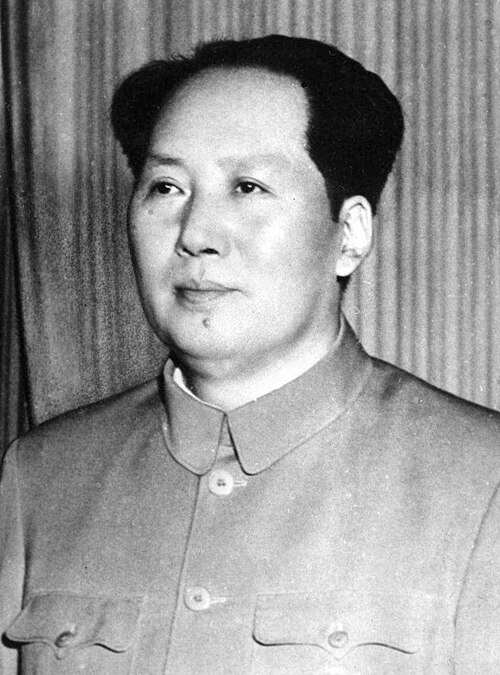
Mao Zedong was born on 26 December 1893 in the village of Shaoshan in Xiangtan County, Hunan Province, the eldest surviving son of Mao Yichang, a prosperous grain dealer who had risen from poverty to acquire several acres of rice paddy and enough surplus capital to hire labourers. The household was more comfortable than most in rural Hunan but not wealthy by any extended definition, and Mao's father was a strict, demanding man who expected his sons to work the land without complaint and regarded books beyond the practical classics as a waste of time. Mao's mother, Wen Qimei, was a gentle Buddhist who tempered her husband's harshness and whose influence on her son's capacity for emotional engagement was evident throughout his life.
Mao was a voracious reader from childhood — devouring popular historical novels about peasant rebellions, bandit heroes, and dynasties won and lost on the battlefield — and his father's attempts to prevent him reading anything beyond account ledgers produced a sustained low-level domestic conflict that the young Mao consistently won. At thirteen his father arranged a marriage for him with a local girl several years his senior, a standard rural practice that Mao refused to consummate and refused to acknowledge — his first recorded act of defiance against an arrangement he regarded as wrong regardless of its social normalcy. The girl died young, locally shamed. The episode shaped Mao's subsequent thinking about arranged marriage and the subordination of women, themes he would write about in his early journalism.
At sixteen Mao left Shaoshan for Changsha, the provincial capital, to continue his education. He enrolled at the Fourth Normal School of Changsha — then considered the best in Hunan — later merging with the First Normal School where he would spend five formative years. He graduated in June 1919 with a strong academic ranking, having published his first article in the New Youth journal, organised the New People's Study Society (bringing together seventy to eighty students, many of whom would later join the CCP), and established a reputation as a student leader of remarkable energy and seriousness of purpose.
Beijing: The Library Basement and the Birth of a Marxist
In 1918, Mao travelled to Beijing — the Chinese intellectual capital — with several New People's Study Society colleagues who were arranging to go to France on the work-study programme. Mao chose not to go to France, for reasons he never fully explained, and instead sought employment and intellectual engagement in Beijing. His mentor Professor Yang Changji, who had moved from Changsha to Peking University, helped him find work as an assistant in the university library under the head librarian Li Dazhao — one of the two men who would become the founders of the Chinese Communist Party and one of the early Chinese Marxists of major intellectual stature.
Mao's life in Beijing was materially miserable in ways that left a permanent impression on him. His salary as library assistant was so low that he could not cover food and lodging without sharing a single room with seven other Hunanese colleagues, in conditions where they reportedly shared one overcoat among them for outdoor trips in the Peking winter. In this lowly position he encountered the full hierarchy of Chinese intellectual life — and was snubbed by it. Famous professors whose lectures he attended did not acknowledge him when he tried to speak to them. Students treated him as furniture. His rural Hunanese accent marked him immediately as provincial and beneath serious notice. The experience of intellectual exclusion while intellectual proximity — working among the books and ideas of China's greatest university while being invisible to its inhabitants — shaped Mao's lifelong contempt for intellectual pretension and his political commitment to elevating those whom educated elites regarded as beneath consideration.
Under Li Dazhao's influence, Mao read Marx and Engels, absorbed the news of the Russian Revolution with electrified attention, and left Beijing in the spring of 1919 committed to Marxism. He returned to Hunan, edited the radical magazine Xiang River Review in vernacular Chinese designed to reach ordinary readers rather than scholars, organised protests against the warlord governor of Hunan, and by 1921 was one of the fifty-odd delegates who gathered in Shanghai in July to found the Chinese Communist Party. He was twenty-seven years old and already certain that the revolution he was joining would succeed.
The Peasant Insight: Discovering What Moscow Refused to See
Between 1925 and 1927, Mao developed the analytical framework that would distinguish his version of Marxism from every other variety then competing for influence in China. The orthodox Comintern position — shared by most Chinese Communists trained in Moscow — held that revolution in China, as in Russia, must be led by the industrial proletariat, the urban working class, whose historical role Marxist theory had designated as the engine of revolutionary transformation. China's peasantry, which constituted ninety percent of the population, was regarded by orthodox Marxists as a backward, conservative force incapable of sustained revolutionary organisation.
Mao went to Hunan in 1925 during a period of enforced "convalescence" — effectively marginalised by the CCP leadership for his lack of urban labour-movement credentials — and found something the orthodox theorists had not predicted: peasants in explosive motion, organising spontaneously against landlords with a political energy and violence that far exceeded anything the urban labour movement was producing. His Report on an Investigation of the Peasant Movement in Hunan (1927) announced this discovery to the party leadership with characteristic directness: the peasantry was the main force of the Chinese revolution, and attempts to moderate or contain its energy were reactionary regardless of which party was making them. The report was rejected or ignored by the CCP leadership at the time. Within a few years it had become the foundational document of Maoism.
Jinggangshan: Building a Revolution on a Mountain
After the catastrophic collapse of the First United Front in April 1927 and the failure of the Autumn Harvest Uprising he led in September, Mao retreated with a surviving remnant of about 1,000 poorly armed men to the Jinggang Mountains on the Hunan-Jiangxi border — remote, mountainous terrain difficult for Nationalist forces to penetrate and close to the communities of poor peasants and wood-cutters who had historically sustained themselves there outside the reach of lowland authority. He united five villages, established the first Chinese Soviet, and began the systematic application of his peasant-centred theory to the actual conditions of revolutionary governance.
In the spring of 1928, the remnants of Zhu De's forces — survivors of the Nanchang Uprising — climbed the mountain to join him, creating the famous Zhu-Mao combination: Zhu De as military commander, Mao as political commissar. The Fourth Red Army they formed together on Jinggangshan became the nucleus of the entire Red Army. Luo Ronghuan, who had participated in Mao's Autumn Harvest Uprising, was also present — the only future marshal who had been there from the very beginning. The Jinggangshan base demonstrated on a small scale the entire model that would eventually win China: land reform to give peasants a direct material stake in the revolution's success, armed forces that maintained strict discipline toward the civilian population, party organisation that penetrated every social institution, and military tactics — guerrilla warfare, avoiding pitched battles with superior forces — adapted to the specific conditions of Chinese terrain and enemy capability.
The Jiangxi Soviet, Five Encirclements, and the Long March
From Jinggangshan the revolution expanded into the Jiangxi Soviet — a substantially larger base area centred on Ruijin in southern Jiangxi, which by the early 1930s claimed a population of several million and an army of over 100,000. Chiang Kai-shek's Nationalist government launched five successive "encirclement and suppression" campaigns against it, the first four defeated by Mao's guerrilla tactics but the fifth — conducted under the advice of the German Comintern agent Otto Braun, using positional warfare doctrine that Mao correctly identified as suicidal against Nationalist material superiority — resulting in the steady compression and eventual collapse of the Soviet's defensive perimeter.
In October 1934, with the Jiangxi Soviet on the brink of military destruction, the Red Army broke through the encirclement and began what became the Long March — 12,000 kilometres of retreat through some of the most difficult terrain in China, fighting rearguard actions against pursuing Nationalist forces, crossing rivers, mountains, swamps, and grassland, losing the majority of those who set out. Of approximately 86,000 who left Jiangxi, around 8,000 survived to reach the new base in Yan'an, Shaanxi, over a year later. The decisive political moment of the Long March came in January 1935 at Zunyi, where a conference of senior party and military leaders — convened at a moment of military crisis — formally shifted the blame for the Fifth Encirclement's failure onto Braun and the leadership that had followed his advice, and restored Mao to effective direction of military strategy. The Zunyi Conference is the moment Mao consolidated the supremacy within the party that he would maintain, with brief interruptions, until his death.
Yan'an: Building the Party That Would Win China
The years in Yan'an (1935–1947) were the most intellectually productive of Mao's career and the period in which he systematised Maoism as a coherent body of theory. He wrote On Practice and On Contradiction (both 1937), his most rigorous philosophical works; On Protracted War (1938), his analysis of the strategic framework for the Anti-Japanese War; and dozens of shorter texts that together constitute the theoretical corpus of Maoism — a synthesis of Marxist dialectics, Leninist party organisation, Chinese classical strategic thought, and the specific insights about peasant revolution that he had developed since the Hunan investigation of 1927.
The Rectification Campaign of 1942–44 was the instrument through which Mao imposed ideological uniformity on a party that still contained significant numbers of Soviet-trained cadres whose Marxism was more orthodox than his own. The campaign required cadres to study Mao's texts, criticise themselves and others for deviations from the correct line, and explicitly subordinate Soviet-derived orthodoxy to the Sinified Marxism that Mao was developing. It was an exercise in ideological consolidation that left the party fully under Mao's intellectual authority by its conclusion — a precondition for the political effectiveness that the Civil War would require.
The Second Sino-Japanese War (1937–1945) was, from the CCP's perspective, the opportunity of a generation. While the Nationalist government bore the overwhelming military burden of fighting the Japanese Army in conventional warfare — at enormous cost in lives and material — the Communist forces expanded their base areas across northern and central China, building the administrative and military infrastructure that would give them decisive advantages when the Civil War resumed. By 1945, the CCP had grown from 40,000 to 1.2 million members and commanded an army of over 900,000 soldiers across nineteen base areas with a combined population of 100 million people.
The Civil War and 1 October 1949
The Civil War resumed in 1946 and was decided by the three great campaigns of late 1948 and early 1949. The Liaoshen Campaign in Manchuria (under Luo Ronghuan and Lin Biao) destroyed 470,000 Nationalist troops in 52 days. The Huaihai Campaign on the Huai River plain (under Liu Bocheng, Chen Yi, and Su Yu) destroyed 550,000 in 65 days. The Pingjin Campaign in North China (under Nie Rongzhen and Lin Biao) took 520,000 more in 64 days. In three campaigns spanning barely four months, the Nationalist military capacity in North China and Manchuria was effectively eliminated. The crossing of the Yangtze in April 1949, the fall of Nanjing and Shanghai, and the sweep through southern China followed with an inevitability that Chiang Kai-shek's flight to Taiwan in December 1949 simply acknowledged.
On 1 October 1949, from the Gate of Heavenly Peace above Tiananmen Square, Mao Zedong proclaimed the establishment of the People's Republic of China. The speech was brief and the famous sentence — the Chinese people have stood up — characteristically to the point. The revolution he had begun twenty-two years earlier with a thousand men on a mountain in Hunan had concluded with the largest country on earth under Communist governance.
The Great Leap Forward: Catastrophe by Ideology
Between 1949 and the mid-1950s, the People's Republic achieved genuine and large-scale social transformation: land reform redistributed agricultural land from the landlord class to the peasantry; nationalisation brought industry and commerce under state control; literacy campaigns extended basic education across a formerly overwhelmingly illiterate population; and the social structures that had subordinated women, perpetuated hereditary privilege, and concentrated power in the hands of local strongmen were systematically dismantled. These were real achievements, and they produced real improvements in material conditions and life expectancy for hundreds of millions of people.
The Great Leap Forward of 1958–1962 reversed those gains and added to them a catastrophe without precedent in Chinese history and barely paralleled anywhere in the world. Mao's programme of crash industrialisation — centred on the insane policy of "backyard steel furnaces" in which peasants were instructed to smelt steel in home furnaces using agricultural tools as raw material — combined with the forced collectivisation of agriculture into people's communes run according to utopian productivity targets that bore no relationship to agronomic reality, and the systematic suppression of accurate reporting from local officials who feared the political consequences of failing to meet those targets, produced a famine of catastrophic dimensions. Estimates of the death toll range from fifteen million to fifty-five million, with most serious historical scholarship settling on figures between thirty and forty-five million — the largest famine, on any credible estimate, in recorded human history.
Mao's response to evidence of the famine — which reached him in fragments through the early 1960s — was initially to deny it, then to reduce but not eliminate collectivisation, and eventually to step back from day-to-day governance in favour of Liu Shaoqi and Deng Xiaoping, who implemented the pragmatic recovery policies that stabilised food production and ended the immediate crisis. His withdrawal from active economic management was not an acknowledgement of error but a strategic retreat: he was watching, waiting, and building the political coalition that would allow him to return.
The Cultural Revolution: Revolution Devouring Itself
The Cultural Revolution, announced in 1966 and pursuing its most violent phase through 1968–69, was Mao's response to what he perceived as the consolidation of a bureaucratic, revisionist class within the CCP — men like Liu Shaoqi and Deng Xiaoping who were implementing policies that smacked, to Mao's political sensibility, of the Chinese Khrushchevism he had spent a decade warning about. The instrument of the Cultural Revolution was the Red Guards — tens of millions of young people, primarily students, mobilised under Mao's authority to attack "the four olds" (old culture, ideas, customs, and habits), expose "class enemies" within the party, and carry the revolution forward against the bureaucratic inertia that Mao believed was strangling it.
The result was a catastrophe of a different kind from the Great Leap: not a mass famine but a systematic campaign of persecution, humiliation, violence, and destruction that dismantled the educational system (closing universities for years), destroyed countless cultural and historical artefacts, killed hundreds of thousands directly in factional violence and struggle sessions, and sent millions of educated people — teachers, doctors, engineers, scientists — to "re-education" in rural labour camps. The men Mao had most trusted — Peng Dehuai, Liu Shaoqi, He Long — were among the Cultural Revolution's most prominent victims. Liu Shaoqi died in prison under a false name. He Long was denied insulin and died in a Beijing hospital. Peng Dehuai was beaten to death.
Mao's own health was declining by the late 1960s — ALS progressively stealing the motor function that had once made him a physically imposing presence — and the last years of his life were spent in an increasingly sealed world at Zhongnanhai, his access to information controlled by those around him, his decisions increasingly erratic and his physical deterioration increasingly visible. He received Nixon in 1972 in one of the most geopolitically consequential meetings of the Cold War, and the triangular Sino-American-Soviet maneuvering that followed transformed the global strategic balance. It was a genuine diplomatic achievement, pursued in part by Zhou Enlai, that demonstrated that even in his decline Mao retained the strategic vision that had defined his career. He died on 9 September 1976 at 82, and within a month the Gang of Four who had dominated the Cultural Revolution's final phase were arrested.
The Verdict That History Cannot Finish
Deng Xiaoping's official assessment — that Mao was seventy percent correct and thirty percent wrong — was a political formula designed to manage the transition to reform-era governance without delegitimising the revolution that had brought the party to power. It satisfied no one fully but served its purpose: preserving enough of Mao's authority to maintain the CCP's institutional continuity while creating enough space to reverse the policies that had produced the Great Leap and Cultural Revolution catastrophes.
The historical reckoning that Deng's formula deferred remains unfinished. Mao unified China, ended a century of foreign humiliation and internal fragmentation, redistributed land, expanded literacy, and built a state that has become, in the half-century since his death, the world's second-largest economy. He also caused, through identifiable personal decisions made in the face of available evidence, the death of tens of millions of his own people in the largest peacetime famine in history, and the systematic persecution of a generation of Chinese intellectuals, officials, and ordinary citizens in the Cultural Revolution. The same mind, the same will, the same insistence on theory over evidence, produced both the revolution and the catastrophe. The mausoleum on Tiananmen Square — where his embalmed body lies in a crystal sarcophagus beneath his own portrait — stands as the most eloquent symbol of the contradiction that the People's Republic has never resolved and may never be able to.