At a Glance
Hunan Origins: A Wealthy Family and an Arranged Marriage Refused
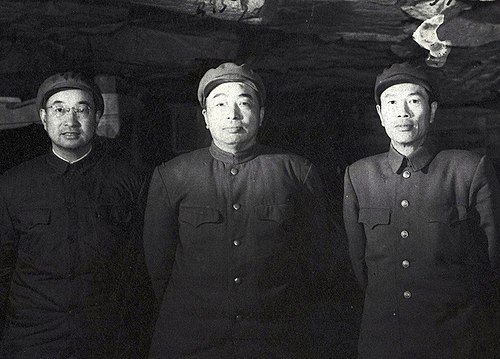
Chen Geng was born on 27 February 1903 in Xiangxiang County, Hunan Province — the same county that produced Peng Dehuai, a coincidence that speaks to something in the social conditions of late Qing Hunan that generated an unusual concentration of revolutionary military talent in a single generation. His grandfather Chen Yiqiong had been an officer in the imperial army, rewarded handsomely for bravery in battle and able to purchase substantial farmland with his compensation; by the time Chen Geng was born, the family owned several hundred mu of land and was among the wealthiest in the locality. Chen Geng grew up in material comfort that most of his future Red Army comrades would never have known.
At thirteen, his father arranged a marriage for him with a girl two years his senior — a standard practice of the era but one that the teenager Chen Geng rejected with a directness that would characterise his entire life. He refused the marriage, left home, and enlisted in a local warlord's army, beginning a military education that would eventually take him to the highest levels of the People's Liberation Army. After finding warlord service disillusioning he worked at the Hunan Railway Bureau, where an encounter with Mao Zedong — already active in Hunan labour organising — planted the seeds of his communist commitment. He joined the Chinese Communist Party in 1922, at the age of nineteen.
Whampoa Military Academy: One of Three Talents
In 1924, the CCP and the Kuomintang were in their period of formal alliance — the First United Front — and Chen was enrolled in the first class of the Whampoa Military Academy near Guangzhou, the institution established with Soviet assistance to train a new generation of professional military officers for the revolutionary movement. The academy's political director was Zhou Enlai, and among its first cohort Chen Geng, Jiang Xianyun, and He Zonghan were assessed as the three outstanding graduates — the "Whampoa Three Talents" — a reputation that opened doors and created a network of relationships, both communist and nationalist, that would prove decisive throughout his subsequent career.
After graduating, Chen commanded Chiang Kai-shek's personal bodyguard unit at Whampoa — a position that put him in the inner circle of the Nationalist military command and gave him the access that made him so valuable as a future intelligence asset. The critical episode came in October 1925 during the second campaign against the warlord Chen Jiongming, when Chiang Kai-shek's forces suffered a catastrophic defeat. Chiang, overwhelmed by shame and unwilling to flee, attempted to take his own life. Chen Geng seized his pistol and physically carried the commander-in-chief on his back for approximately ten kilometres through the retreating forces to safety — an act of personal courage and, viewed from one angle, of extraordinary political convenience for the Communist cause, since the man he saved would spend the next two decades as their principal adversary.
The Underground Years: Six Years as a Communist Spy
When the Kuomintang-Communist alliance collapsed in April 1927 — Chiang Kai-shek's Shanghai Massacre killing thousands of Communist and left-wing activists — Chen Geng's dual identity became untenable. He participated in the Nanchang Uprising of 1 August 1927, the Communist Party's first armed challenge to Nationalist power and the birth of what would become the People's Liberation Army. After the uprising's failure he was wounded — losing fingers on his left hand during one engagement — and made his way underground, operating in Shanghai as a Communist intelligence agent attached to the Central Special Branch of the CCP.
For six years, from 1928 to 1933, Chen Geng operated within the Nationalist military and intelligence apparatus, passing information to the Communist underground while maintaining his cover as a loyal military officer. The work was extraordinarily dangerous — dozens of his colleagues and contacts were discovered and executed during this period — and required a combination of nerve, social intelligence, and meticulous tradecraft that Chen's naturally gregarious personality and known Whampoa connections helped to sustain. He was, in a real sense, hiding in plain sight: a man who had saved Chiang Kai-shek's life, known personally to the generalissimo, above suspicion precisely because of his prominence.
In March 1933, Chen's cover was finally broken. He was arrested in Shanghai by Nationalist intelligence. The charge was Communist espionage and the normal sentence was execution. What saved his life was the very episode that had made him so useful: Chiang Kai-shek, informed of the arrest, remembered that this was the man who had carried him off a battlefield on his back eight years earlier. The execution order was not issued. The intervention of Song Qingling — Sun Yat-sen's widow, a figure of enormous moral authority who used her position to argue for Chen's release — combined with the pressure from Whampoa classmates including Song Xilian (who organised eleven fellow graduates to petition Chiang for clemency) eventually secured Chen's freedom. He was spirited out of Nationalist custody and made his way to the Communist base in Jiangxi.
Long March and the War Against Japan
Chen arrived at the Jiangxi Soviet and was assigned divisional command in the Fourth Front Army of the Red Army. He participated in the Long March — the 12,000-kilometre strategic retreat from Nationalist encirclement that began in October 1934 and became the founding epic of Chinese Communist mythology. After the Long March's conclusion at Yan'an in Shaanxi, Chen commanded forces against the Japanese Army during the Second Sino-Japanese War (1937–1945) with the reorganised Eighth Route Army, leading his forces in Shanxi province with particular effectiveness in interdicting Japanese supply lines and engaging the "first-ranked troop" of the Nationalist-aligned General Hu Zongnan's forces in sustained guerrilla and conventional operations.
His personal life during these years was defined by tragedy and resilience. His first wife Wang Genying, whom he had married in 1927 in defiance of the arranged match his father had planned, was killed during the Second Sino-Japanese War. He survived and continued fighting. In February 1942 he married Fu Ya, with whom he had four children. His brother-in-law Tan Zheng, married to Chen's younger sister Chen Qiuju, had joined the revolution partly through Chen Geng's influence — a testimony to the reach of his personal example within his extended family network — and Tan rose to senior PLA rank alongside Chen.
Civil War Victories: Shanxi, Huaihai, and the Final Push
During the resumed Chinese Civil War (1945–1949), Chen commanded the Chen-Xie Corps in southern Shanxi, where he destroyed the main force of Hu Zongnan's army — the elite formation that Chiang Kai-shek had designated his first-ranked troops — in a series of engagements that significantly weakened Nationalist capacity in North China. In October 1947 he led his forces across the Yellow River to coordinate with the field armies of Liu Bocheng, Deng Xiaoping, Chen Yi, and Su Yu in the Central Plains offensive that progressively unravelled Nationalist control of the country's heartland.
He participated in the Huaihai Campaign — the massive encirclement operation in Anhui and Jiangsu that destroyed over half a million Nationalist troops in the winter of 1948–49, the decisive engagement of the Civil War — and the subsequent Crossing the Yangtze Campaign that brought Communist forces into Guangdong and Guangxi and effectively ended organised Nationalist resistance on the mainland. In 1949, he served as commander and political commissar of the Fourth Army Group of the PLA as it swept through southern China. By the time the People's Republic was proclaimed in October 1949, Chen Geng was among the most experienced and battle-tested generals the revolution had produced.
Vietnam, 1950: Shaping the Border Campaign
In July 1950, at the personal request of Hồ Chí Minh — who had known Chen since the revolutionary networks of the 1920s — Chen Geng arrived in Vietnam to head a Chinese military advisory mission assisting the Việt Minh against the French. The mission was an extraordinary exercise in revolutionary solidarity and strategic calculation: China had just proclaimed its own republic and was already feeling the pressure of American opposition; supporting Hồ's movement created a buffer state on the southern border and tested Chinese advisory capacity in conditions of active warfare.
Chen's most direct contribution came in planning the Biên Giới (Border) Campaign of September–October 1950, working alongside Võ Nguyên Giáp. He advised Giáp to prioritise the capture of Đông Khê rather than the more obvious target of Cao Bằng, correctly reasoning that taking Đông Khê would force the French to attempt a relief column that could then be ambushed on the road. The campaign was a comprehensive Việt Minh victory: French control of the entire Sino-Vietnamese border was eliminated, over 8,000 French and colonial troops were killed or captured, and the strategic initiative in Indochina shifted to the Việt Minh. Chen Geng's operational fingerprints were all over the plan.
Korea and the Military Engineering Institute
From Vietnam, Chen transferred to the Korean theatre, serving as commander and political commissar of the 3rd Army Group of the Chinese People's Volunteer Army from 1951, and acting as deputy commander of the entire CPVF when Peng Dehuai returned to Beijing for consultations. The Korean War was a grinding attritional conflict that tested Chinese logistical capacity and tactical adaptability against a technologically superior opponent — and it was the technological disparity that would occupy Chen for the rest of his life.
Returning from Korea, Chen founded the PLA Military Engineering Institute in Harbin in 1953 — an institution designed to produce the scientific and technical officers that the People's Republic needed if it was to develop independent military technology rather than remain dependent on Soviet transfers. He oversaw the institute's development through its early years and worked with Nie Rongzhen, who was responsible for China's overall science and technology programme, on the foundations of China's ballistic missile and nuclear weapons development. The laboratory, in Chen Geng's understanding, was not separate from the battlefield but continuous with it — the technological capacity to deter or defeat enemies was an extension of the revolutionary project by other means.
He was conferred the rank of Senior General (Da Jiang) — the highest non-marshal grade — in September 1955, one of ten officers so recognised at the PLA's inaugural rank conferral ceremony. He died of a heart attack in Shanghai on 16 March 1961, at fifty-eight, before the nuclear weapons programme he had helped to initiate produced its first test. China's first nuclear device detonated in October 1964, three years after his death.
The Man Behind the General: Prankster, Friend, and Strategist
Those who served alongside Chen Geng consistently emphasised a quality unusual among senior military commanders: he was genuinely, incorrigibly funny. His pranks at Yan'an — most famously a sustained scheme to relieve Zhu De of the apples from his personal orchard by bringing a companion to share the burden and thereby triggering Zhu's instinct to give more when more people were present — became legendary across the PLA. He was known for cheerfulness in adversity, warmth toward subordinates, and an irreverence toward hierarchy that somehow never damaged his authority.
His friendship with Song Xilian — the Whampoa classmate who chose the Nationalist side and whose petition had helped save Chen's life in 1933 — endured across decades of civil war, separation, and political antagonism. When Song was captured in 1949, Chen made a special journey from Yunnan to visit him in the prison camp at Chongqing. When Song was pardoned in 1959, Chen hosted his reunion dinner. The friendship survived everything the twentieth century threw at it, and it says something about the kind of man Chen Geng was that it did.