At a Glance
Jiangjin and the Path to Europe: A Wealthy Son Goes Left
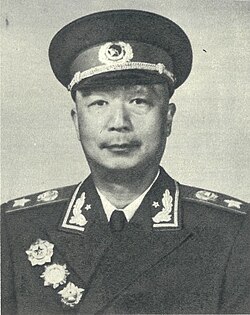
Nie Rongzhen was born on 29 December 1899 in Jiangjin County, Sichuan Province — now part of the Chongqing municipality — into a wealthy, cosmopolitan family whose prosperity gave him access to educational opportunities unavailable to the vast majority of his countrymen. His father was sufficiently well-off to support the kind of extended foreign study that only the most privileged Chinese families could contemplate in the early 1920s, and when the May Fourth Movement swept China in 1919 and the work-study programme to France began sending promising young Chinese to Europe, Nie was among those who could make the journey.
He arrived in France in 1920 and spent four years in Europe — initially in France and then, crucially, at the Université du Travail in Charleroi, Belgium, where he studied chemistry and engineering on a scholarship provided by the Belgian Socialist Party. Charleroi in the early 1920s was an industrial city whose labour movement was among the most politically advanced in Europe, and the combination of scientific education, socialist intellectual environment, and the living example of European working-class organisation had on Nie — as on so many young Chinese in Europe at this moment — a radicalising effect that sent him home a committed communist.
The critical personal encounter of this European period was in Charleroi itself, where Zhou Enlai — then organising the Chinese communist student network in Europe — spent a night and met with Nie. Zhou recruited him into the CCP in 1923, beginning a working relationship that would persist across five decades and that would eventually make Zhou the crucial protector of Nie's nuclear programme during the Cultural Revolution. From Belgium, Nie went on to Moscow — studying at the Oriental University and then at the Soviet Red Army School, receiving the formal military education that would ground his subsequent career — before returning to China in 1925 to join the Whampoa Military Academy's political department under Zhou Enlai's direction.
Nanchang, Long March, and the Road to Shanxi
Nie participated in the Nanchang Uprising of 1 August 1927 as chief of staff of the uprising forces' political department — the same action that He Long commanded and that established the founding date of the People's Liberation Army. He survived the uprising's military collapse and the difficult months that followed, making his way through the underground to the Jiangxi Soviet and the developing Red Army. He served in a succession of political and military roles through the Jiangxi period and participated in the Long March (1934–1935) as political commissar of the First Army Corps — the elite vanguard formation commanded by Lin Biao, in whom he would serve the same stabilising role that Luo Ronghuan performed in other Lin Biao commands: providing the political authority and personal steadiness that Lin's difficult personality required from its commissar.
At the Zunyi Conference in January 1935 — the critical moment when Mao Zedong reasserted strategic control over the Long March — Nie supported Mao's position, as did most of the senior military commanders whose battlefield experience gave them direct evidence that the Soviet-advised positional warfare strategy had been catastrophic. His position at Zunyi placed him firmly in the Mao camp and ensured that the suspicion which attached to Soviet-trained cadres after Zunyi did not contaminate his standing in the party's inner circle.
Jinchaji: The Model Base Area and the Dead Japanese General
When the Eighth Route Army entered Shanxi following the Second United Front agreement in August 1937, Nie Rongzhen commanded the 115th Division's advance elements as they moved into the Shanxi-Chahar-Hebei (Jinchaji) region — the mountainous country straddling the borders of three provinces where the Taihang and Yanshan ranges provided the terrain conditions that guerrilla warfare required. He established himself at the base of the Wutai Mountains and began the systematic construction of what would become, by the universal assessment of CCP military history, the most successful and most imitated of all the anti-Japanese base areas.
The Jinchaji base was Mao's explicit model: the template for the political, military, and administrative organisation that the CCP sought to replicate across occupied China. Nie built it through a combination of military effectiveness against Japanese forces, land reform that gave the peasantry a direct material stake in communist success, and a political apparatus that extended party organisation into every village committee, school, and militia unit in the region. By 1945 the base area had a population of twelve million people, 100,000 main-force troops, and controlled most of the territory in the region outside the major cities — a shadow state-within-a-state that had been built from nothing in eight years of war.
The defining military achievement of the Jinchaji base came in September 1939 at the Battle of Huangtuling — an engagement in which Nie's forces ambushed and destroyed a Japanese column in the Taihang Mountains. Among the dead was Lieutenant General Abe Nobuhide, the commanding general of the Japanese forces in the area: the first Japanese general officer to be killed in action since the war began in 1937. The psychological impact of killing a Japanese general — demonstrating that the invincibility of Japanese senior officers was a myth the guerrillas could pierce — was enormous, and Mao publicly praised the action as a signal achievement. Nie's forces also conducted tunnel warfare and mine warfare against the Japanese Army's "iron wall encirclement" campaigns of the early 1940s, developing tactical innovations — the network of tunnels connecting villages that allowed forces to appear and disappear without engaging superior Japanese firepower — that became standard elements of Chinese guerrilla practice.
The Pingjin Campaign and the Peaceful Handover of Beiping
During the Civil War, Nie commanded the North China Military Region — the force that engaged and contained the Nationalist armies of General Fu Zuoyi in the Beijing-Tianjin corridor while the decisive battles of Liaoshen and Huaihai were being fought to the northeast and south. In the Pingjin Campaign of late 1948 and January 1949, Nie's forces, acting in coordination with Lin Biao's Northeast Field Army arriving from Manchuria and Luo Ronghuan as political commissar, captured Tianjin in a fifteen-hour assault on 15 January 1949 and then pursued the political negotiations that produced Fu Zuoyi's agreement to surrender Beiping peacefully.
The peaceful handover of Beiping — the ancient imperial capital, then renamed Beijing when the People's Republic designated it the new national capital — was one of the most consequential political achievements of the Civil War period. Fu Zuoyi's decision to negotiate rather than fight saved the city's irreplaceable architectural and cultural heritage from the destruction that street-by-street urban warfare would have produced. Nie Rongzhen and Luo Ronghuan were the principal Communist interlocutors in those negotiations, and the outcome — a million people, hundreds of historic monuments, and the infrastructure of what would become the new China's capital — preserved intact — was directly attributable to the political skill they brought to the table alongside their military pressure.
Two Bombs, One Satellite: Building China's Strategic Deterrent
After the People's Republic was established, Nie served as acting PLA Chief of Staff from 1949 to 1954 before being drawn into the work that would define the second half of his career: the development of China's strategic weapons capability. The process began in 1956, when Nie participated with Zhou Enlai, Chen Yi, and others in formulating China's first twelve-year science and technology development plan — a comprehensive programme that identified fifty-seven key areas of development priority and established the scientific institutions that would carry them out.
In 1956, Nie formally proposed to the Central Committee and the Central Military Commission that China must develop its own ballistic missiles, atomic bombs, and advanced fighter aircraft — not as alternatives to Soviet assistance, which was still available, but as preparations for the day when Soviet support might be withdrawn. His foresight was vindicated in June 1959, when Nikita Khrushchev decided to terminate the Soviet nuclear assistance programme — a decision that left China's atomic bomb project without the Soviet prototype, technical data, and engineering support that had been expected. Mao's response was to accelerate the programme under the banner of self-reliance, and Nie was placed at its head.
The National Defence Science and Technology Commission established in 1958 under Nie's directorship became the administrative centre for China's entire strategic weapons programme — reporting directly to the Central Military Commission and the Politburo, insulated from normal bureaucratic channels, and resourced with whatever the country could provide in the teeth of the Great Leap Forward famine and the subsequent economic crisis. In November 1962, Zhou Enlai chaired the establishment of the Central Special Committee specifically to accelerate the Two Bombs programme, with Nie as the committee's executive director.
The results were achieved at extraordinary speed. On 16 October 1964, China detonated its first atomic device — a uranium-235 fission implosion weapon — at the Lop Nur test site in Xinjiang, becoming the fifth country in the world to possess nuclear weapons. On 25 October 1966, a DF-2 ballistic missile carrying a live nuclear warhead was launched 800 kilometres to a ground-zero target in Xinjiang — the only time any nuclear power has ever conducted a live nuclear missile test over its own territory. Nie flew to the impact zone and confirmed that the missile had struck with what he called deadly accuracy. On 17 June 1967, China tested its first hydrogen bomb with a yield of 3.3 megatons — achieving thermonuclear capability only 32 months after the first atomic test, faster than any other nuclear state in history, outpacing both the United States (seven years) and the Soviet Union (nearly four years) in the interval between fission and fusion weapons. On 24 April 1970, China launched the Dongfanghong-1 satellite — the first satellite launched by a developing country — making China the fifth nation to put a spacecraft into orbit using its own rocket.
The Cultural Revolution: Protecting the Programme
When the Cultural Revolution erupted in 1966, Nie Rongzhen faced the same threat as every other senior figure in Chinese political and military life — Red Guard attacks, denunciation as a revisionist, removal from position, and potential imprisonment or worse. His survival with relatively fewer wounds than most of his peers was not accidental. When Red Guards stormed the National Defence Science and Technology Commission in August 1966, Nie received them in person, accepted their criticisms calmly, and then stated clearly that national defence research could not be interrupted — a position he knew Zhou Enlai would support because the nuclear and missile programmes were too important to China's international position to be destroyed by factional violence.
In early 1967 he was dragged into public denunciation sessions and labelled a revisionist, and he participated in the "February Countercurrent" — the collective protest by senior marshals including Ye Jianying, Tan Zhenlin, and others against the Cultural Revolution's excesses — that resulted in all of them being temporarily marginalised. But Zhou Enlai's protection, extended specifically because of the nuclear programme's strategic importance, prevented Nie's complete destruction. By spring 1969, Western intelligence analysis noted that the entire Chinese nuclear weapons programme operated under Nie's authority — a remarkable degree of continued institutional influence for a man who had been officially denounced two years earlier. The weapons programme that could not be permitted to fail was also the instrument of Nie's survival.
The Last Marshal: Ninety-Two Years and the End of an Era
After the Cultural Revolution ended and Deng Xiaoping's reforms began, Nie Rongzhen was rehabilitated and recognised as one of the founders of China's modern scientific and technological capability. His memoirs, published in the 1980s, provided invaluable documentation of the nuclear programme's development and of the extraordinary human effort — scientists working in secret bases in the Xinjiang desert, engineers solving problems without Soviet technical support, administrators defending research programmes from Red Guard interference — that had produced China's strategic arsenal. His daughter Nie Li became a People's Liberation Army general, continuing the military family tradition into the next generation.
He died on 14 May 1992 in Beijing, at ninety-two — the longest-lived of all ten marshals, and the last to die, outlasting the next-longest-lived, Liu Bocheng, by six years. His death closed the biological chapter of the founding generation. The institutions he had built — the National Defence Science and Technology Commission, the nuclear weapons programme, the satellite and missile capability — had already transformed the People's Republic's strategic position beyond anything his contemporaries could have imagined when they climbed the Jinggang Mountains with Mao Zedong in 1928. The young man who had studied chemistry in a Belgian industrial city on a Socialist Party scholarship had given China the bomb.