At a Glance
Kaixian, Sichuan: Poverty, School, and the Revolution of 1911
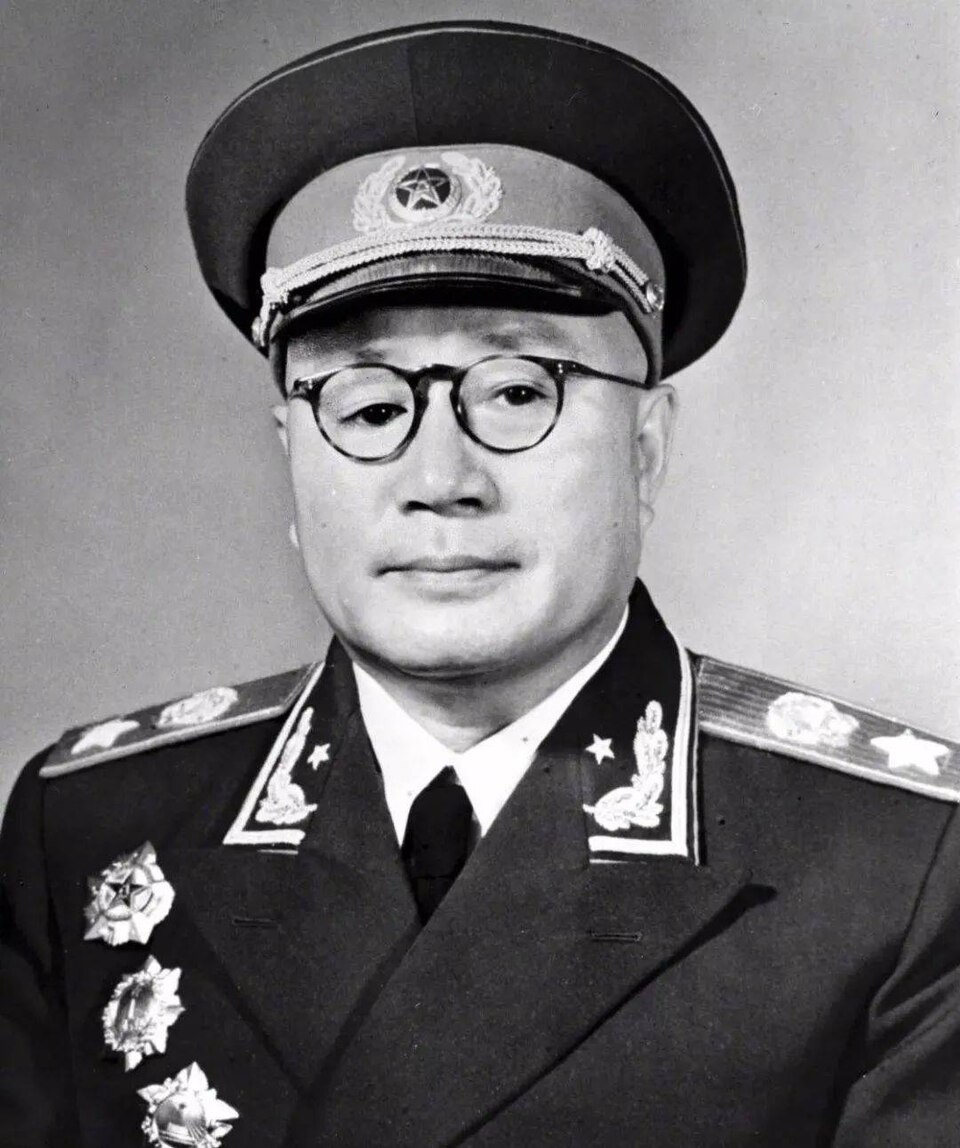
Liu Bocheng was born on 4 December 1892 in a peasant family in Kaixian County, Sichuan Province — a remote district in the mountainous eastern part of the province where the Yangtze River and its tributaries cut through steep terrain that had historically made the region both difficult to govern and deeply resistant to outside authority. His family was poor but Liu was a determined student — unusual for a boy of his background — gaining grades that earned him access to schooling far beyond what the majority of his contemporaries could aspire to. He was influenced by the constitutional reformist and revolutionary ideas of Sun Yat-sen that were circulating widely among educated young Chinese in the decade before the 1911 Revolution, and when that revolution came, the nineteen-year-old Liu joined the Boy Scouts in Chongqing to support it.
The Revolution of 1911 ended the Qing dynasty but produced not the constitutional republic its supporters had hoped for but a fractious landscape of provincial militarism and national fragmentation. Liu enrolled at the Chongqing Military Academy in 1912 and received formal military training — the beginning of a professional military education that he would continue throughout his life, supplementing his practical battlefield experience with theoretical study in ways that few Chinese commanders of his generation matched. He graduated and joined the republican army, serving in the campaigns against Yuan Shikai's attempted restoration of monarchy and in the subsequent factional warfare of the warlord period.
Seventy-Two Cuts: The Battle of Fengdu and the Glass Eye
The episode that defined Liu Bocheng's public reputation occurred in 1916 during the Fengdu campaign in Sichuan — one of the military operations against Yuan Shikai's forces. Liu was hit by two bullets: one struck him in the calf and one entered his right temple, passed through the orbital cavity, and destroyed his right eye. The wounds were severe enough to be potentially fatal; the eye was gone and the bullet's passage through the temporal region threatened the brain structures beneath.
A German surgeon was brought in to perform the surgery necessary to remove the destroyed eyeball and clean the wound. The surgeon proposed using anaesthetic — standard practice, and medically necessary given the extent of the procedure. Liu refused. His reasoning was specific and medically informed: he understood that general anaesthesia carried risks to the brain nerves in the region where the bullet had passed, and he was not willing to accept that risk. He would undergo the operation conscious. The surgeon, who spoke no Chinese and communicated through interpreters, was deeply skeptical that any patient could endure the procedure without sedation. Liu endured it. He counted seventy-two individual cuts during the operation, lying still throughout without screaming or losing consciousness. When it was finished, the surgeon — reportedly moved to tears — gave Liu the nickname "Chinese Mars," the god of war, out of what can only be described as professional awe. A glass eye replaced what had been destroyed. Liu wore it for the rest of his life, and the story of the seventy-two cuts became part of the revolutionary mythology that surrounded him.
He was wounded at least nine more times in subsequent military engagements. The cumulative physical damage of thirty years of active combat left him progressively visually impaired in his remaining eye — by the time of the Cultural Revolution he was effectively blind — but it never diminished the acuity of the mind that directed the military operations that made him one of the most formidable field commanders of his era.
Soviet Military Education and the Nanchang Uprising
Liu joined the Chinese Communist Party in 1926, at a time when the party was deeply embedded in the Nationalist movement through the First United Front and when CCP military cadres were being given opportunities for formal military training in the Soviet Union. He participated in the Nanchang Uprising of 1 August 1927 — the CCP's first armed revolt against the Nationalist government, commanded by He Long and involving Zhu De, Chen Yi, and others — before travelling to the Soviet Union to study at the Frunze Military Academy in Moscow from 1927 to 1930. The Frunze Academy was the Soviet Union's premier institution for the advanced military education of senior officers, and the three years Liu spent there gave him a systematic theoretical framework for operational warfare — combined arms, deep battle doctrine, the operational level between tactics and grand strategy — that distinguished him from commanders whose knowledge was entirely experiential.
He returned to China in 1930 as one of the most formally educated military minds in the Chinese Communist Party, and was appointed Chief of Staff of the Red Army in 1932 — a position that brought him into direct collaboration with Zhu De as commander, Mao Zedong as political commissar, and the broader leadership of the Jiangxi Soviet. His time as Chief of Staff coincided with both the height of the "dogmatist" period — when Soviet-trained advisers including the German Comintern agent Otto Braun were applying rigid Soviet tactical doctrines to Chinese conditions with disastrous results — and with Liu's own resistance to those doctrines. He supported Mao's approach of mobile warfare and guerrilla tactics over the positional defence that Braun and the "28 Bolsheviks" insisted upon, and he paid for that resistance with demotion before the Long March began.
The Long March: Vanguard Commander and Zunyi
Despite having been demoted from Chief of Staff — a consequence of his opposition to the dogmatist military line — Liu was rehabilitated for the Long March and given command of the vanguard detachment of the Red Army, the unit responsible for securing the route ahead of the main force and overcoming the obstacles that blocked the line of march. It was the most demanding and dangerous role on the Long March, and Liu filled it with the combination of tactical ingenuity and personal courage that defined his entire military career.
His most celebrated achievement of the Long March came at the Luding Bridge crossing of the Dadu River — the famous engagement in which Red Army soldiers crossed a suspension bridge under fire, with the wooden planks removed by the defending Nationalist forces, hanging from the iron chains. Liu's vanguard units conducted this crossing, and the success of the Luding Bridge crossing is one of the central episodes of Long March mythology. He also spent nine days and nights on a boulder at the Golden Sands River crossing — directing the ferrying of the entire Red Army across the Yangtze in a handful of commandeered boats, working continuously without rest to ensure that the crossing was completed before Nationalist forces could close in. At the Zunyi Conference of January 1935 — the critical meeting at which Mao Zedong reasserted control of the party and military leadership, displacing the Soviet-aligned faction that had been directing the disastrous strategy — Liu Bocheng was among the senior commanders who supported Mao's position.
The 129th Division and the Liu-Deng Army
In 1938, Liu Bocheng was assigned command of the 129th Division of the Eighth Route Army — the reorganised communist forces operating under the Second United Front against Japan. His political commissar was Deng Xiaoping, beginning a partnership that would last thirteen years and produce some of the most celebrated military operations in PLA history. Deng was ten years younger than Liu, a very different personality — more politically flexible, more manoeuvring — but the two men developed a working relationship of exceptional mutual trust and complementary effectiveness: Liu provided the operational military genius and Deng provided the political guidance, supply organisation, and party management that enabled Liu's plans to be executed.
The 129th Division established the Jin-Ji-Yu Base Area in the mountains of Shanxi, Hebei, and Henan — building a communist-administered territory that sustained operations against Japanese forces throughout the war. In 1940 Liu led his division's contribution to the Hundred Regiments Campaign — the massive offensive coordinated by Peng Dehuai that struck Japanese railways and communications across North China with over 100 regiments, the largest single Communist military operation of the Anti-Japanese War. The Japanese military command was so alarmed by Liu Bocheng specifically that they sent agents specifically to assassinate him. The mission failed to kill Liu; the agents killed his daughter, who was being held at a kindergarten.
As the war progressed, the 129th Division expanded far beyond its original strength, absorbing new recruits, integrating local militia into the formal structure, and developing into a force that bore little resemblance to the division it had been in 1938. By the time the Nationalist-Communist Civil War resumed in 1945, the Shanxi-Hebei-Shandong-Henan Field Army that Liu commanded numbered hundreds of thousands of troops — an operational force capable of conducting conventional large-scale manoeuvre warfare as well as the guerrilla operations that had been its original mode.
Dabie Mountains, Huaihai, and the Civil War's Decision
The most strategically audacious operation of Liu Bocheng's Civil War command came in the summer of 1947, when the Central Committee decided to carry the war into Nationalist-controlled territory by sending the Liu-Deng Army across the Yellow River and into the Dabie Mountains in southern Henan and northern Hubei — deep in the Nationalist heartland, far from any existing Communist base area, without a secure supply line or rear area. The operation was enormously risky: 100,000 troops moving into enemy territory to establish a new front that would force the Nationalists to divide their attention and their forces. Liu and Deng executed it, fighting through the Yellow River crossing and establishing Communist presence in the Dabie Mountains at considerable cost, tying down Nationalist forces that would otherwise have been available to press the Communist positions in Manchuria and North China.
In November 1948, the Huaihai Campaign began — the massive encirclement battle that Liu co-commanded alongside Chen Yi and Su Yu. The Huaihai Campaign destroyed over 550,000 Nationalist troops in 65 days of fighting across the Huai River plain, eliminating the military force that stood between the Communist armies and the Yangtze River. It was the decisive engagement of the Civil War. Liu's Second Field Army subsequently conducted the Crossing the Yangtze Campaign in April 1949, sweeping through Nanjing and then south and west through Sichuan — Liu's home province — completing the conquest of the Chinese mainland by the end of 1949.
The Military Academy and the Long Twilight
Almost immediately after the People's Republic was proclaimed in October 1949, Liu petitioned the Central Committee to be relieved of his command positions so that he could establish a military academy. His reasoning was clear-eyed and forward-looking: the People's Liberation Army had won the Civil War through guerrilla warfare, political mobilisation, and the operational genius of a handful of exceptional commanders. What it needed to fight modern wars against technologically superior opponents — the kind of war Korea was already demonstrating — was a systematic military education for an entire officer corps. Liu was the most qualified person in China to build such an institution, and he insisted on doing it.
The PLA Military Academy he founded at Nanjing in 1950, which he led as president until 1957, became the foundation of Chinese military professional education. Working with a magnifying glass as his remaining vision deteriorated, he reviewed translations of foreign military works totalling over a million Chinese characters and compiled the teaching materials that gave successive generations of PLA officers a systematic theoretical foundation for combined arms warfare. By the time of the Cultural Revolution he was completely blind, but the institution he had built had already produced the officer cadres that would staff the modernising PLA of the post-Mao era.
He was wrongly criticised for "dogmatism" in 1958 — an irony given that he had spent his entire career resisting Soviet-style military dogma — and partially marginalised, though never fully purged, in the factional upheavals of the Mao years. His complete blindness during the Cultural Revolution period paradoxically insulated him from some of the worst pressure: there were limits to what could be demanded of a man who could not see. He survived. He witnessed Deng Xiaoping's return to power and the rehabilitation of the generation that the Cultural Revolution had tried to destroy. He died in Beijing on 7 October 1986, aged ninety-four — the longest-lived of the Ten Marshals — and Deng Xiaoping delivered the memorial eulogy in which he wrote that Liu had "laid the groundwork for a modern, regular army" and that the criticism of 1958 had been unfair.