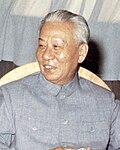
At a Glance
Hunan Origins: The Wealthier Peasant and the Education of a Theorist
Liu Shaoqi was born on 24 November 1898 in Yinshan Village, Ningxiang County, Hunan Province — the same province that produced Mao Zedong, born just four years earlier less than sixty kilometres away, and whose mountainous, socially stratified, intensely political culture formed both men. Liu's family was, by the standards of rural Hunan, relatively prosperous — his father was a landlord-farmer with enough land to provide the family with a standard of living above subsistence, enough surplus to allow Liu to attend good schools, and enough social standing to give him access to the modernising educational institutions that were transforming Chinese intellectual life in the early twentieth century.
He was the youngest of nine children, and his father died when he was young, leaving the family in reduced but not desperate circumstances. He attended the First Normal School in Changsha — the same institution that Mao Zedong attended, where the headmaster Yang Changji was producing a remarkable generation of politically engaged students — and absorbed the mixture of classical Chinese learning, social Darwinism, nationalism, and proto-socialist ideas that were circulating among educated Chinese youth in the decade following the 1911 Revolution. In 1919 he studied French in North China, part of a broader preparation for the work-study programme to France that he ultimately did not join — instead making his way to Moscow.
Moscow, Labour Organisation, and the Party's First Years
In 1920, Liu Shaoqi went to Shanghai, joined the Socialist Youth League, and in the winter of 1920 was sent as part of a student group to the Soviet Union, where he enrolled at the University for Toilers of the East in Moscow. The University for Toilers of the East was the Comintern's training institution for revolutionary cadres from Asia and other colonial and semi-colonial regions — the place where the nascent Chinese Communist movement sent its most promising young members to receive both ideological formation and practical organisational training. Liu was in Moscow when the Chinese Communist Party held its First National Congress in Shanghai in July 1921; he joined the Party in the Moscow branch.
He returned to China in 1922 and spent the next several years as a professional organiser of trade unions and labour movements — one of the most dangerous occupations available in 1920s China, where labour organisers faced the combined hostility of foreign concession authorities, warlord governments, and the private armies of the commercial interests they were challenging. Liu organised coal miners in Anyuan and Hunan, led railway workers in strikes, and became Vice President of the All-China Federation of Labour in 1925, at a moment when the labour movement was reaching the height of its influence in the broad national revolutionary movement. The May Thirtieth Movement of 1925 — in which British police in Shanghai fired into a crowd of Chinese demonstrators, killing a dozen and wounding dozens more, and triggering a national general strike — was a defining moment for the labour movement, and Liu was one of its leading organisers during the general strike that followed.
Underground Work, the Jiangxi Soviet, and the Long March
After the collapse of the First United Front in 1927 and Chiang Kai-shek's bloody purge of Communists, Liu operated in the underground networks that the party maintained in the cities — in Shanghai, in Manchuria, and in other urban centres where the party needed to maintain a presence despite the enormous risks involved. He was arrested at least twice and survived — a combination of luck, discipline, and the professional tradecraft of a man who had been living a clandestine existence for years. He travelled to the Jiangxi Soviet in 1932, where he joined the leadership of the Communist base area and developed the organisational relationships within the party's inner circle that would sustain his ascent through the following decades.
He participated in the Long March beginning in October 1934, surviving the retreat from Jiangxi to Shaanxi and arriving at Yan'an in 1935. During the Long March and the subsequent period at Yan'an, Liu's particular contribution was in the domain where his skills were greatest: theoretical and organisational work rather than military command. He became one of the principal intellectuals of the Yan'an period — writing, lecturing, and shaping the ideological framework within which the Communist Party understood itself and its mission.
Yan'an: How to Be a Good Communist and the Making of a Theorist
Published in 1939, How to Be a Good Communist — originally a series of lectures delivered at the Institute of Marxism-Leninism in Yan'an — became the defining document of Liu Shaoqi's intellectual career and one of the most widely read texts in Chinese communist history. The book addressed what Liu saw as the fundamental problem of building a revolutionary party: how to develop in individual members the self-discipline, ideological commitment, and subordination of personal interest to collective purpose that the party's survival and effectiveness required. Drawing on both Marxist-Leninist theory and Chinese classical thought — particularly Confucian concepts of self-cultivation — Liu constructed an account of communist virtue that was simultaneously politically orthodox and deeply rooted in Chinese moral tradition.
The text became required reading for every member of the CCP and was distributed so widely that it shaped the self-understanding of an entire generation of Chinese communists. It was, in retrospect, the most complete expression of Liu's political vision: the idea that the party required not simply loyal followers but genuinely disciplined men and women who had internalised the revolution's values and could be trusted to advance them without constant supervision. The contrast with Mao's emphasis on mass campaigns, spontaneous mobilisation, and continuous revolution could hardly have been greater — and the divergence between the two men's visions of how the revolution should proceed was the fault line along which the Cultural Revolution's earthquake would eventually run.
Liu's organisational work during the Yan'an period was recognised in 1943, when he was appointed CCP General Secretary — effectively the head of the party's internal administration and the third-ranking figure in the leadership after Mao and Zhu De. When Mao Zedong travelled to Chongqing in August 1945 for the negotiations with Chiang Kai-shek that briefly appeared to offer the possibility of a post-war coalition government, Liu served as acting chairman of the party in Mao's absence — a measure of the trust the party's most senior leader had placed in him at that point.
The People's Republic: From Vice Chairman to President
After the proclamation of the People's Republic on 1 October 1949, Liu became one of the six vice chairmen of the Central People's Government, the most senior positions in the new state below Mao himself. He was elected Chairman of the Standing Committee of the National People's Congress in 1954 — the legislative leadership — and in 1959, when Mao stepped down from the chairmanship of the People's Republic to concentrate on party affairs, Liu Shaoqi was elected to succeed him as Chairman (President) of the state. He was publicly named as Mao's designated successor in 1961, the highest formal recognition of his position as the party's second man.
His chairmanship coincided with the aftermath of the Great Leap Forward — the catastrophic Maoist programme of agricultural collectivisation and crash industrialisation that killed tens of millions of people in a famine between 1959 and 1961, the worst man-made famine in human history. Liu, who had heard stories of the famine's scale from his sister during a visit to his home county in Hunan, became increasingly critical of Mao's policies within the party's internal deliberations, supporting the pragmatic recovery programme that Zhou Enlai, Deng Xiaoping, and Liu himself developed: allowing peasants to farm private plots, restoring market incentives, and quietly dismantling the commune system's most destructive features. The Seven Thousand Cadres Conference of January 1962 — at which over seven thousand party officials gathered in Beijing to discuss the causes and lessons of the famine — heard Liu deliver an assessment of the Great Leap that placed primary responsibility on human error rather than natural disaster and that was understood by everyone present as a critique of Mao, even though Liu was too careful to say so directly.
The recovery programmes that Liu and Deng Xiaoping managed through the early 1960s worked. China's economy stabilised, food production recovered, the immediate catastrophe of the famine passed. But the political cost of this pragmatic success was enormous: Mao watched the rehabilitation of China's economy proceed on the basis of policies that contradicted his vision of continuous revolution, and watched Liu Shaoqi's reputation for competent governance grow in inverse proportion to his own declining personal authority. The fear that had developed in Mao — that Liu was China's Khrushchev, a man who would repudiate his predecessor after death just as Khrushchev had repudiated Stalin — became the engine of the Cultural Revolution.
The Cultural Revolution: Destruction of an Unperson
The Cultural Revolution was announced in 1966, and Liu Shaoqi was its primary target from the beginning. Red Guard posters covered Beijing denouncing him as "the commander of China's bourgeoisie headquarters," "China's Khrushchev," "the biggest capitalist roader in the Party," and a traitor to the revolution. Mao's widow Jiang Qing and the radical faction around Lin Biao organised struggle sessions in which Liu and his wife Wang Guangmei were publicly humiliated before crowds of thousands. Wang Guangmei was forced to wear a ballgown and a necklace of ping-pong balls on stage in a grotesque parody of her state visits — her husband obliged to watch. Liu attempted to defend himself by holding up a copy of the Constitution and citing his authority as head of state. Mao, who regarded this as a fundamental provocation, became only more determined to destroy him.
In July 1966 he was displaced as CCP Vice Chairman by Lin Biao. In October 1968 he was stripped of all party positions and expelled from the CCP — formally declared a "renegade, traitor, and scab." His wife was thrown into prison. His son Liu Yunbin, a physicist, was tormented into suicide in 1967, lying down before an oncoming train. Mao's investigators combed through the records of the Japanese occupation looking for anything that could be used to justify the treason charges against Liu — finding, after searching through enormous archives, a 1929 document that could be construed as a compromise with Nationalist police that was then labelled a betrayal. Wang Guangmei later noted that the Kuomintang had vilified Liu for years without ever using such language as the Cultural Revolution produced.
In October 1969, as Sino-Soviet border tensions made the evacuation of senior leaders from Beijing seem prudent, Liu was transferred to Kaifeng in Henan Province — a sick man with uncontrolled diabetes, his hair grown long and matted, his body wasted by illness and neglect. He was held in a disused bank vault converted into a cell. One account states he was kept naked; all accounts agree that the medical care available — insulin and standard treatment for a diabetic patient — was effectively withheld. He developed pneumonia repeatedly; his immune system, compromised by years of stress and the disease management failures of his confinement, could not recover. He died at 6:45 in the morning of 12 November 1969, alone, under the alias "Liu Weihuang." He was cremated the following day under the same false name. His children did not learn of his death until 1972. The crematorium workers did not know whose ashes they were handling.
Posthumous Rehabilitation and the Verdict of History
After Mao's death in September 1976 and the arrest of the Gang of Four in October, the process of reassessing the Cultural Revolution's victims began slowly and then with gathering momentum. Deng Xiaoping, who had himself been twice purged and who understood from personal experience what the Cultural Revolution had done to the party's best people, made the rehabilitation of Liu Shaoqi one of the early priorities of his reform programme. In February 1980, the Fifth Plenum of the 11th Central Committee issued the formal "Resolution on the Rehabilitation of Comrade Liu Shaoqi," reversing all the charges of the Cultural Revolution period and declaring Liu "a great Marxist and proletarian revolutionary" who had been the victim of false charges and political persecution.
A state funeral — held nearly a decade after his actual death — gathered the surviving leadership of the People's Republic to mourn the man who had been its president. His ashes, recovered from wherever they had been stored under the false name, were scattered at sea. His wife Wang Guangmei, released from solitary confinement, survived to become a public figure in the 1990s, working on poverty alleviation and children's rights programmes with an energy and dignity that testified to the quality of the person the Cultural Revolution had tried to destroy. His image returned to public display alongside Mao, Zhu De, and Zhou Enlai as one of the founding leaders of the People's Republic — the party having decided that the revolution required his posthumous presence among its pantheon regardless of what it had done to him in life.
How to Be a Good Communist was republished. His collected works were compiled and issued. The party that had erased his name restored it with the deliberate thoroughness of an institution that understood how much it had damaged itself, as much as him, by the original erasure. Liu Shaoqi died as an unperson. He lived on as a martyr — the proof, if any were needed, that the revolution devoured not only its enemies but the most conscientious and capable of its own.