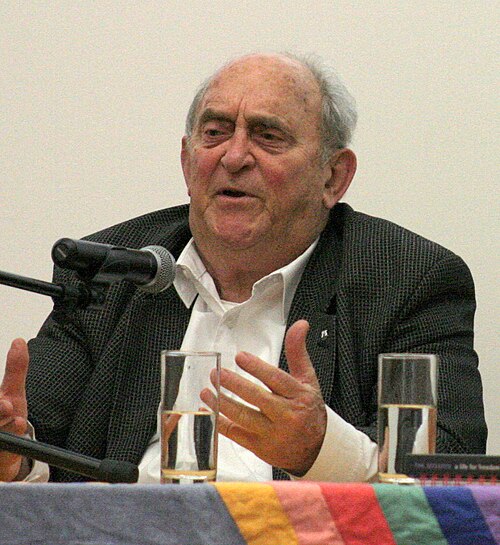
At a Glance
Cape Town, Engineering, and the Political Formation of a White Communist
Dennis Goldberg grew up in the Cape Town of the 1930s and 1940s — a city with a political culture somewhat different from Johannesburg's, shaped by the longer history of racially mixed communities in the Cape, by the specific character of Cape liberalism which was more genuinely multi-racial than its Transvaal counterpart, and by a Jewish immigrant community that carried Eastern European socialist and communist traditions and that had its own complex relationship to the apartheid racial hierarchy. Like Bram Fischer, Arthur Goldreich, Rusty Bernstein, Joe Slovo, and Ruth First, Goldberg belonged to the disproportionately Jewish white left that provided the liberation movement with a significant portion of its white membership — people whose family histories of persecution gave them a different relationship to racial classification and to the politics of exclusion than the English-speaking and Afrikaner communities whose families had been in South Africa for generations.
His choice to study civil engineering at the University of Cape Town was shaped by both intellectual interest and practical political thinking — an early recognition that the liberation movement needed people with technical skills as well as political commitment, and that engineering was a profession that could be deployed directly in the service of the movement's practical requirements. His political formation at UCT deepened through contact with the Congress of Democrats — the white organisation within the Congress Alliance — and with the SACP, which provided the theoretical framework for understanding South Africa's racial capitalism and which was the primary vehicle through which white South Africans could participate in the liberation movement on terms of genuine political equality.
By the early 1960s, as the decision to establish Umkhonto we Sizwe was being made and the organisation was beginning to construct its sabotage campaign, Goldberg's technical skills had made him one of the most practically valuable members of the movement's white communist circle. The sabotage campaign required not only political commitment and organisational skill but technical knowledge — knowledge of what would damage economic infrastructure, of how to construct devices safely, of what materials were available and how they could be deployed effectively. Goldberg had that knowledge in ways that his politically trained but technically untrained colleagues did not, and it made him essential to MK's early operations in ways that went beyond his political role.
Liliesleaf Farm, Arrest, and the Technical Evidence
The documents seized at Liliesleaf Farm in the July 1963 Rivonia raid included materials that were specifically damaging to Goldberg's position in the subsequent trial. The technical specifications and designs for weapons and explosive devices that were found among the seized documents — documents that Goldberg had prepared as part of MK's technical planning — provided the prosecution with direct evidence of his specific role in the armed campaign that went beyond general membership of the organisation. He had not merely been present at meetings or participated in political planning; he had done the technical work of designing the instruments through which the sabotage campaign was to be conducted.
This made his position in the trial straightforwardly difficult from a legal perspective: the physical evidence of his technical work was specific, detailed, and clearly incriminating. The defence strategy that Bram Fischer had developed — acknowledging involvement in sabotage rather than denying it, framing the admission as a moral and political statement about the context that had driven the accused to armed resistance — was adopted by all the accused, including Goldberg, but it could do nothing to mitigate the specificity of the technical evidence against him. He was convicted on the same charges as his co-accused and sentenced to life imprisonment on 12 June 1964.
His reaction to the sentence, as recorded by those who witnessed it, was characteristic of the man: he smiled, and told his mother in the courtroom gallery that he would be out before she died. He was thirty years old. His mother lived to see him released in 1985. He kept the promise.
Pretoria Central: The Apartheid of Imprisonment
The decision to send Goldberg to Pretoria Central Prison rather than Robben Island was the apartheid system's insistence on racial separation even within its own prison system — a demonstration that apartheid's logic was so thoroughgoing that it could not permit even the equalisation of punishment. The Rivonia accused had been convicted of the same crime and sentenced to the same term. They had been political comrades who had worked together, planned together, and been arrested together. But apartheid classified them as racially different, and its prison system maintained that classification even when its practical consequence was to separate men who had been convicted together from sharing the imprisonment they had received together.
For Goldberg, this separation was a specific and ongoing cruelty. The community that his co-accused built on Robben Island — the informal university, the political debates, the mutual support, the shared experience of resistance to the prison system's attempts to dehumanise them — was a community that sustained them through two decades of imprisonment. Goldberg had none of this. He was in the white section of Pretoria Central, alone among political prisoners in a way that his comrades on the island were not, without the community that gave political imprisonment its specific character as a continuation of political commitment by other means.
He managed this isolation through the resources he had — his intellectual commitments, his correspondence with family and friends outside, his work on legal appeals and political writing within the prison's constraints — and through a determination not to be diminished by the separation that the apartheid system had imposed. But the loneliness was real, and his accounts of his imprisonment acknowledge it directly: he was not part of the island community that became the defining experience of the Rivonia prisoners' shared story, and the absence was a loss that the political significance of his imprisonment could not entirely compensate for.
He was released in February 1985 after twenty-two years — the government's decision to release him, and its decision to do so earlier than the Robben Island prisoners, was partly a gesture toward the international community, which was applying increasing pressure on South Africa over the Rivonia prisoners' continued imprisonment. The apartheid logic that had separated him from his co-accused in prison now, perversely, led to his earlier release: his whiteness, which had cost him the community of Robben Island, now gave him an earlier exit from Pretoria Central. He went to London after his release and was active in the Anti-Apartheid Movement until the democratic transition allowed him to return.
London, Return, and the Work of Community H₂O
In London, Goldberg found a political community that welcomed him — the Anti-Apartheid Movement was at the height of its activity in the mid-1980s, the campaign for sanctions and the release of Mandela and the remaining Robben Island prisoners was mobilising millions of people across Europe and beyond, and Goldberg's presence as a released Rivonia trialist gave him both moral authority and practical value as an ambassador for the continuing struggle. He worked with the ANC's external mission and the SACP's London structures, maintaining the connections that his imprisonment had not broken.
His return to South Africa after 1990 brought him back to Cape Town, to the city where he had grown up and been politically formed. The post-apartheid South Africa he returned to was very different from the one he had left in 1985 — constitutionally democratic, formally non-racial, governed by the ANC whose liberation he had worked for — but also, in the material conditions of the majority of its people, not as different as the liberation struggle had promised. The poverty, inequality, and lack of basic services that were the structural legacy of apartheid were not being addressed at the pace or the scale that the Freedom Charter had envisaged, and Goldberg's response to this reality was characteristic: he did not confine himself to speeches about what should happen but did the practical work of helping it happen.
Community H₂O — the clean water initiative that Goldberg founded and led — was an expression of the same practical engineering commitment that had made him valuable to MK forty years earlier, now directed toward the basic human needs of rural communities rather than toward the technical requirements of a sabotage campaign. The work was unglamorous, it required the same patient technical problem-solving that engineering always requires, and it made a direct practical difference to the people it served. His memoir, I Was a Stranger, published in 2010, provided the most detailed first-person account of his political formation, his role in MK, and his experience of twenty-two years in Pretoria Central that exists in the public record.
Legacy
Dennis Goldberg's legacy has several distinct dimensions. As a Rivonia trialist and a communist who made the specific choices he made — joining MK, doing the technical work of the sabotage campaign, accepting the consequences of that work in court — he represents the white South African left's most direct form of commitment to the liberation struggle. He did not merely support the struggle from outside; he was convicted of participating in it and served twenty-two years for that conviction. The specific loneliness of his imprisonment — alone in Pretoria Central while his comrades built their island community — was the price of his whiteness in a system that even in its punishments maintained racial separation.
His post-prison work — the community water projects, the reconciliation initiatives, the public advocacy for the unfinished business of economic equality — was consistent with the values that had led him into the liberation struggle in the first place. He did not regard the achievement of political democracy as the completion of the project; he regarded it as the precondition for the further work of economic transformation that remained undone. In this, he was consistent with the radical economic tradition that Chris Hani had represented and that the post-apartheid government's economic policies had largely set aside.
He died on 29 April 2020, twelve days after Andrew Mlangeni, in the middle of a global pandemic. The two last Rivonia trialists — the white engineer from Cape Town and the working-class MK operative from Bethlehem — died within a fortnight of each other, the last living witnesses to the trial that had defined the apartheid state's attempt to destroy the ANC's leadership. Their deaths closed the chapter. The work they had given their lives to remains in progress.