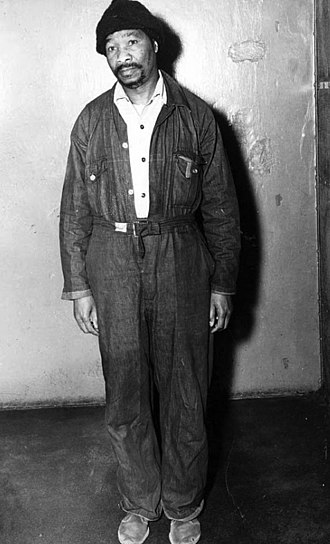
At a Glance
The Transkei, Lovedale, Fort Hare, and an Intellectual Formation
Govan Mbeki was born in 1910 in Nqamakwe in the Transkei — the same region that produced Nelson Mandela, born eight years later in nearby Mvezo. The Transkei of the early twentieth century was a place of rural poverty and racial dispossession, but also a place with a mission education tradition that produced, through Lovedale and Fort Hare, the generation of educated Africans who would eventually lead the liberation movement. Lovedale Institution near Alice in the Eastern Cape was one of the most important educational institutions in Africa for Black students, and Fort Hare University — founded in 1916 specifically to provide tertiary education to Black South Africans — was the institution where that education led.
Mbeki's educational path through these institutions gave him something that defined his subsequent career: a rigorous intellectual formation that took ideas seriously, that understood the importance of systematic analysis, and that was committed to understanding South Africa's racial capitalism in theoretical terms rather than merely responding to it in emotional ones. His subsequent work — as a teacher, as a journalist, as a political organiser, and finally as the author of The Peasants' Revolt — was always shaped by this intellectual formation, by the sense that effective political action required understanding the conditions you were acting in.
Fort Hare in the 1930s was already a site of political formation — not yet the crucible of Black Consciousness and liberation movement politics it would become in the 1960s, but already a place where educated Africans encountered the ideas of Pan-Africanism, African nationalism, and the beginnings of the Congress Alliance's non-racial programme. Mbeki's encounter with these ideas at Fort Hare contributed to his subsequent path: into the ANC, into the Communist Party, into the dual commitment to African liberation and to the class analysis that the SACP provided.
Journalism, the Eastern Cape ANC, and The Peasants' Revolt
Mbeki's combination of intellectual formation and political commitment found expression in the Eastern Cape ANC's work through the 1950s in ways that made him one of the most valuable organisers the movement had. He edited New Age — the successor publication to the Guardian and Advance in the Eastern Cape — providing the region with the left press coverage that sustained political consciousness and organised the liberation movement's arguments in the communities it served. The Eastern Cape had a strong tradition of mission-educated African political activism, and the combination of this tradition with the Congress Alliance's organisational programme produced a regional movement of particular strength.
His organising work in Port Elizabeth and the surrounding Eastern Cape built the ANC's mass membership in the region and connected the urban working class of the port city with the rural African communities of the interior. This dual reach — urban and rural, working class and peasant — gave his political analysis a breadth that many of the movement's more metropolitan leaders lacked. When he came to write The Peasants' Revolt, his analysis was grounded in direct knowledge of both the rural conditions he was studying and the political framework through which those conditions could be understood.
The Peasants' Revolt, published in 1964, was a study of the rural resistance movements that had developed in the Transkei in the late 1950s in response to the apartheid government's Bantu Authorities Act — which imposed a system of apartheid-aligned "self-government" on the Transkei — and its policy of forced cattle culling, which was devastating to the rural African communities whose economic survival depended on their herds. These policies produced sustained rural resistance — boycotts, protests, the assassination of government-appointed chiefs, and ultimately an armed uprising that the apartheid security forces suppressed with considerable violence.
What Mbeki's analysis contributed was the systematic understanding of what had produced this resistance: not merely immediate grievance at the specific policies, but the deeper structural conditions of rural African life that apartheid's land policies had created — the loss of land, the destruction of the subsistence agricultural economy that had previously provided a partial buffer against the migrant labour system's worst effects, and the imposition of a system of governance that treated rural Africans as subjects to be administered rather than citizens with political agency. The book was one of the first systematic studies of rural African political consciousness in South Africa and remains a significant text in the literature of the liberation struggle.
Rivonia, the Trial, and the Decision to Admit Involvement
Mbeki was among the ANC and MK leadership who were meeting at Liliesleaf Farm in Rivonia when the security police raided it in July 1963. He was arrested along with Sisulu, Kathrada, Mhlaba, Motsoaledi, Mlangeni, and others. Mandela, already imprisoned, was brought in to face the same charges.
The decision that the accused collectively made — to admit their involvement in MK's activities rather than deny it, to use the trial as a political platform, and to speak to the world about the conditions that had driven them to armed resistance — was a decision in which Mbeki fully participated. His theoretical formation gave him a particular contribution to the defence team's intellectual framework: the ability to articulate, with precision and depth, why the conditions of South African racial capitalism had made armed resistance not merely understandable but rational and, in the specific historical circumstances, necessary.
His conviction and sentencing to life imprisonment on 12 June 1964 was not a surprise. The evidence was overwhelming, the defence had not sought to deny it, and the political decision to use the trial as a platform rather than a purely legal proceeding had been made with full knowledge of its consequences. He was fifty-three years old when he was sentenced. He would not leave Robben Island until he was seventy-seven.
Twenty-Four Years on Robben Island: The Most Intellectually Formidable Prisoner
Within the Robben Island prisoner community, Govan Mbeki occupied a particular role. He was among the most intellectually formidable of the prisoners — the one whose theoretical analysis was the most rigorous, whose SACP formation gave him the most systematic framework for understanding the movement's history and direction, and whose willingness to engage in sustained argument about strategy and programme gave the island's informal university its most demanding intellectual voice.
The political debates on Robben Island were not merely abstract: they were debates about the direction of the liberation movement in real time, about what strategy should guide MK's operations, about the relationship between the armed struggle and the broader mass movement, about the programme that should govern the post-apartheid order. In these debates Mbeki was consistently the voice of the most rigorous Marxist analysis — the voice that insisted on class analysis alongside racial analysis, that pushed back against formulations that prioritised the political at the expense of the economic, and that argued for a programme of genuine economic transformation rather than merely political democracy.
These debates had real consequences for the direction of the ANC and for the character of the post-apartheid settlement. The tensions between the more radical economic programme that Mbeki and others on the island advocated and the more moderate programme that the ANC's external mission was developing in response to the pressures of the transition negotiations were already present in the Robben Island debates of the 1970s and early 1980s, and they would continue to shape the ANC's internal politics through the transition and beyond.
His release in November 1987 — two years before Mandela and the others — was a unilateral decision by the apartheid government that the ANC explicitly opposed. The government's calculation was that releasing Mbeki separately might create divisions between him and the remaining prisoners, or might be used as evidence of the government's willingness to engage in a piecemeal process of releasing prisoners rather than as part of a comprehensive settlement. The ANC's opposition was based on the principle that the release of one prisoner without the release of all was a political manoeuvre rather than a genuine concession, and Mbeki himself, upon his release, expressed his own ambivalence about being released while his comrades remained imprisoned.
After Release: The Uncompromising Elder
Mbeki returned to Port Elizabeth after his release and immediately resumed political work — not in the cautious, managed way of someone who had been warned to keep a low profile, but with the same directness and analytical commitment that had characterised his entire career. He was elected to the ANC's National Executive Committee after the unbanning, participated in the political work of the transition period, and continued to argue for the more radical economic programme that he had been advocating since before his imprisonment.
His relationship with his son Thabo — who had been sent into exile as a teenager while Govan was building the Eastern Cape ANC, and who had spent his formative years in the ANC's exile structures before becoming one of its most important diplomatic and political figures — was both close and politically complex. They shared deep commitments to the liberation movement, but their political positions were not identical: Govan's SACP formation and his insistence on economic transformation placed him to the left of Thabo's more market-friendly approach to post-apartheid economic policy.
When Thabo Mbeki became South Africa's second democratically elected president in 1999, Govan was still alive — one of the very few Rivonia trialists to live long enough to see his child achieve the presidency of the country he had sacrificed his freedom to liberate. The specific weight of that moment — the father who had given twenty-four years of his life for a democratic South Africa watching his son lead that democracy — was acknowledged publicly and emotionally by Thabo and by the broader public that understood what it meant.
Legacy
Govan Mbeki's legacy operates at several levels. As an intellectual he produced in The Peasants' Revolt one of the most significant analytical texts of the South African liberation struggle — a study grounded in empirical specificity and theoretical rigour that contributed to the movement's understanding of rural African consciousness and resistance. As an organiser he built the Eastern Cape ANC's mass structures and contributed to the movement's regional strength. As a Rivonia trialist he paid twenty-four years of his life for his commitment to the liberation struggle. And as the father of Thabo Mbeki, he contributed to the family that shaped one of the post-apartheid South Africa's most complex and consequential political careers.
His death in 2001 at ninety-one was mourned by the ANC and by the Eastern Cape communities he had served for decades. He had seen the democratic transition, had participated in the post-apartheid political structures, and had died knowing that the cause he had committed his life to had achieved its primary goals. Whether those goals had been achieved in the form he had envisioned — with the economic transformation that his SACP formation demanded alongside the political democracy that the constitutional settlement provided — was a question whose answer was more complicated, and he was characteristically direct about the complications in his public statements in his final years.