At a Glance
Johannesburg, the Party, and the Press
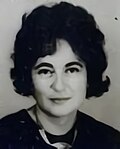
Ruth First was born in Johannesburg in 1925, the daughter of Julius First — a founding member of the Communist Party of South Africa who had been among the small group of people who established the Party in 1921. Growing up in the First household meant growing up in a world where communist politics was not an external ideology imported from books but the normal language of engagement with the political and social reality of South Africa. The racial inequality of the apartheid system, the exploitation of the labour movement, the international context of anti-colonialism and socialist politics: these were the subjects of daily conversation, and Ruth First absorbed them before she could have articulated what she was absorbing.
She studied at the University of the Witwatersrand — the English-speaking university that admitted students of all races and that in the war years of the early 1940s was a place of intense political engagement. It was at Wits that she met Joe Slovo, and the relationship that began there became one of the great partnerships of the South African left — not a conventional relationship in which one partner's career served the other's, but a genuine collaboration of two formidable people who supported each other's work while each pursuing a distinct and distinctive contribution to the liberation movement. They married in 1949 and had three daughters: Shawn, Gillian, and Robyn.
She began her journalistic career working for the Guardian — the left-wing newspaper that was repeatedly banned and relaunched under different names, that was the primary vehicle for progressive opinion in South Africa, and that provided Ruth First with a platform for the kind of investigative journalism that connected directly to the liberation movement's political programme. Her reporting on the conditions of Black farm workers, on the pass law system, on the treatment of prisoners, and on the broader human consequences of apartheid brought her into conflict with the authorities who preferred that these conditions remain invisible, and it established her as one of the most effective communicators the liberation movement had.
The Journalism and Its Politics
Ruth First's journalism was not neutral reporting. It was committed journalism — work done in the explicit service of a political position, using the professional skills of the journalist to make the case for the liberation movement's analysis of South African society in the most concrete and the most human terms available. This was not a compromise of professional standards; it was the expression of a coherent theory of what journalism was for — the theory that the journalist's job was to show people what was true, and that showing the truth about apartheid was itself a political act regardless of whether the journalist explicitly made the political argument.
Her reporting on the conditions of Black farm labour in the Transvaal — published in a series of articles that documented the conditions of farm workers in ways that challenged the comfortable ignorance of white South African readers — was among the most important investigative journalism produced in South Africa in the 1950s. The conditions she documented — the pass laws that bound workers to farms, the violence of the farm labour system, the legal mechanisms that gave white farmers almost unlimited power over Black workers — were conditions that the mainstream South African press treated as invisible or natural. Ruth First treated them as neither. She went to the farms, she talked to the workers, she documented what she found, and she published it.
The agricultural labour series and her other investigative work established her reputation as one of the country's most important journalists at a time when journalism that challenged the racial order was genuinely dangerous. The Guardian's repeated banning was in part a response to the kind of journalism Ruth First and her colleagues were producing — the government's acknowledgment that what they were writing was effective enough to require suppression.
117 Days: The Solitary Confinement and Its Account
Ruth First was detained in August 1963, in the wave of arrests that followed the Rivonia raid and that swept through the Congress Alliance's networks in an attempt to identify and destroy whatever remained of the ANC underground after the capture of the Rivonia leadership. She was held in the Pretoria Local Prison in solitary confinement — under the ninety-day detention law that allowed the security police to hold anyone indefinitely without charge, without access to legal counsel, and without any of the procedural constraints that even the apartheid legal system's political prosecutions required.
She was held for 117 days. The experience she had in that time — the specific textures of the isolation, the interrogations, the psychological dimension of confinement in a cell with no human contact beyond the interrogators who were trying to extract information from her — she documented in the memoir she wrote after her release. 117 Days, published in 1965, is one of the most important personal accounts of what the apartheid detention system actually did to people — not because it is the most extreme account (it does not describe physical torture, which some of the security police's practices of the period did involve), but because it is the most analytically precise.
Ruth First was a journalist and an intellectual, and she brought to the experience of detention the same analytical attention she brought to everything else. She observed her own psychological state with the same disciplined observation she would have brought to a political situation she was reporting on. She noticed what the isolation did to her — the ways in which the absence of human contact and the complete removal of normal social reference points changed her relationship to time, to self, to the coherence of her own thinking. She noticed how the interrogations worked — the specific techniques the security police used, the emotional dynamics of the interrogation relationship, the ways in which the isolation created vulnerabilities that the interrogators were trained to exploit.
The resulting memoir is uncomfortable reading because it is honest in ways that flatter neither the author nor the reader — it does not present a heroic narrative of resistance maintained through stoic endurance, but a more complex account of psychological survival in conditions specifically designed to prevent it. The honesty is itself a form of courage, and the book remains essential reading for anyone who wants to understand what the apartheid detention system actually was.
Exile: London, Africa, and Mozambique
Ruth First left South Africa after her release from detention, joining the stream of ANC and SACP figures who went into exile in the years following the Rivonia arrests and the banning of the liberation movement. She went first to London, where she continued her journalistic and political work in the centre of the international anti-apartheid movement, contributing to the solidarity campaign and maintaining the connections to the liberation movement in South Africa that gave the exile community its political substance.
She also continued her scholarly work in exile — writing the books on South West Africa, on military coups in Africa, on Libya, that demonstrated the range of her intellectual engagement with the political economy of the continent she was committed to. These were not journalistic works in the conventional sense; they were serious political economy, drawing on theoretical frameworks and empirical research that placed the specific phenomena she was studying in the broader context of capitalism, colonialism, and the movements working to dismantle both.
The move to Mozambique after independence in 1975 was the decision that eventually cost her her life. She went to Maputo to direct the Centre of African Studies at Eduardo Mondlane University — the research centre that she built into one of the most important institutions of African studies in the southern hemisphere. The work she did at the centre — on migrant labour, on Mozambican development, on the political economy of the region — was the most sustained and most systematic scholarly work of her career, and it was work that was directly relevant to the liberation movement's understanding of what a post-apartheid South Africa would need to address.
17 August 1982: The Parcel Bomb
The parcel bomb that killed Ruth First on 17 August 1982 was sent by Craig Williamson — an apartheid intelligence operative who had spent years infiltrating the international anti-apartheid movement's networks in London and elsewhere, gaining access to its communications and its personnel under the cover of being a committed anti-apartheid activist. Williamson's infiltration was one of the most successful long-term intelligence operations the apartheid state conducted against the liberation movement, and the information he obtained during his years in the movement contributed to the security apparatus's ability to target its most effective members.
The decision to assassinate Ruth First was a decision by the apartheid state to kill a fifty-seven-year-old academic in Mozambique because of the threat she represented — not a military threat, not an operational threat to any specific security operation, but an intellectual and political threat. The work she was doing at the Centre of African Studies, the analysis she was developing of the political economy of southern Africa, the connections she maintained to the liberation movement's networks: these were what the state was trying to destroy when it sent the parcel bomb to her office.
She opened the parcel at her desk. It exploded. She was killed immediately. She was fifty-seven years old. Joe Slovo received the news in Lusaka. He continued his political work — the only response to such a loss that maintained the integrity of the commitment they had shared. The continuation was itself a tribute, though it was also, as he later wrote, a grief that he carried for the rest of his life.
The Truth and Reconciliation Commission and the Inadequate Reckoning
Craig Williamson applied for amnesty from the Truth and Reconciliation Commission for his role in Ruth First's assassination. His application was contested by her daughters — Shawn, Gillian, and Robyn Slovo — who challenged both the completeness of his disclosure and the appropriateness of amnesty for a deliberate political murder. The TRC granted Williamson amnesty in 2000, a decision that the First-Slovo family and many others in the liberation movement community regarded as deeply inadequate.
The case illustrated one of the most difficult tensions in the TRC process: the tension between the political requirement to offer amnesty in exchange for full disclosure — which had been the price of the peaceful transition — and the moral demand that the victims of the most deliberate and most calculated murders receive a reckoning that amnesty did not provide. Ruth First's assassination was not a military operation that had gone wrong or a case in which the perpetrator had acted without clear authorisation; it was a deliberate, planned murder of a specific individual because of who she was and what she was doing. Williamson received amnesty. The family continued to challenge this.
Legacy: The Complete Intellectual and the Incomplete Justice
Ruth First died at fifty-seven, in Maputo, at the desk of the institution she had built. She was killed by the state that she had spent her adult life opposing, for reasons that the TRC process established but could not adequately account for. She left behind a body of journalism and scholarship — 117 Days, South West Africa, The Barrel of a Gun, Black Gold, and many other works — that remains among the most important intellectual outputs of the South African liberation movement's exile generation.
She was a journalist who understood what journalism was for. She was a scholar who understood what scholarship was for. She was a communist who understood what communism was for. These three commitments were not separate in her life but expressions of the same fundamental orientation: the conviction that understanding the world clearly was inseparable from working to change it, and that the most honest intellectual work was work done in the service of liberation rather than in the service of power.
The apartheid state killed her because it understood this — because it correctly identified her as a threat that was intellectual and political rather than military, and because it had no tolerance for the kind of clear seeing and honest analysis that she practised. The parcel bomb is the state's acknowledgment of her effectiveness. It is also, in the most permanent and most brutal sense, the measure of the cost that effectiveness exacted. She was fifty-seven years old. She was at her desk. She was doing the work.