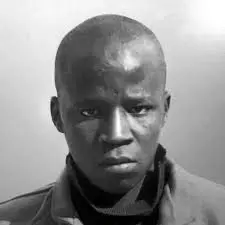
At a Glance
Mamelodi and the Pretoria Township World
Solomon Kalushi Mahlangu was born in Mamelodi on 10 July 1956 — the township that served as Pretoria's segregated African residential area, separated from the administrative capital of the apartheid state by the spatial architecture that the apartheid system had constructed to maintain the racial separation that was its foundational principle. Growing up in Mamelodi meant growing up within sight, almost, of the Union Buildings where the apartheid government administered its racial order — the proximity a particular form of irony for a young man who would eventually be hanged by the state those buildings housed.
His childhood and adolescence were lived in the Mamelodi of the late 1950s and 1960s — a community shaped by the same forces that shaped all the South African townships of that era: the pass laws, the migrant labour system, the inferior education of the Bantu Education Act, the daily indignities of the racial hierarchy, and the underlying political traditions of the ANC and the liberation movement that survived the banning and the repression of the early 1960s in the community's memory and in the conversations of the households that carried the tradition forward.
The Soweto uprising of June 1976 did not happen in Mamelodi, but it happened to Mamelodi — as it happened to every African township in the country, transforming the political consciousness of the generation that was coming of age in those months. The images of Hector Pieterson, the sound of gunfire in Soweto's streets, the subsequent spread of the protests to other townships and to secondary schools across the country: these events created the political generation that Solomon Mahlangu was part of, the generation that decided that the sacrifice demanded by apartheid's continued existence was too great and that the risk of resistance was worth accepting.
The Decision to Leave: MK After 1976
The path from Soweto 1976 to MK training in Angola was a path that thousands of young South Africans took in the years immediately following the uprising. The uprising had demonstrated that mass unarmed protest could impose real political costs on the apartheid state and attract international attention, but it had also demonstrated that the state was willing to shoot children in the streets to maintain its order. For many of the young people who participated in the 1976 protests — who had been in the streets, who had seen their classmates shot, who had experienced the state's response at its most direct — the conclusion was that the unarmed protest had reached its limits and that a more militant form of resistance was required.
Leaving South Africa to join MK was not a decision taken lightly or made without cost. It meant leaving family, leaving community, leaving the known world of the township for the unknown world of exile and military training. It meant accepting the risk of not returning, or of returning only to face the legal consequences that the state was preparing to impose on MK operatives. For Solomon Mahlangu and the thousands like him, the decision was made because the alternative — remaining in South Africa and accepting the conditions of apartheid as permanent — was the option they found more intolerable.
He was trained in Angola, in the ANC's camps that provided the military education that turned civilian young men into MK operatives. The training was both technical — weapons handling, tactical fieldcraft, communications — and political — the MK cadre was expected to understand what they were fighting for, to be able to articulate the liberation movement's programme and its philosophy, to be a political soldier rather than simply a military instrument. Mahlangu received this training and was prepared for the operation that would return him to South Africa and that would end his life.
June 1977: The Johannesburg Incident
On 13 June 1977, Solomon Mahlangu and Monty Motloung entered South Africa as part of an MK operation. The details of what they were intended to do — the specific objectives of the operation — are not fully established in the public record. What is established is what happened in central Johannesburg: a confrontation with police in a commercial area in which shooting broke out, two white bystanders were killed, and both Mahlangu and Motloung were captured.
The two bystanders who died — Sergeant Abraham Martins, a warehouse worker, and Ernst van Heerden, a student — were not the intended targets of any MK operation. They were in the wrong place when the shooting started, killed in the chaotic violence of a street confrontation that no one had controlled. Their deaths were the consequence of an operation that had gone wrong in the most lethal way — the outcome that the ANC's stated commitment to minimising civilian casualties was designed to prevent, and that the specific circumstances of this incident had produced anyway.
Motloung had fired the shots that killed the bystanders. Mahlangu had not. But Mahlangu was present during the incident, was part of the same MK operation, and was therefore charged under the common purpose doctrine — the legal principle that makes all participants in a joint criminal enterprise responsible for the acts of any participant in furtherance of that enterprise. The common purpose doctrine was a legal instrument that the apartheid state used extensively against liberation movement operatives, and it was applied here to convict a man of murder for deaths he had not caused by the actions of a person who could not be executed for them.
The Trial and the Sentence
The trial of Solomon Mahlangu and Monty Motloung was a political trial in the sense that all political prosecutions under apartheid were political — it used the mechanisms of the legal system to pursue political objectives, in this case the demonstration that the state would impose the death penalty on MK operatives and the deterrence of further armed operations. The legal proceedings were conducted within the formal framework of South African law, with the procedural protections that the apartheid legal system provided, but the outcome — the death sentence for a man who had not fired the fatal shots — was one that the international community and the anti-apartheid movement regarded as fundamentally unjust.
Motloung, who had fired the shots that killed the two bystanders, was also convicted of murder but was found to be too severely brain-damaged from the injuries he had received during capture to be sentenced to death. The distinction between the two accused — one too damaged to hang, the other sentenced to death for the actions of the damaged one — was itself a commentary on the legal doctrine that made the distinction irrelevant. Common purpose held Mahlangu responsible for Motloung's actions. The fact that Motloung could not be executed for those same actions was a paradox the legal system produced but did not resolve.
The appeal for clemency to State President John Vorster was refused. The execution was scheduled and carried out. Solomon Mahlangu was hanged at Pretoria Central Prison on 6 April 1979. He was twenty-three years old. He had been an MK operative for less than two years. He had not fired the shots that killed the bystanders for whose deaths he was executed.
The Last Words and Their Life After Him
"Tell my people that I love them and that they must continue the struggle. My blood will nourish the tree that will bear the fruits of freedom. Aluta continua."
These words — spoken to his mother, Mashadi Mahlangu, who was present at his execution — became one of the most quoted statements in the history of the South African anti-apartheid struggle. They circulated in the liberation movement's publications, in the speeches of solidarity organisations around the world, in the culture of the ANC's exile communities. They expressed, in a form simultaneously personal and political, the understanding that the individual sacrifice was part of a collective project — that the person being killed was not the end of the thing that was being killed for, but that the struggle would continue and that the sacrifice contributed to its eventual outcome.
The words have the quality of all the best last words — they are simple, they are true, and they are addressed to other people rather than to the person's own situation. Solomon Mahlangu, facing the gallows at twenty-three, told his mother he loved his people and told the people to continue. He did not complain about the injustice of his execution or protest his conviction. He placed his death in the service of the living who would carry the struggle forward. The tree he described has borne fruit — the democratic South Africa that exists is, in this specific and meaningful sense, what his blood nourished.
Legacy: The Young Man and the Name He Left
Solomon Mahlangu died at twenty-three. He had been alive for less time than the apartheid state would continue to exist after his death. He was one of hundreds of young men that the apartheid state hanged — the death penalty was one of its most frequently used instruments against the liberation movement's young operatives, and the gallows at Pretoria Central Prison and other prisons across the country claimed many lives. What distinguishes Mahlangu from many of the others is the last words — the clarity and the generosity of what he said at the moment of his death — and the decision of the liberation movement to make his name and his words a symbol of the sacrifice the struggle required.
The Solomon Mahlangu Freedom College in Tanzania — the school that the ANC established in exile to educate the children of liberation movement members — bore his name from its founding. The Solomon Mahlangu Drive in Tshwane carries his name through the city that executed him. The Order of Mendi for Bravery in Gold that President Mbeki awarded him posthumously in 2004 is the post-apartheid state's formal recognition of what the apartheid state did to him and what he represented.
He was twenty-three years old. He was hanged for the deaths caused by another man. He told his mother he loved his people and told his people to continue. The struggle continued. The tree bore fruit. The fruits are imperfect, as all political fruits are. But they are real, and they are there, and they are in part the product of what Solomon Mahlangu's blood nourished. That is the measure of a martyr, and he was one.