At a Glance
Johannesburg, Architecture, and the Communist Tradition
Lionel Bernstein was born in Johannesburg in 1920 into the Jewish immigrant community that had settled in the city in the generations since the gold rush, and he grew up in the environment that produced a disproportionate share of the South African communist and liberal left. The Jewish experience of persecution in Eastern Europe, and the proximity of the Jewish immigrant community to the Black working class in Johannesburg's inner suburbs, gave many young Jewish South Africans of Bernstein's generation a particular sensitivity to what racial categorisation and systematic discrimination did to human beings — a sensitivity that for some found expression in Zionism, for some in liberalism, and for others in the communist tradition that insisted on the universal applicability of the principles of human equality.
Bernstein trained as an architect — a profession that, in the Johannesburg of the 1940s and 1950s, offered both a degree of professional independence and an engagement with the built environment in which the apartheid system expressed itself most visibly. The townships, the compounds, the racially segregated spaces of the apartheid city were an architect's subject as much as a political activist's, and the relationship between the spatial organisation of apartheid society and its political and economic structures was not lost on someone who thought carefully about both. His architectural practice — which he maintained throughout his years of political activity and resumed in exile in London — was continuous with his political commitments rather than separate from them.
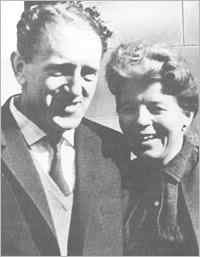
He joined the Communist Party in the early 1940s, following the path of many in his generation and his community. His marriage to Hilda Watts in 1941 joined two of the most committed figures in the South African communist movement in a partnership that would last for more than sixty years — through the Treason Trial and the Rivonia Trial and exile in London and the eventual return to a democratic South Africa they had spent their lives working toward. Together the Bernsteins were one of the most important couples in the history of the South African left: two people whose individual contributions were significant and whose combined contribution was greater than either alone.
The Freedom Charter: Writing the Future
The Congress of the People, held at Kliptown on 26 June 1955, was the largest and most representative gathering the Congress Alliance had ever organised — approximately three thousand delegates from across South Africa, representing the ANC, the Indian congresses, the Congress of Democrats, and the Coloured People's Congress, assembled to adopt a document that would articulate the rights and aspirations of all South Africans in terms that could serve as the foundation for a post-apartheid dispensation.
The document they adopted had been produced through a genuinely democratic process: the Congress Alliance had sent organisers across the country to collect "freedom demands" from ordinary South Africans — from workers and farmers and domestic servants and teachers and miners and women and students — asking what kind of South Africa they wanted to live in. The responses — tens of thousands of them, written on scraps of paper and in notebooks and on whatever was available — were collected, sorted, and synthesised into the document that the Congress Alliance presented to the Kliptown gathering.
Lionel Bernstein was the person most responsible for that synthesis — for taking the tens of thousands of demands and desires and aspirations that ordinary South Africans had expressed and organising them into the coherent, readable, politically powerful document that the delegates adopted clause by clause at Kliptown. The process of drafting required both political judgment — about which demands to include, how to frame contested questions, how to reconcile the different political emphases of the Alliance's constituent organisations — and literary skill, the ability to write sentences that were both precise and inspiring, that communicated complex political positions in language that ordinary people could understand and be moved by.
The Freedom Charter's opening words — "We, the people of South Africa, declare for all our country and the world to know: That South Africa belongs to all who live in it, black and white, and that no government can justly claim authority unless it is based on the will of all the people" — are among the most important sentences in South African political history. They established the principle of non-racial democratic citizenship as the foundation of the liberation movement's programme, and they did it in language clear enough that there could be no ambiguity about what was being claimed. Lionel Bernstein wrote those words. They became the intellectual foundation on which the 1996 Constitution was built, and they are the reason 9 August is National Women's Day in South Africa — because the Freedom Charter that Bernstein drafted was the document that the women who marched in 1956 were marching for.
Liliesleaf Farm: The Day the Movement's High Command Was Captured
Liliesleaf Farm, a smallholding in the northern Johannesburg suburb of Rivonia, had been the operational headquarters of MK's high command since the early 1960s. It was owned and managed by Arthur Goldreich, who maintained it as a working farm to provide cover for the political and military planning that took place there. Nelson Mandela had lived there undercover while he was operating as the Black Pimpernel. The ANC's most senior underground operatives met there, planned there, and kept the documents of the armed struggle there.
On 11 July 1963, the Security Branch raided Liliesleaf Farm. They arrested seventeen people, including most of MK's high command. The documents they seized — the Rivonia documents, as they became known — gave the state the evidence it needed for the prosecution of the most important political trial in South African history. Among those arrested was Lionel Bernstein.
He had been at the farm for a meeting — present, in other words, at the wrong place at the wrong time, from a legal perspective, even if his presence was entirely consistent with his political commitments. The state charged him alongside the other accused with sabotage and conspiracy to commit violent revolution, and he spent the following year in the Palace of Justice in Pretoria, listening to the state build its case against him and his co-accused. Hilda attended the trial throughout, sitting in the public gallery and observing the proceedings that would determine whether her husband spent the rest of his life in prison.
The Acquittal, the Re-Arrest, and the Contempt of Law
The verdict in the Rivonia Trial was delivered on 12 June 1964. Eight of the accused — Mandela, Sisulu, Mbeki, Kathrada, Mhlaba, Motsoaledi, Mlangeni, and Goldberg — were found guilty and sentenced to life imprisonment. One accused — James Kantor — had had his charges withdrawn earlier. And Lionel Bernstein was acquitted.
The court found that the state had not established beyond reasonable doubt that Bernstein had been a member of MK or had personally participated in the planning of acts of sabotage. He was not guilty. He was free. He rose from the dock and walked toward the door of the courtroom, toward Hilda, toward the street, toward whatever came next.
He did not reach the street. At the door of the courtroom, Security Branch officers were waiting for him. They arrested him again, immediately, under the ninety-day detention law — the provision that allowed the security police to hold anyone indefinitely without charge and without access to legal counsel. The court had acquitted him. The state re-arrested him before he could leave the building. The rule of law that the Rivonia Trial had ostensibly been conducted under was exposed, in that moment, as a facade: the state would use the courts when the courts served its purposes and would override them by administrative means when they did not.
Hilda Bernstein's account of this moment in The World That Was Ours is one of the most devastating passages in the literature of the anti-apartheid struggle — not because it is dramatic in the conventional sense, but because it is so precisely observed, and because the precision of the observation reveals so completely the nature of the system it describes. She saw her husband acquitted and re-arrested in the same motion. She understood immediately what it meant. She wrote it down.
Escape, Exile, and the Architectural Practice in London
After his eventual release from the second detention, Lionel Bernstein and Hilda made the decision to leave South Africa. The pattern of their departure was the pattern of many activists of the Rivonia era: a clandestine exit via Botswana, moving through the network of sympathisers and ANC contacts that maintained routes out of South Africa for those who could no longer safely remain. They reached London and established themselves there — Lionel resuming his architectural practice, Hilda beginning the writing career that would produce the books through which she documented the liberation struggle and their experience of it.
London was the centre of the international anti-apartheid movement in the 1960s and 1970s, and the Bernsteins were part of that community — attending the meetings, contributing to the campaigns, maintaining the connections to the ANC's external mission and to the broader solidarity movement that made the international pressure on the apartheid government possible. Lionel's architectural work gave him a professional identity and an economic foundation in exile, and the combination of professional practice and political commitment that had characterised his life in South Africa continued in London, if in a different register.
He and Hilda both returned to South Africa after the democratic transition. He died in London on 23 June 2002, at eighty-two years of age — having lived to see the country for which he had written the Freedom Charter hold its first democratic elections, having lived to see the ANC government adopt a constitution whose foundational principles were the direct descendants of the principles he had articulated in the document the apartheid government had arrested him for drafting.
Legacy: The Author of the Beginning
Lionel Bernstein's legacy rests primarily on two things that are in some tension with each other: the Freedom Charter, which he wrote, and the Rivonia Trial, in which he was acquitted. The Freedom Charter is one of the most important political documents in South African history — the statement of principle that defined what the liberation movement was fighting for and that became the intellectual foundation of the post-apartheid constitutional order. The acquittal at Rivonia is a legal peculiarity — a verdict that the state immediately overrode by administrative means, rendering the distinction between conviction and acquittal meaningless in the moment of its production.
What connects these two aspects of his legacy is the question of the state's relationship to law. Bernstein wrote a document asserting that all South Africans had equal rights under the law and equal claims to the country's resources and governance. The apartheid state arrested him for writing it, tried him, acquitted him, and then re-arrested him in the same motion. The contempt for law that the re-arrest expressed was the contempt for law that the Freedom Charter challenged. His life, in this sense, was a demonstration of the very principle he had articulated: that a state which claimed legal authority while overriding legal outcomes at will was not a legitimate state, and that the document he wrote was not a demand being made of power but a description of what power needed to become.
He was the architect who designed documents as well as buildings. The Freedom Charter is the most enduring thing he built, and it is still standing.