At a Glance
Fort Beaufort and the Eastern Cape Tradition
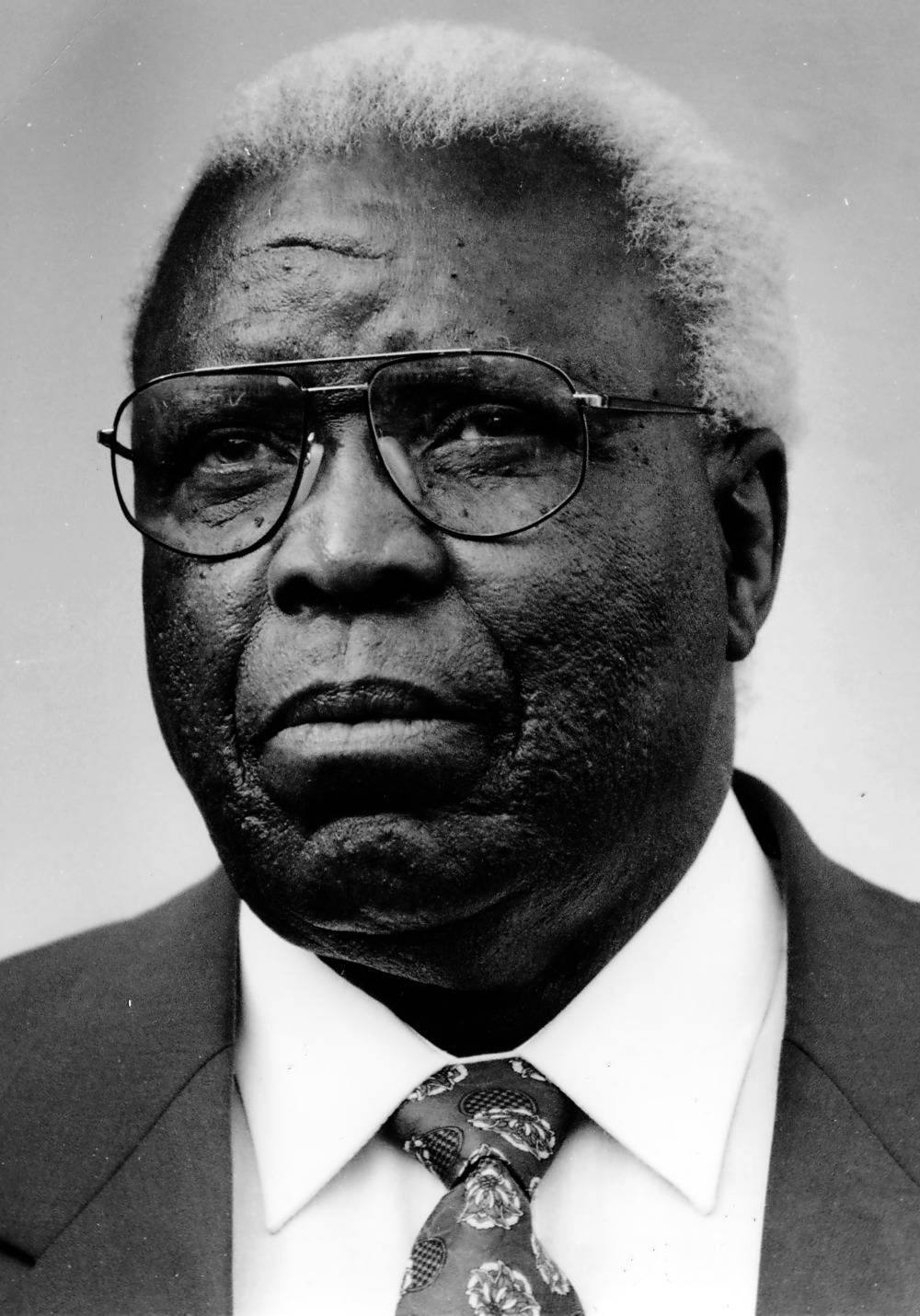
Raymond Mhlaba was born in Fort Beaufort in the Eastern Cape in 1920, in the province that had been the heartland of African political organisation since the nineteenth century. The Eastern Cape was the home of the earliest African political organisations and intellectual traditions — the province of Lovedale College, of Fort Hare University College, of the ANC's deepest organisational roots. It was also the province with the most active communist left outside of Johannesburg, the place where the CPSA had built some of its most effective African working-class structures in the 1930s and 1940s.
Mhlaba's formation in this environment gave him access to both the ANC tradition and the communist tradition from an early stage. The Eastern Cape's political culture was one in which these two traditions were intertwined — where the same people were often active in both organisations and where the distinction between ANC member and SACP member was sometimes less significant in practice than it was in organisational theory. The Eastern Cape was the province that had produced Govan Mbeki — the Rivonia prisoner who was both an ANC leader and one of the most important Marxist theorists the South African left ever produced — and Raymond Mhlaba was part of the same political tradition.
He trained as a laundry worker — one of the few occupations available to African men in the Eastern Cape's limited economy — and became involved in trade union organising through his work. The trade union movement was the entry point through which many working-class African activists came to the liberation movement in the 1940s, and the experience of organising workers gave Mhlaba the practical skills and the political consciousness that his subsequent ANC and SACP career would draw on.
The Underground Communist: Compartmentalisation as Political Practice
The remarkable fact of Raymond Mhlaba's political life — remarkable even in the context of a liberation movement that required its members to accept extraordinary costs and disciplines — is the thoroughness with which he maintained the secrecy of his Communist Party membership. In the years of the Suppression of Communism Act, when SACP membership was a criminal offence that could result in imprisonment, the requirement for secrecy was absolute. Members were expected to deny their membership publicly, to maintain the appearance of non-communist political identity even when their actual commitments were fully communist, and to share knowledge of their Party membership only with those who needed to know it for operational reasons.
Mhlaba carried this requirement to its logical extreme. His own family — the people closest to him, the people whose knowledge of his true political commitments would have had no operational consequences — did not know he was a Communist Party member until the information became public through the Rivonia Trial proceedings. This was not the ordinary caution of the underground operative who avoids unnecessary disclosure; it was the absolute compartmentalisation of the most disciplined kind of clandestine political actor, applied consistently across the whole of his domestic and political life.
The discipline that this required — the maintenance of a consistent public identity that concealed a different private reality, the management of relationships built on incomplete knowledge, the daily navigation of conversations that could not be fully honest because honesty would have been operationally dangerous — was a form of self-sacrifice that was less visible than imprisonment or exile but no less demanding. Mhlaba maintained it for decades. The revelation at the Rivonia Trial was not a betrayal or a failure; it was the unavoidable disclosure that the trial's proceedings produced, and by the time it happened the secrecy had served its purpose for years.
MK Founding Member: The Decision for Armed Struggle
Raymond Mhlaba was one of the founding members of uMkhonto we Sizwe — the armed wing of the ANC established in December 1961 following the Sharpeville massacre and the banning of the ANC and the SACP. The decision to form MK was the most consequential strategic decision the South African liberation movement made in the early 1960s — the decision to add armed struggle to the movement's repertoire after the government had demonstrated through Sharpeville that it was willing to use lethal force against peaceful protest and after the banning of the ANC had removed the legal vehicle through which nonviolent opposition had been organised.
Mhlaba's involvement in MK's founding reflected his position as the ANC's Eastern Cape regional commander and his dual commitment to the ANC and the SACP — the two organisations whose partnership produced MK. The Eastern Cape was one of MK's most important regional bases, and Mhlaba's command of the ANC's Eastern Cape structures gave him both the authority and the organisational network from which to contribute to the new armed wing's development.
The early MK was explicitly committed to sabotage — attacks on infrastructure and symbols of the apartheid state rather than on people — and the Eastern Cape networks that Mhlaba commanded were part of the first wave of MK operations. The careful calibration of the armed struggle's early phase to avoid civilian casualties was an expression of the ANC's understanding that its moral authority in the international arena was one of its most important strategic assets, and Mhlaba as a regional commander was responsible for implementing this calibration in the Eastern Cape's operations.
The Rivonia Trial and the Long Sentence
The Rivonia arrests of July 1963 caught most of MK's high command. Mhlaba was arrested in the security sweep that followed the Liliesleaf Farm raid, charged alongside the other Rivonia accused, and convicted in June 1964. The sentence of life imprisonment was designed to be permanent — the apartheid government's assessment that these men were sufficiently dangerous that their indefinite removal from political life was worth the domestic and international political costs that such sentences entailed.
The Rivonia Trial's significance extended far beyond the sentences it produced. The trial was a political event as much as a legal one — an occasion on which the liberation movement's leadership had the opportunity to explain their actions and their principles to the world, to challenge the apartheid state's legal authority on its own ground, and to make the moral case for the liberation struggle in terms that the international community could understand. The statements from the dock — most famously Mandela's "I am prepared to die" speech, but also the statements of the other accused — were among the most important political documents the South African liberation movement produced, and Mhlaba was part of the group whose collective dignity in the face of life sentences gave the trial its historical character.
Twenty-Six Years: The Long Education
Robben Island prison held Raymond Mhlaba for twenty-six years — from his arrival in 1964 until his release in October 1989. The island that the apartheid government had designed as the end of political careers was, for Mhlaba and the other long-term prisoners, the site of one of the most sustained programmes of political education in the history of South African politics. The Robben Island University — the informal educational institution that the prisoners built from the resources available to them — provided political, historical, and theoretical education to each wave of new prisoners who arrived at the island, transmitting the liberation movement's intellectual tradition across the decades of imprisonment.
Mhlaba's Eastern Cape background was a particular asset in this community. The Eastern Cape was the home of the overwhelming majority of the island's prisoners, and his knowledge of the region's political traditions, his relationships with the activists from Port Elizabeth and East London and the surrounding areas who arrived at the island through the 1960s and 1970s, and his authority as a Rivonia prisoner gave him both a social role and a political influence in the prison community that extended beyond his formal organisational positions.
He was released in October 1989 as part of the group release of Rivonia prisoners that the de Klerk government authorised as part of its preparation for the negotiations that would produce the democratic transition. The release came four months before the unbanning of the ANC — a deliberate sequencing that attempted to manage the political dynamics of the transition. For Mhlaba, released at sixty-nine after twenty-six years of imprisonment, the return to the Eastern Cape was the beginning of the final chapter of a political life that had spanned half a century.
The Eastern Cape Premier and the Last Years
Raymond Mhlaba's election as Premier of the Eastern Cape Province in 1994 was both a personal recognition and a symbolic statement. The man who had been the ANC's Eastern Cape underground commander before his arrest, who had spent twenty-six years on Robben Island, was returning to the region where he had built the underground networks as its democratically elected premier — the chief executive of a province whose political character had been shaped in significant part by the tradition he represented.
The Eastern Cape in the post-apartheid era faced some of the most severe development challenges of any province in South Africa — high levels of poverty, a heavily rural population, limited economic infrastructure, and the legacy of the Bantustan system that had designated large portions of the province as the "homelands" of the Xhosa-speaking peoples. Governing it required the application of administrative capacity to problems of development that were the direct inheritance of decades of apartheid underdevelopment, and the resources available for addressing them were limited by the broader constraints of the post-apartheid government's fiscal position.
He subsequently served as South Africa's High Commissioner to Uganda, contributing to the post-apartheid government's African diplomacy in a role that drew on his decades of experience in the liberation movement's continental relationships. He died in Port Elizabeth on 2 February 2005, ten days before his eighty-fifth birthday — in the city that had been the base of his ANC underground operations before his arrest forty-two years earlier, the city that had then imprisoned him and that he had outlived to see become a city of the democratic South Africa his imprisonment had helped to create.
Legacy: The Quiet Revolutionary
Raymond Mhlaba's legacy is the legacy of the Eastern Cape's ANC tradition — one of the most important regional traditions in the history of the South African liberation movement — and of the Rivonia generation's particular form of commitment. He was not the most celebrated of the Rivonia prisoners — Mandela's symbolic stature, Sisulu's organisational significance, Mbeki's theoretical importance, Kathrada's personal relationship with Mandela: these have tended to draw more historical attention than Mhlaba's quieter contribution. But quietness is not insignificance. He was the ANC's Eastern Cape commander. He was a founding member of MK. He served twenty-six years on Robben Island without breaking. He returned to the Eastern Cape as its premier.
The detail of the Communist Party membership kept secret even from his family is the detail that most vividly captures the character of his commitment — the thoroughness, the discipline, the absolute prioritisation of the movement's operational requirements over the normal claims of personal relationships. It was a form of dedication that was its own kind of sacrifice, different from but no less complete than the more visible forms of sacrifice that the liberation struggle is more commonly celebrated for.
He lived to eighty-four. He died in the city where his political life had been organised, in the province he had helped to govern, in the democratic country he had spent half a century helping to build. That is a completed life, and it deserves its place in the record of the South African liberation struggle.