At a Glance
Tanauan to Manila: Poverty, Law, and the Path to Revolution
Apolinario Mabini was born on 23 July 1864 in Talaga, a barrio of Tanauan in Batangas province — one of the agriculturally rich provinces of southern Luzon, where the sugar and coffee economy produced both wealthy ilustrado families and the landless rural poor who worked their fields. Mabini's family were among the poor: his father was a farmer of modest means, and the family's circumstances meant that Apolinario's education was something he had to earn through his own labour rather than receive as a family entitlement.
He worked as a schoolteacher while pursuing his legal studies — a common path for ambitious young men of limited means in the colonial Philippines, where teaching provided income and some social standing while the student prepared for the bar examination. He was a student of exceptional ability, winning scholarships and prizes, and he passed the bar examination in 1894, establishing a small legal practice in Manila. He was thirty years old, on the threshold of the modest professional career that his abilities and efforts had earned him, when the paralysis that defined the rest of his life struck in 1896.
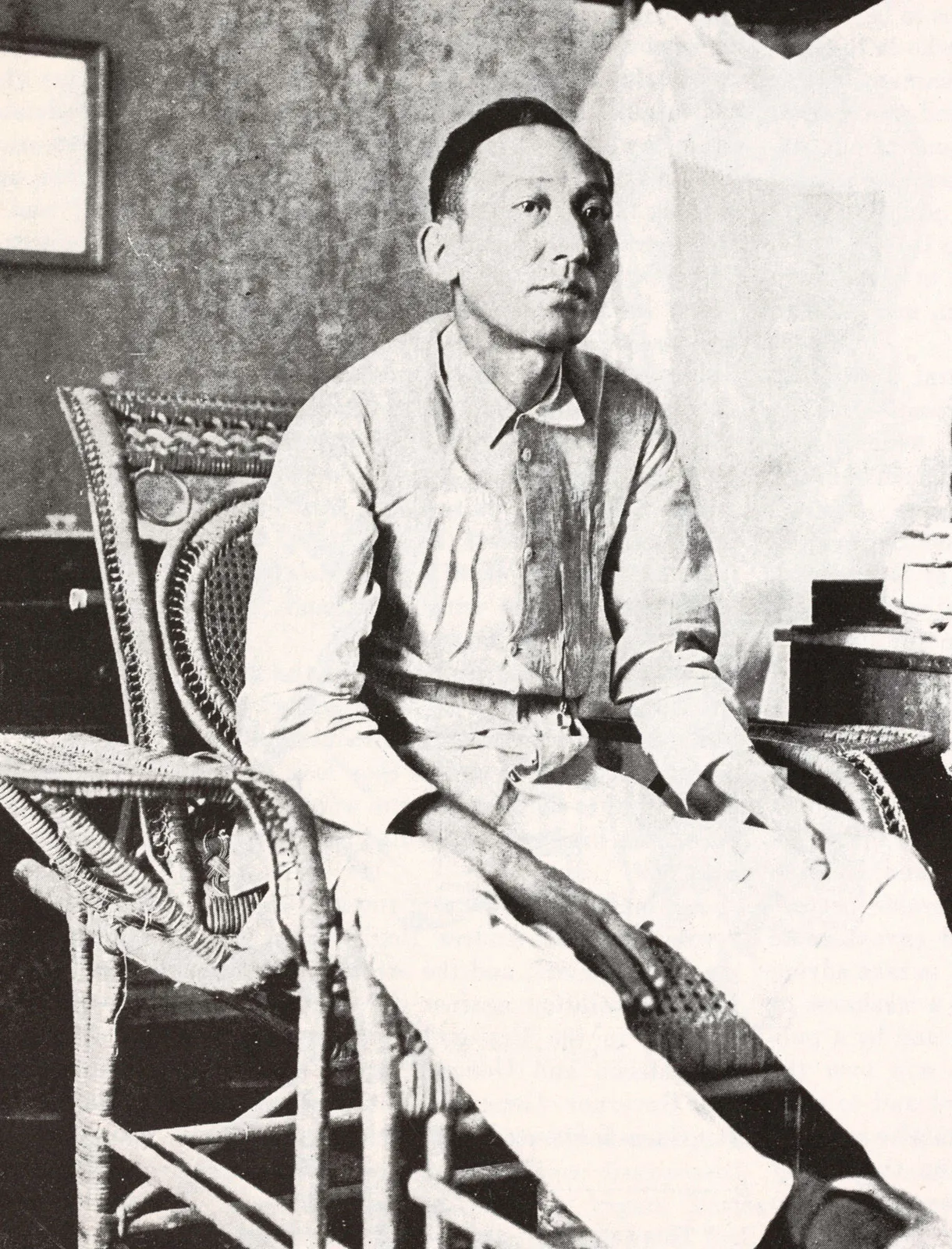
The paralysis — attributed to polio in most accounts, though some historians have suggested other causes — left him unable to walk. He became dependent on others for his physical movement through the world: carried in a hammock or a chair by assistants, transported between locations by aides who understood that the intelligence they were carrying was worth the inconvenience. The physical limitation seems to have concentrated rather than diminished his intellectual energy. He read, wrote, and thought with an intensity that the practical demands of a lawyer's daily practice had perhaps not fully permitted, and when the revolution came, he had both the analytical clarity and the philosophical framework to make an immediate and decisive contribution to it.
The Revolution Finds Its Theorist
When the Katipunan's existence was betrayed to the Spanish authorities in August 1896 and the Philippine Revolution began, Mabini aligned with the revolutionary movement immediately. He was arrested briefly by the Spanish — his known nationalist sympathies making him a suspect regardless of direct evidence — and released. When Aguinaldo's faction consolidated control of the revolutionary government after the Tejeros Convention of March 1897 and the execution of Andrés Bonifacio, Mabini eventually made his way to Aguinaldo's headquarters and was appointed the president's chief adviser.
The appointment was immediately consequential. Mabini brought to the revolutionary government something it had lacked: a coherent constitutional philosophy, a systematic understanding of what a Philippine republic should be in terms of its legal and governmental structure, and the writing ability to express that philosophy in documents that could serve both internal governance and international diplomacy. He drafted the Constitutional Programme of the Philippine Republic in 1898 — a document that articulated the principles of republican self-governance, the separation of powers, the rights of citizens, and the legal framework within which the new state would operate. He wrote the preamble to the Malolos Constitution that the Philippine Republic formally adopted in January 1899.
His influence on Aguinaldo was significant but not absolute, and the points at which Aguinaldo overruled him are among the most consequential decisions in Philippine history. Mabini opposed the Pact of Biak-na-Bato of December 1897 — the agreement under which Aguinaldo and other revolutionary leaders accepted exile to Hong Kong and a Spanish payment in exchange for laying down arms. He argued that the revolution should continue. He was overruled. He opposed the decision to cooperate with the American forces against Spain in 1898, distrusting American intentions and arguing that the United States was not coming to the Philippines as a liberator but as a replacement coloniser. He was overruled. In both cases, subsequent events confirmed his analysis.
The Malolos Republic and the American Conquest
The First Philippine Republic — the Malolos Republic, named for the town in Bulacan where its Congress met and its constitution was ratified — was declared in January 1899 with Aguinaldo as President and Mabini as the effective head of government. It was, while it lasted, one of the first republican governments in Asia: an elected legislature, a constitution, a cabinet, a foreign ministry attempting to win international recognition, and a military force defending the republic's territory against an American army that had arrived as an ally against Spain and was now positioning itself for the conquest that President McKinley's "Benevolent Assimilation" proclamation had announced.
The Philippine-American War began on 4 February 1899, when American and Filipino forces exchanged fire at the San Juan Bridge in Manila. The war that followed was brutal and protracted — the Americans eventually fielded 126,000 soldiers against the Philippine forces, used concentration camps and collective punishment, and killed between 200,000 and 600,000 Filipinos through violence, disease, and famine before the organised resistance was suppressed. Mabini directed the republic's foreign policy through the war's opening phases, writing appeals to foreign governments, drafting legal arguments for Philippine sovereignty under international law, and attempting to make the case in the court of international opinion that the United States was committing an act of naked imperialism against a people who had already established their own government.
The international response was indifferent. The European powers had their own imperial projects and no interest in establishing precedents against colonial conquest. The American anti-imperialist movement — which included figures like Mark Twain and Andrew Carnegie — had moral force but not political power sufficient to stop the war. Mabini continued writing as the republic's military position deteriorated. Aguinaldo's government fled from Malolos as the Americans advanced, moving from town to town through 1899. Mabini was captured by American forces in December 1899 and taken to Manila.
Guam: The Exile Who Would Not Yield
The American colonial administration offered captured Filipino leaders an oath of allegiance to the United States as the price of amnesty — freedom, the restoration of property, and reintegration into public and professional life in exchange for a formal declaration of loyalty to the new sovereign. Most of the ilustrado leadership took the oath. They were practical men who had families, property, and professional careers to protect, and who calculated that cooperation with the American administration offered better prospects than continued resistance. Mabini refused.
His refusal was not theatrical. He was in poor health, paralysed, imprisoned, without resources, and offered a comfortable way out. He refused because his entire intellectual life had been organised around the proposition that the Philippines had a right to self-governance, that this right could not be surrendered to any foreign power, and that taking the oath would be a direct contradiction of everything he had written and argued and worked for. He was deported to Guam in January 1901 along with other prominent refusers, and he spent nearly two years there — on the American-administered island, a prisoner of the empire he had refused to recognise — writing.
The work he produced in Guam exile is among the most important documents of Philippine nationalist thought. La Revolución Filipina is a history and analysis of the revolution from its origins to its suppression — candid, sometimes critical of the decisions Aguinaldo and others had made, and animated by the conviction that the revolution's defeat was not evidence that independence was wrong but evidence that it had been imperfectly pursued. El Verdadero Decálogo — The True Decalogue — is a philosophical statement of civic and moral principles for Filipinos, framed as a counter to the Ten Commandments: a secular humanist manifesto for a people being told by their new American colonisers that they were not yet ready for self-governance.
Return, Death, and the Legacy of Principle
Mabini finally took the oath of allegiance in February 1903 — not because his convictions had changed but because his health was failing and he wanted to die in the Philippines rather than in exile. He returned to Manila in February 1903. He died of cholera on 13 May 1903, four months after his return, aged thirty-eight. He had outlived the republic he helped build by four years and would not live to see the independence he had argued for achieved. That came in 1946.
His face appears on the Philippine one-centavo coin. His house in Tanauan, Batangas is a national shrine. Mabini Street in Ermita, Manila runs through what was once the heart of the colonial city's legal and professional district — an appropriate address for the man who gave the Philippine Revolution its constitutional language. His writings remain in print and are studied in Philippine schools as primary documents of the country's intellectual and political history.
What Mabini represents in Philippine memory is the principle of consistency: the man who argued the same things before the revolution, during the revolution, and after the revolution's military defeat, and who refused to change his stated position even when changing it would have made his own life easier and safer. In a political culture that has often rewarded flexibility and punished rigidity, his inflexibility is honoured as the most important kind of courage — the courage not of the battlefield but of the desk, the written word, and the refusal, maintained across years of exile and ill-health, to say that what he believed to be true was false.