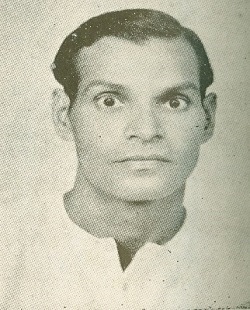
At a Glance
Punjab and Lahore: The Revolutionary Networks of the Late 1920s
Jaidev Kapur came of age in the Punjab of the late 1920s — the province that the colonial government had developed as its military and agricultural heartland, that had given the empire its most loyal regiments for generations, and that in the years after Jallianwala Bagh in 1919 had also produced the most intense and sustained revolutionary nationalism in the subcontinent. The two things were not contradictory: the same Jat Sikh and Khatri families that had provided soldiers for the colonial army also produced the young men who joined the Naujawan Bharat Sabha and the Hindustan Socialist Republican Association in the years between the Kakori executions of 1927 and the Central Legislative Assembly bombing of 1929.
Lahore was the centre of this world. The city was the Punjab's political, legal, and educational capital — home to the courts where nationalist lawyers practised, the colleges where nationalist students organised, and the newspapers where nationalist arguments were published and debated. It was also, in 1928 and 1929, the operational base of the HSRA's Punjab network: the organisation that Bhagat Singh, Chandrashekhar Azad, and Sukhdev Thapar had built from the remnants of the old Hindustan Republican Association after the Kakori executions. Jaidev Kapur was part of this network — connected to it through the personal relationships that constituted the HSRA's organisational structure, which relied on trust between individuals rather than formal membership lists or documented hierarchy.
The Lahore Conspiracy Case: A Trial That Defined a Generation
The Lahore Conspiracy Case was the colonial government's most ambitious prosecution of the HSRA, built around the killing of British police officer John Saunders on 17 December 1928 — the operation that Bhagat Singh, Azad, and Rajguru had carried out in retaliation for the baton-charge that killed Lala Lajpat Rai. The investigation was thorough and the net it cast was wide: the colonial government arrested every HSRA member it could identify, charged them under Section 121 of the Indian Penal Code for waging war against the King Emperor, and built a case from the overlapping testimony of approvers, the physical evidence recovered in raids on safe houses, and the intelligence gathered through years of surveillance of the revolutionary networks.
Twenty-one men were eventually tried in the Lahore Conspiracy Case, and Jaidev Kapur was among them. The case proceeded against a backdrop of national political crisis: Bhagat Singh and Batukeshwar Dutt were simultaneously being tried for the Central Legislative Assembly bombing, the hunger strikes in Lahore Central Jail were generating enormous press coverage, and the Congress under Gandhi was negotiating with the Viceroy in what would become the Gandhi-Irwin Pact. The convergence of these events meant that the Lahore trial was conducted under extraordinary public scrutiny, with every development reported across India and the defendants acutely aware that their statements and conduct in the dock were being read by the entire nationalist movement.
The colonial court's Special Tribunal — established specifically for this case because the government feared that a jury trial might produce the same acquittal that the earlier Kakori cases had sometimes avoided only narrowly — convicted the principal defendants. Bhagat Singh, Sukhdev, and Rajguru were sentenced to death and hanged on 23 March 1931. Others received sentences of transportation for life or terms of rigorous imprisonment. Jaidev Kapur was among those acquitted — the evidence against him specifically was insufficient for the standard of proof required even by the Special Tribunal, and the acquittal was confirmed on appeal.
What Acquittal Meant in the Context of That Trial
Jaidev Kapur's acquittal requires some contextualisation to be properly understood. The Lahore Conspiracy Case was not a trial in which the colonial government was trying to determine guilt or innocence in any straightforward sense — it was a political prosecution intended to destroy the HSRA as an organisation by removing its members from circulation and demonstrating to potential recruits that membership carried catastrophic personal consequences. The degree of involvement required for conviction was adjusted to meet the prosecution's objectives, and the differentiation between sentences — hanging, transportation, imprisonment, acquittal — reflected both the strength of the evidence against each defendant and the prosecution's assessment of each person's centrality to the operation being tried.
Jaidev Kapur was acquitted because the evidence that he had directly participated in the Saunders shooting or in the specific planning of that operation was insufficient. This was not the same as saying he was uninvolved in the HSRA — his membership and his connection to the network were not in dispute. It meant that the prosecution could not prove, to the standard the court required, that he had been directly involved in the specific criminal act charged. In the context of a colonial trial in which the standard of proof was itself politically determined, this distinction carried moral complexity that Jaidev Kapur was presumably aware of throughout his subsequent life.
After the Trial: Law, Parliament, and the Long Survival
Released after his acquittal, Jaidev Kapur returned to the legal career that the HSRA had interrupted. He was qualified as a lawyer or training as one at the time of his arrest — the Lahore legal community was closely connected to the nationalist movement, and many of the barristers who defended HSRA members were themselves former or current Congress activists. He practised law in the decades around independence, building the professional life that the acquittal had made possible while the men he had been tried alongside — those who were not hanged or transported — navigated their own transitions from revolutionary underground to the institutions of a free India.
He was elected to the Indian Parliament on a Congress ticket, a career trajectory that placed him among the independence generation's members who made the transition from resistance to governance — a transition that was more complicated than it appears in retrospect, requiring the absorption of the habits and compromises of institutional politics by people whose formative experience had been in organisations that operated entirely outside institutions. The Parliament he served in was the institution that Bhagat Singh and the HSRA had thrown smoke bombs into in 1929 to force attention to legislation they considered oppressive. The distance between that moment and a seat in its successor legislature was not merely temporal.
The Witness Who Lived: Testimony About Bhagat Singh
As Jaidev Kapur aged and his contemporaries died — Bhagat Singh in 1931, Azad in 1931, Sukhdev in 1931, Rajguru in 1931, Batukeshwar Dutt in 1965, others through the following decades — his position as a living witness to the HSRA period became increasingly significant. He gave interviews, wrote recollections, and provided the kind of first-hand testimony about Bhagat Singh as a person — his manner of speaking, his specific arguments in private conversation, his way of relating to his comrades — that no documentary record could fully provide.
This testimony is historically valuable precisely because it is irreplaceable. The documentary record of the HSRA — the pamphlets, trial transcripts, police records, newspaper accounts — tells us what the organisation did and what its members said in public. It does not tell us what Bhagat Singh was like in a room with his comrades, what he found funny, how he argued when he disagreed, what he was like as a human being rather than as a political symbol. Jaidev Kapur knew, and for the decades he lived after independence he was one of the very few people who did.
He died in 1999, aged approximately ninety-three — nearly seven decades after the trial that had defined his youth, more than half a century after the independence that the men hanged in that trial had helped make possible. He had outlived the British empire, the undivided Punjab, the Congress's dominance of Indian politics, and virtually every other person who had been in the rooms where the HSRA's decisions were made. That longevity was itself a kind of testimony: evidence that the story of the revolutionary generation was longer and more various than the martyrology of its most celebrated dead, and that the survivors' lives were also part of what that generation had been and what it left behind.