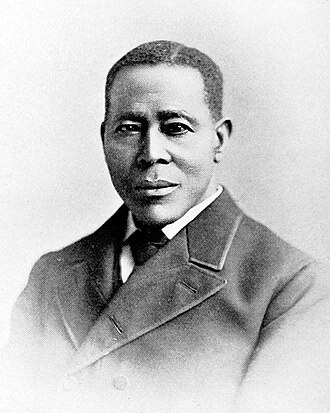
At a Glance
Burlington County, a Family Divided by Slavery, and the Personal Stakes of Liberation
William Still grew up in a household defined by a specific, personal loss — the loss of two brothers who remained enslaved in Maryland while the rest of the family lived free in New Jersey. His father Levin had purchased his own freedom from Maryland slavery and made his way north; his mother Charity had escaped from Maryland, but in escaping had been forced to leave behind two of her children, Levin Jr. and Peter, who could not be safely brought along. The family lived in New Jersey with the knowledge that these two boys were somewhere in Maryland, enslaved, and that the institution the Still family had escaped by purchase and flight was, for two of William's brothers, still the consuming reality of their daily lives.
This specific, biographical knowledge of slavery's human cost — not as an abstraction encountered through reading or argument but as the lived reality of his own family's history — gave William Still a relationship to the Underground Railroad's work that was fundamentally different from the relationship of even the most committed white abolitionists. Every person who came through his Philadelphia station was, in some sense, a version of his brothers — a specific human being whose specific family had been divided by the same institution that had divided his own, and whose specific escape was an individual act of liberation with individual human meaning. The documentation he produced reflected this understanding: he was not merely recording statistics but preserving the specific, individual stories of people whose humanity the slave system had tried to reduce to property.
He moved to Philadelphia in 1844, educated himself through the reading that had been his primary school since childhood, and in 1847 was hired by the Pennsylvania Anti-Slavery Society as an office worker — the first paid position in his career and the entry point to the Underground Railroad work that would define it. He rose to become the corresponding secretary of the Philadelphia Vigilance Committee, the organisational arm of the Underground Railroad in Philadelphia, and in that role he became the operational hub of the most important mid-Atlantic station in the movement's network.
The Philadelphia Station: Operations, Networks, and the Art of Coordination
The Philadelphia Vigilance Committee's operations in the late 1840s and the 1850s were the product of Still's systematic intelligence applied to the specific requirements of a major Underground Railroad hub. Philadelphia was the first major city north of the Mason-Dixon Line on the primary escape routes running from Maryland, Delaware, and Virginia, and the station needed to receive people arriving in various states of physical and emotional condition, assess their needs, provide immediate necessities, arrange for any medical treatment required, and forward them northward through the Pennsylvania and New England networks toward Canada or other safe destinations — all while maintaining the security that the Fugitive Slave Act's enforcement mechanisms made essential.
Still coordinated this with what contemporaries consistently described as remarkable efficiency and remarkable calm. He communicated regularly with stations on both sides of him in the network — with Thomas Garrett in Wilmington, whose correspondence provided advance notice of arrivals and whose operation received people from the Maryland and Delaware routes; with Jermain Loguen in Syracuse, with Lewis Hayden in Boston, and with the various other northern stations that received people from Philadelphia. He maintained the Vigilance Committee's finances, sought funds from supporters, and managed the practical logistics of an operation that was handling hundreds of people in the years of its highest activity.
The Fugitive Slave Act of 1850 added a specific dimension of danger to his work that had not existed before its passage. Federal law now required Northern citizens to assist in the return of escaped slaves, made federal marshals available to enforce it, and denied accused fugitives the protection of state courts and jury trial. The documentation that Still was keeping — the detailed records of escaped people, their enslavers' names, the routes they had taken — was potentially devastating evidence against the entire Philadelphia network if it fell into the wrong hands. He kept it anyway, hiding it in a cemetery vault to protect it from discovery, because he understood that the historical record of what the Underground Railroad had accomplished was as important as the operations themselves and needed to be preserved even at the risk of its exposure.
The Discovery of Peter Still: Documentation Meets Personal History
The encounter with Peter Still in 1850 was the most dramatic personal moment of William Still's Underground Railroad career and one of the most extraordinary episodes in the entire history of the movement. Peter Friedman — born Peter Still, the name he had taken from his enslaver — arrived at the Philadelphia Vigilance Committee having escaped from slavery in Alabama, where he had lived for most of his forty years. William Still conducted the standard intake interview, asking the questions about background and family that he asked of every escaped person who came through his station.
In the course of the interview, Peter described his parents — his father Levin, who had purchased his freedom and gone north, his mother Charity, who had escaped from Maryland leaving two sons behind. He described the family in Maryland, the details of how he and his brother Levin Jr. had been left when their mother fled. And William Still, listening to this account, understood that he was sitting across from his own brother — that the man he was interviewing as part of his standard Underground Railroad documentation was one of the two siblings whose continued enslavement had been the defining wound of his family's history for forty years.
His account of this moment in his 1872 book is careful and controlled, written with the restraint of a man who understood that the personal dimension of the discovery did not diminish but rather illustrated the political dimension — that the specific human significance of each escape was exactly what the institution of slavery tried to deny and exactly what the Underground Railroad's work was in the business of affirming. Peter Still's story ended well: he was eventually reunited with his mother Charity in New Jersey, and his subsequent career — he was eventually able to purchase his wife Vina's freedom from slavery in Alabama — was one of the Underground Railroad's more complete human resolutions. But the encounter in Still's Philadelphia office remains one of the movement's most indelible moments.
The Network: Tubman, Garrett, and the Mid-Atlantic Triangle
Still's position as the Philadelphia hub placed him at the intersection of the most productive Underground Railroad routes in the mid-Atlantic region, and the relationships he built with the conductors who fed people to his station were among the most important partnerships in the movement's history. His correspondence with Thomas Garrett in Wilmington was extensive, regular, and operationally specific — Garrett would write to inform Still of groups arriving from the Maryland and Delaware routes, their condition, their needs, the timing of their forwarding northward; Still would respond with information about the Philadelphia network's readiness to receive them. The letters, which Garrett kept and Still preserved, are among the most vivid operational documents in the Underground Railroad literature.
His relationship with Harriet Tubman was equally significant. Tubman conducted her rescue groups northward from Maryland's Eastern Shore through Wilmington — where Garrett received and provisioned them — and then into Pennsylvania and to Philadelphia, where Still received them and arranged their northward forwarding. Still documented each of Tubman's groups with the same systematic care he brought to every arrival, recording the names, the backgrounds, and the stories of the people she had guided to freedom. His records of Tubman's operations are among the most important sources for the documented history of her rescue missions, providing the specific names and circumstances that Tubman's own oral accounts left undocumented.
He also maintained relationships with the northward network — with the stations in New England and the organisations in New York that received people from Philadelphia and forwarded them toward Canada. The communications that sustained these relationships were part of the Underground Railroad's invisible infrastructure — the letters and coded messages and personal contacts that kept the network coordinated across geographic distances without creating the documentary trail that would have exposed it to legal prosecution. Still walked this line with consistent skill, preserving what needed to be preserved and protecting what needed to be protected.
The Underground Railroad (1872): Giving Names to the Nameless
The book that Still published in 1872 was, in its ambition and its execution, one of the most significant acts of historical preservation in the history of American reform. He was doing something that the Underground Railroad's operational requirements had always worked against: he was naming names. The secrecy that the network required for its safety had meant that most of its operations were conducted without written records, that most of the people it helped remained anonymous in the historical literature, and that the human reality of what the movement had accomplished — the specific individuals whose specific escapes had been organised, funded, and sheltered by the network's conductors and stations — was in danger of being lost as the participants aged and died.
Still's book partially countered this loss. It preserved the stories of hundreds of individual escaped people, with their real names — not the pseudonyms that the slave narrative tradition sometimes used to protect people still in the South — and with the names of their enslavers, the details of their escapes, and wherever possible their subsequent lives in freedom. The decision to use real names rather than pseudonyms was a deliberate statement: these were real people, with real histories, and their stories deserved to be told with the specificity that their humanity required. The slave system had reduced them to property; Still's documentation restored them to personhood.
The book also preserved the correspondence and the operational records that documented the network's workings — the letters from Garrett about arriving groups, the letters from Tubman about her missions, the letters from other conductors and stations that chronicled the network's operations over more than a decade. These documents are irreplaceable sources for the operational history of the Underground Railroad, providing the kind of specific, contemporary evidence that most other accounts of the movement lack.
The 1872 publication was not merely an act of historical preservation; it was also a political argument about Reconstruction and its promises. Still was publishing at a moment when the promise of Black freedom was under systematic assault — when the Southern states were using terror, fraud, and legal manipulation to reassert white supremacy over the formerly enslaved — and his book was a demonstration that the people whose freedom the Underground Railroad had helped to secure were fully capable of the self-direction, the entrepreneurial activity, the civic engagement, and the professional achievement that freedom required. The successful outcomes he documented were arguments against the racial hierarchy that the post-war South was attempting to rebuild.
Businessman, Civic Leader, and the Post-War Life of a Free Man
Still's post-Civil War career demonstrated through his own biography the argument that his book was making about the formerly enslaved: that Black Americans, given the freedom and the opportunity that the Underground Railroad had helped to secure and the Civil War had formally established, were fully capable of building successful and consequential lives. He established himself as a coal merchant in Philadelphia, built a successful business, and became one of the most important civic figures in Black Philadelphia — a community leader, a philanthropist, and a persistent advocate for Black civil rights in a city and a state that were not always willing to provide them.
He founded the first Young Men's Christian Association for Black men in Philadelphia, worked to integrate the city's streetcars — a campaign that eventually succeeded through a combination of legal action and public pressure — and maintained throughout his business career the commitment to Black community building that had characterised his Underground Railroad work. The coal business he built provided the financial foundation for this civic work and demonstrated that the skills he had developed as an Underground Railroad coordinator — the ability to manage complex networks, to maintain relationships with multiple parties, to balance logistical requirements with human needs — were directly applicable to the world of commercial enterprise.
He died on 14 July 1902, at the age of eighty, having outlived slavery by thirty-seven years and having spent those years building the kind of Black institutional and economic life in Philadelphia that freedom was supposed to have made possible everywhere. His death was mourned widely in the Black community of the city and the broader reform world as the passing of one of the movement's most consequential figures — a man whose combination of operational effectiveness, historical consciousness, and personal integrity had made him irreplaceable in the Underground Railroad's golden years and whose post-war career had demonstrated exactly what freedom could produce when its promise was actually honoured.
Legacy: The Record-Keeper Who Knew Everyone's Name
William Still's legacy rests on two distinct but deeply connected contributions. The first is operational: his direction of the Philadelphia Vigilance Committee for more than a decade, his coordination of the mid-Atlantic Underground Railroad network, and his specific role in receiving, provisioning, and forwarding the hundreds of escaped people who passed through his station made him one of the most practically effective figures in the movement's history. He was, in the operational sense that Levi Coffin was the movement's "president," the movement's chief correspondent and coordinator in the most important single corridor of the mid-Atlantic network.
The second contribution is historiographical, and it may be the more enduring. The Underground Railroad Record that he compiled and published in 1872 is the most comprehensive and the most humanly specific account of the Underground Railroad's operations available to historians, and it has shaped every subsequent understanding of what the movement actually did and how it actually worked. Without Still's documentation, the people whose escapes the Underground Railroad organised would have remained nameless and faceless — statistics in a general account of the movement's achievements rather than specific human beings with specific stories that deserve to be known and told. Still gave them their names back, and in doing so he gave the movement its most complete and its most humanly significant historical record.