At a Glance
Tennessee, Cherry, and the Specific Cruelties of Plantation Life
Jermain Loguen's memoir opens not with his own story but with his mother Cherry's — a deliberate choice that reflected his understanding of where the deepest cruelties of slavery were located and who bore the heaviest burden of its specific violences. Cherry was an enslaved woman who had been brought from Ohio to Tennessee by a white man named Manasseth Logue, with whom she subsequently had several children, including Jermain. The relationship between Cherry and Logue was not consensual in any meaningful sense — it was the relationship that slavery made possible between an enslaver and an enslaved woman, sustained by the total legal power that the institution gave to one party over the other.
The children that Cherry bore to Logue were enslaved, because American law followed the condition of the mother — Cherry's enslavement was inherited by her children regardless of their father's status as a free white man. This legal arrangement, which was the product of a deliberate legislative choice to prevent the children of enslaved women and white men from having any claim to freedom through their paternal lineage, was a demonstration of the slave system's fundamental logic: it was not a system of racial categories that generated slavery, but a system of property relations that used racial categories to justify itself, and the treatment of Cherry's children as their father's property rather than as his children illustrated exactly how that logic operated.
The treatment of Cherry and her children by the Logue household was characterised by the casual violence that was the plantation system's primary disciplinary tool. Loguen's memoir describes specific incidents of brutality against his mother and against himself with a directness and a detail that was intended to make Northern readers understand that slavery was not a paternalistic arrangement occasionally marred by regrettable excess but a system of systematic terror in which violence was the normal mechanism of control. These descriptions gave his subsequent abolitionist career its emotional foundation — the specific, particular memories of specific, particular cruelties that no theoretical argument about slavery's injustice could replace as testimony.
The Escape: Tennessee to Canada and Back
Loguen escaped from slavery in Tennessee in 1834, at approximately twenty-one years of age. The details of his escape — described in his memoir with the combination of precision and retrospective wonder that characterises the best escape narratives — involved a combination of careful planning, physical endurance, and the assistance of strangers who were willing to take considerable risks to help him. He made his way north through Indiana, where a Quaker family provided him with the food, shelter, and directions that allowed him to continue; he eventually reached Canada, where he lived for a period and obtained the education that had been denied him in slavery.
His time in Canada was transformative. He learned to read and write — skills that were illegal to teach to enslaved people in Tennessee and that the system had deliberately withheld from him — and he began the process of intellectual and personal development that would eventually produce the minister, the orator, and the Underground Railroad conductor that he became. He returned to the United States after several years in Canada, eventually making his way to New York and then to the upstate New York community where his career would be built.
The choice to return to the United States rather than remaining in Canada — where he was legally safe from recapture under the Fugitive Slave Act — was a choice that he made consciously and that he understood as a commitment to the people he had left behind. He could have lived out his life in Canada in relative safety; he chose instead to place himself at the centre of the Underground Railroad network, accepting the risks that came with that position, because the people who were still enslaved in the South needed the network that men like him were positioned to provide. The choice was characteristic of the man — not the easy decision but the right one, accepted with full understanding of what it cost.
Syracuse: Building the Underground Railroad's Most Defiant Hub
Loguen arrived in Syracuse, New York in the early 1840s and found there a community that was unusually hospitable to his presence and his work. Syracuse had a strong abolitionist tradition — the city was part of the "burned-over district" of upstate New York where evangelical revivalism and reform movements had deep roots — and it had a substantial population of escaped slaves who had settled there and who formed a community with the resources and the social networks that Underground Railroad work required. The city's geographic position, on the main route from the South through New York to Canada, made it a natural hub for the Underground Railroad network, and the community's willingness to protect its Black residents from slave catchers and federal marshals made it possible for Loguen to operate there more openly than an Underground Railroad conductor could operate almost anywhere else in the United States.
His home on East Genesee Street became the central station of what was, by the 1840s and 1850s, one of the most active Underground Railroad networks in the country. Escaped slaves arriving in Syracuse were directed to Loguen's house, where they found food, shelter, clothing, money, and the personal attention of a man who understood from his own experience exactly what they had been through and what they still needed. He arranged the next legs of their journeys — by wagon, by the Erie Canal, by the network of safe houses that extended from Syracuse northward to the Canadian border — and provided them with the material and emotional support that made the difference between a successful escape and a recapture.
His estimate that more than 1,500 people passed through his home on their way to freedom is impossible to verify independently, but it is consistent with what we know about the scale of his operations and with the testimony of contemporaries who observed them. If the figure is approximately accurate, it places him among the very most productive conductors in Underground Railroad history — men and women who personally assisted the escape of hundreds or thousands of people over the course of careers that combined extraordinary courage with extraordinary logistical capacity.
The Fugitive Slave Act and the Syracuse Defiance
The passage of the Fugitive Slave Act in September 1850 was one of the most significant crises in the history of American abolitionism — a federal law that required Northern citizens to assist in the capture and return of escaped slaves, that denied accused fugitives the right to a jury trial, and that imposed severe penalties on anyone who assisted or harboured people fleeing slavery. For Loguen, who was himself a fugitive slave and who had spent years openly conducting escaped slaves through Syracuse, the Act was both a personal threat and a political provocation.
His response was not to go underground or to moderate his activities. It was to hold a public meeting, stand before the citizens of Syracuse, declare openly that he was a fugitive slave, announce that he would not comply with the Act under any circumstances, and dare the federal government to try to enforce it against him. The speech he delivered at that meeting — which was widely reprinted in the abolitionist press and which circulated across the North — was one of the most electrifying acts of personal defiance in the history of the movement. He named himself. He named his status. He named the law he was refusing. And he dared his oppressors to respond.
The Jerry Rescue of October 1851 — in which the Syracuse community mobilised en masse to free a captured escaped slave named Jerry Henry from the federal marshals who were holding him for return to slavery — was the practical consequence of the spirit that Loguen's speech had embodied and helped to create. The rescue required several thousand people to act together in direct violation of federal law, to storm a building guarded by federal officers, and to take responsibility as a community for the liberation of a man that the law said was someone else's property. It succeeded, Jerry was smuggled to Canada, and the federal government — faced with the prospect of trying to prosecute a city — backed down. The Jerry Rescue became the most celebrated act of mass resistance to the Fugitive Slave Act in American history, and Loguen's role in organising and leading it was central.
The Letter to Sarah Logue and the Voice of Liberation
In 1860, Loguen received a letter from Sarah Logue — the widow of his former enslaver Manasseth Logue — demanding either his return to slavery or the payment of one thousand dollars for himself, and threatening to have him seized if he did neither. The letter was remarkable in its presumption: written to a man who had been free for twenty-six years, who was a minister, a bishop-elect, and a celebrated public figure, as if his freedom were merely an inconvenient interruption in his proper condition as a piece of property.
Loguen's response, which he published openly in the abolitionist press, was one of the most celebrated documents in the literature of American slavery — a letter of scorching clarity and moral force that refused every premise of Sarah Logue's demand and made the case for his freedom and his dignity in terms that left no room for compromise or misunderstanding. He told her that she had no claim on him, that his mother's enslavement had been a crime against nature and against God, that his own escape had been an act of justice rather than a theft, and that he would not pay a dollar for himself or submit to recapture under any circumstances. He told her that if she sent anyone to Syracuse to attempt his capture, the community would protect him. And he told her, in terms of great dignity and great clarity, exactly what he thought of the system that had produced her letter and of her presumption in writing it.
The letter circulated across the North and was reprinted dozens of times in the abolitionist press. It demonstrated, more vividly than any abstract argument could have, the moral bankruptcy of the slave system's claims on the people it had held in bondage, and it displayed the quality that made Loguen such an effective figure in the movement — the combination of personal authority, moral clarity, and willingness to speak without apology or equivocation about the justice of his own cause.
Legacy: The King of the Underground Railroad
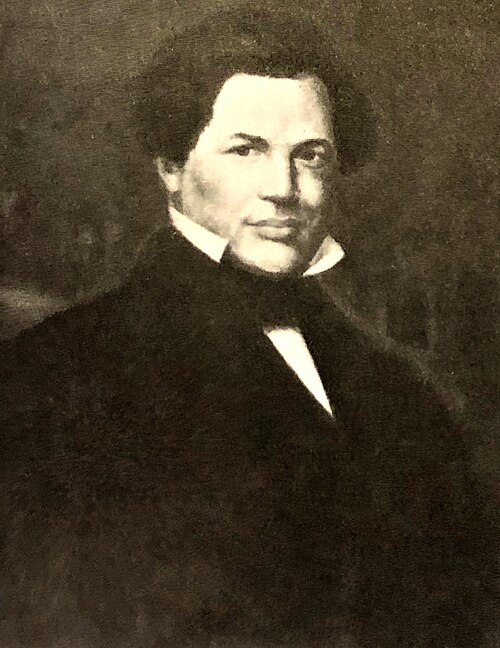
Jermain Loguen died in 1872, a bishop of the African Methodist Episcopal Zion Church, a celebrated figure in the history of American abolitionism, and a man whose personal story — from enslaved child in Tennessee to the most defiant Underground Railroad conductor in America — embodied the movement's central argument: that the people the slave system had tried to reduce to property were in fact full human beings whose dignity, courage, and capacity for self-determination were equal to anyone's and whose liberation was not merely a political goal but a moral necessity.
He was called the King of the Underground Railroad in his own lifetime, a title that reflected both the scale of his operations and the quality of his personal leadership. Unlike most Underground Railroad conductors, who operated in secrecy for obvious reasons, Loguen operated openly — his activities were known to the entire city of Syracuse, to the federal government, to the slave catchers who came looking for the people he had sheltered, and to the newspapers that covered his speeches and published his letters. He made his openness a form of political argument: a demonstration that the community of Syracuse would protect him and the people he sheltered, that the Fugitive Slave Act could not be enforced against a sufficiently determined and sufficiently united community, and that the slave power's reach did not extend into a city that had decided, collectively, not to allow it.
His daughter Amelia became a pioneering physician — one of the first Black women to earn a medical degree in the United States — and her career was a continuation of the tradition of Black achievement and self-determination that her father had embodied and defended. The Loguen family's history across two generations was itself an argument against the slave system's premise that Black people were fitted only for bondage, and its illustration of what freedom, education, and community support could produce when Black people were given the opportunity to develop their full capacities.