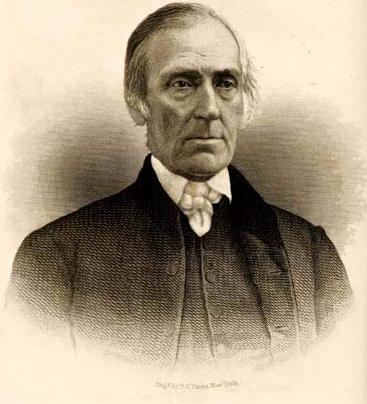
At a Glance
New Garden, the Quaker Conscience, and a Southern-Born Abolitionist
The Quaker community of Guilford County, North Carolina, in which Levi Coffin grew up was one of the most distinctive social environments in the antebellum South — a community of people whose religious tradition placed them in fundamental tension with the slave society that surrounded them and whose long history of antislavery conviction gave them the theological and practical resources to act on that tension. The Society of Friends had been passing antislavery resolutions since the late seventeenth century, and the North Carolina Quaker communities of the early nineteenth century were in many cases active opponents of slavery who helped enslaved people escape, who refused to buy or sell enslaved people, and who maintained the institutional infrastructure of antislavery conviction in a region where such conviction was not merely unpopular but dangerous.
Coffin grew up in this tradition, watching the adults around him navigate the tension between their religious convictions and the social and legal realities of a slave state, and he began his own antislavery activities early — by his own account, he was helping enslaved people find food, directions, and assistance as a teenager, beginning a career of direct action that would extend for more than fifty years. His childhood in North Carolina gave him something that many Northern abolitionists lacked: a direct, personal, sustained exposure to slavery not as an abstraction or a distant reality but as the daily texture of the society around him, the system that shaped the lives of everyone he knew regardless of their relationship to it.
The decision to move to Indiana in 1826 was partly economic — the opportunities for a Quaker merchant in the free state of Indiana were considerably better than those available to a man of his convictions in North Carolina — and partly a recognition that the Underground Railroad work he was already beginning to do could be conducted more effectively from a free state. Indiana in the late 1820s was not a welcoming environment for Black people or for antislavery activists; the state's Black Laws imposed significant legal restrictions on Black residents, and the white working-class communities of Indiana included many people who were hostile to abolitionism and to the escaped slaves who passed through the state on their way north. But compared to North Carolina, Indiana was freedom, and Coffin used the freedom it offered with the systematic intelligence that characterised everything he did.
Newport: Twenty Years at the Centre of the Indiana Network
The Newport station that Coffin established in 1826 became, within a few years, the most important Underground Railroad hub in Indiana — the point at which multiple routes converged, where escaped slaves coming up from the Ohio River crossings in southern Indiana arrived to be provisioned, rested, and forwarded along the northward routes toward Canada. The town's geographic position was important: it sat at the intersection of several of the principal northward routes, and its proximity to the Ohio border — through which most escaped slaves from Kentucky and Virginia entered Indiana — made it a natural relay point for the network.
But geography alone did not make Newport what it became. The station's effectiveness depended on Coffin's organisational intelligence — his ability to manage the network of safe houses and conductors that extended both south and north from Newport, to communicate with stations at both ends about the movement of escaped people, to provision and forward people at the required pace, and to manage the security of the operation in a community that included many people who were hostile to what he was doing. He was known in Newport as an Underground Railroad operator — the secrecy that the movement officially maintained was not, in his case, very secret — and the community's tolerance of his operations, while never universal, reflected both the respect his standing as a businessman generated and the Quaker community's willingness to protect him from the most aggressive expressions of pro-slavery hostility.
His wife Catherine's role in the Newport operations was as essential as his own. She managed the domestic dimensions of the station — the feeding, the clothing, the medical care, the emotional support — with a competence and a dedication that Coffin acknowledged explicitly in his memoirs. The number of people who passed through their home — more than three thousand over the decades of their operations — meant that the domestic work of the station was not occasional but constant, requiring a woman of extraordinary capacity and commitment to sustain it across the decades. Catherine Coffin was that woman, and the Underground Railroad's history does her a disservice when it records her primarily as her husband's supporter rather than as a full co-operator in their shared enterprise.
Cincinnati and the Free-Labour Economy
Coffin's move to Cincinnati in 1847 placed him at the centre of the most important Underground Railroad hub in the Ohio Valley — a city that sat directly across the Ohio River from Kentucky, that had a large free Black community whose members were active in the network, and that was a major commercial centre whose transportation infrastructure provided multiple routes for the movement of escaped people northward. Cincinnati was also a city of intense racial conflict — its proximity to slave territory made it a target for slave catchers, and its large working-class white population included many people who were deeply hostile to both abolitionism and to the free Black community whose competition for employment they resented.
Coffin's Cincinnati business — the wholesale warehouse that sold exclusively free-labour goods — was one of the most ambitious expressions of the economic dimension of his antislavery convictions. The argument underlying the free-labour store was straightforward: by refusing to stock goods produced by enslaved labour and by demonstrating that a commercially viable business could be built on goods produced only by free workers, Coffin was making the economic case against slavery that complemented the moral case he made through his rescue operations. The store was not merely a commercial enterprise but a demonstration — a proof of concept that the free-labour economy that abolitionists envisioned as the alternative to slavery could actually work.
The Cincinnati station was also more politically exposed than the Newport operation had been. Cincinnati was a major city under intense scrutiny from pro-slavery interests in Kentucky and from the federal government, and the passage of the Fugitive Slave Act in 1850 increased the legal pressure on Underground Railroad operations everywhere. Coffin responded to the Act with the same combination of principled defiance and practical intelligence that had characterised his approach from the beginning: he continued his operations, adapted his methods to the changed legal environment, and relied on the Cincinnati community's willingness to protect him from the most aggressive enforcement efforts.
The Network Builder: Routes, Relationships, and the Architecture of Liberation
What distinguished Coffin from most Underground Railroad conductors was not merely the scale of his operations but the sophistication of his understanding of what a network required. He thought systematically about routes, about the relationships between stations, about the communication systems that allowed the network to coordinate the movement of escaped people without creating the documentary trail that would expose the operation to legal prosecution, and about the funding mechanisms that sustained the network's practical operations.
He maintained relationships with conductors and station operators across an enormous geographic area — from the Ohio River crossings in southern Indiana and Ohio to the Canadian border — and he managed these relationships with the care and the attention to detail of a man who understood that the network's weakest link was as important as its strongest. A failed connection at any point on the route could mean the recapture of someone who had already endured the most dangerous part of the escape, and Coffin's systematic attention to maintaining and strengthening every connection in the network was one of the most important reasons for its extraordinary record of success.
His fundraising and political advocacy were as important as his operational work. The Underground Railroad required money — for food, clothing, transportation, and the various other practical expenses of moving escaped people northward — and Coffin was one of the most effective fundraisers in the movement's history, drawing on his business connections, his Quaker network, and his speaking engagements to maintain the financial flows that kept the network operational. His 1864 trip to Britain — to raise money for the freedpeople's relief work that the Civil War had made necessary — extended this fundraising work into the international arena that the American antislavery movement had always cultivated as a source of political and financial support.
Reminiscences: The Most Complete Account of an Underground Railroad Life
The Reminiscences of Levi Coffin, published in 1876, is one of the most important primary sources in the literature of the Underground Railroad — a detailed, specific, and operationally rich account of more than fifty years of antislavery work that provides historians with information about the movement's practical operations that no other source can match. Coffin described specific escapes with specific details — the people involved, the routes taken, the challenges encountered, the solutions found — in ways that illuminate the actual mechanics of the Underground Railroad rather than merely its symbolic significance.
The book's value as a historical source is complemented by its value as a personal document — an account of what it meant to spend a life in dedicated service to a cause, to maintain across decades the conviction that what you were doing was right even when the law said otherwise and the community around you was often hostile, and to build from the specific religious tradition of Quaker antislavery a practice of liberation that was simultaneously principled and pragmatic. Coffin was not a man who separated his faith from his practice; the two were inseparable, and the Reminiscences is as much a spiritual autobiography as it is an operational history of the Underground Railroad.
Legacy: The President of the Underground Railroad
Levi Coffin died on 16 September 1877, in Cincinnati, Ohio, having spent more than fifty years in active service to the cause of human freedom. The title he carried — President of the Underground Railroad — was not an official designation but a popular one, conferred by the movement's participants and observers on the man who, in their judgment, had done more than any other individual to build and sustain the network that carried enslaved people from bondage to freedom. Whether the title was fully accurate — whether any single person could be said to have been the "president" of something as decentralised and as collectively organised as the Underground Railroad — is a question that historians continue to debate. But the recognition it expressed was genuine: Coffin had been, for the better part of half a century, the most important single node in the most productive regional Underground Railroad network in the country, and his contributions to the movement were of a scale and a quality that no other individual's could match.
His house in Newport, Indiana — now the Levi Coffin House State Historic Site in Fountain City — is one of the best-preserved Underground Railroad stations in the United States, and it provides a physical connection to the operations he conducted there for twenty years. The house is a reminder that the Underground Railroad was not merely a network of sympathetic individuals but a physical infrastructure — actual buildings where actual people ate actual food and rested in actual beds before continuing on their journeys — and that the people who provided that infrastructure were doing something as concrete and as practical as anything in the history of American reform.