At a Glance
Upper Darby, Quaker Formation, and the Kidnapping That Set a Life's Direction
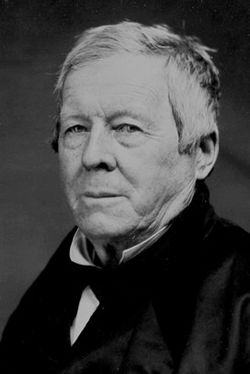
Thomas Garrett's commitment to the Underground Railroad was shaped by the convergence of two things: the general formation of his Quaker religious tradition, which had been the most consistent institutional opponent of slavery in American history, and a specific personal incident in his youth when a free Black woman employed by his family was seized by slave catchers intending to sell her south. His pursuit of the kidnappers, recovery of the woman, and witness to the absolute disregard the slave-catching industry showed for the legal status of free Black people was the formative experience that transformed general moral opposition into specific, lifelong practical commitment.
The Quaker tradition he inherited was not passive. It had produced John Woolman, who had spent decades walking through the slave South urging Quaker slaveholders to free their enslaved people. It had produced Anthony Benezet, who had written the earliest serious antislavery literature in America. It had produced a theological framework in which the Inner Light of God was present in every human being regardless of race, making the ownership of any human being a direct assault on divine creation. Garrett absorbed this tradition as the moral atmosphere of his childhood, and when he settled in Wilmington he brought it with him to a slave state whose geography made it one of the most important battlegrounds in the contest between slavery and freedom.
His position as an iron merchant gave him the economic independence and the practical resources that sustained his operations: a large property where people could be sheltered, a commercial network that provided cover for movements and communications, and a standing in the Wilmington community that provided some measure of social protection against the most aggressive attempts at prosecution. He used all of these resources systematically for four decades.
The Courtroom Statement: Defiance as Doctrine
The trial of 1848 was not the first legal challenge Garrett had faced — he had been indicted before and had escaped conviction. This time the evidence was sufficient, the jury willing, and the judgment devastating. The fine that the court imposed stripped him of everything. He was fifty-eight years old, had spent more than two decades building his business, and walked out of the courthouse with nothing.
The judge's statement from the bench — expressing the hope that financial ruin would deter Garrett from further assistance to escaped slaves — was the conventional language of judicial sentencing, the assumption that the destruction of a man's material interests would override his moral convictions. Garrett's response was a direct refutation of that assumption, delivered in plain language that had more rhetorical power than any formal oratory: he had not done anything he was ashamed of. He did not regret his losses. Any fugitive who needed a friend would find one in Thomas Garrett.
The statement was reported across the North. It was reprinted in abolitionist newspapers, read at antislavery meetings, cited in sermons. Its power came from its specificity: this was not a declaration of abstract principle but a statement made by a specific man in a specific courtroom at the moment of his specific ruin, addressed to the specific judge who had just destroyed him financially, promising that the destruction had not changed a single thing about his intentions. The antislavery movement understood what this meant, and it celebrated the statement as the most direct possible expression of what genuine moral commitment looked like when tested.
Recovery and the Tubman Collaboration
The recovery from 1848 was accomplished through community support — from Black Wilmingtonians who had the most direct stake in his continued operations, and from sympathetic members of the Quaker and broader antislavery community who helped him rebuild. Within a few years he was back in business and back in operation, having kept the promise he had made from the courtroom floor.
The collaboration with Harriet Tubman that developed in the late 1840s and through the 1850s was one of the most operationally important partnerships in Underground Railroad history. Tubman came through Wilmington repeatedly on her rescue missions from Maryland's Eastern Shore, and Garrett was the reliable, resourceful, completely trusted figure at the critical Pennsylvania border crossing who provided what her groups needed to continue northward. He gave shoes to people who had walked enormous distances without adequate footwear. He provided money for the next stage of the journey. He communicated with Still to prepare the Philadelphia network for each arriving group.
The letters he wrote Still about Tubman's operations are among the warmest documents in his correspondence — full of admiration for her courage and her operational genius, and the affection of a man who had known her long enough to understand exactly what she was capable of and to be genuinely awed by it. The relationship between the sixty-something Quaker merchant and the thirty-something former enslaved conductor was one of the Underground Railroad's most remarkable interracial partnerships, built on years of shared work and mutual respect.
Delaware, the Enemy's Territory, and the Long War
To appreciate the full weight of what Garrett did, it is necessary to remember where he did it. Delaware was a slave state throughout his entire career — a state whose legislature had repeatedly refused to abolish slavery, whose legal apparatus was available to prosecute Underground Railroad conductors, and whose proximity to Maryland's slave-exporting economy meant that it was constantly crossed by slave catchers, federal marshals, and the networks of informants and bounty hunters who made Underground Railroad operations perpetually dangerous.
Garrett did not operate in the relative safety of a free state where the social atmosphere was generally sympathetic and the legal risks, while real, were politically constrained. He operated in a slave state, in a city where his activities were known to his enemies, in an era when the Fugitive Slave Act had made federal law enforcement available to those who wanted to stop him. The 1848 conviction was not an anomaly but a demonstration of what the system he was operating against was capable of doing to him. He knew it, and he continued anyway.
The sustained courage that this required — the daily choice, renewed every time a person came to his door, to continue doing something that had already cost him everything — is the most remarkable quality of his remarkable career. He did not make one heroic decision; he made thousands of them, across forty years, in full knowledge of the consequences.
The Community Carried Him: Emancipation and the Recognition It Deserved
When emancipation came and slavery was abolished, the Black community of Wilmington honoured Thomas Garrett in the most direct and most physical way available to them: they reportedly lifted his carriage from the street and carried him through the city themselves, in a spontaneous expression of gratitude that was simultaneously a tribute to a specific person and a recognition of what that person had done for their community across four decades. The moment was widely reported and has been remembered in the history of the movement as one of the most vivid and most moving expressions of the relationship between Underground Railroad conductors and the communities they served.
He died on 25 January 1871, at eighty-one, having outlived slavery and having seen the beginning — if not the sustained realisation — of the freedom he had spent his life working to secure. His legacy in the Underground Railroad's history is clear and unambiguous: the most prolific single conductor in the mid-Atlantic network, the man who kept his courtroom promise across two decades of resumed operations, the Quaker iron merchant who chose the people over the property every time the choice was forced upon him.