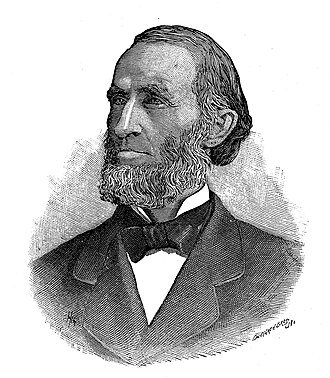
At a Glance
A Methodist Conscience and the Education That Sharpened It
Calvin Fairbank came to abolitionism through the same route that brought many of his generation into the antislavery movement: through a Protestant Christianity that took its moral commitments seriously enough to produce in its adherents a sense of personal responsibility for the sins of the society around them. The Methodism of early nineteenth-century upstate New York was a live, reforming faith — connected to the broader currents of the Second Great Awakening, animated by a conviction that human beings had an obligation not merely to personal piety but to the transformation of the social order in accordance with divine justice. In this theological environment, slavery was not simply a distant evil that one might deplore in the abstract; it was a specific, ongoing moral catastrophe that implicated every American in its continuation and demanded a personal response.
Fairbank's years at Oberlin College, which he attended in the early 1840s, gave this theological conviction an institutional context and a practical network. Oberlin was by this period one of the most important centres of organised abolitionism in the United States — the first American college to admit Black students on a regular basis, the home of Charles Grandison Finney's evangelical revivalism, and a gathering point for the young men and women who were becoming the activist core of the antislavery movement. At Oberlin, Fairbank moved from a general moral opposition to slavery to a specific understanding of what the Underground Railroad was, how it worked, and what role he might play in it. He was not a man who processed his convictions primarily through writing or oratory; he processed them through action, and Oberlin gave him the understanding of what action was possible and the connections to the people who were already taking it.
The geographic position of Kentucky — a slave state that shared a long border with the free states of Ohio and Indiana, separated from freedom by the Ohio River — made it a natural focus for Underground Railroad operations, and it was to Kentucky that Fairbank turned his attention in the years following his time at Oberlin. The border crossings, the river passages, the networks of safe houses and sympathetic individuals that constituted the Underground Railroad in the Ohio Valley region were by the 1840s well-developed, and Fairbank inserted himself into these networks with a directness and a disregard for personal safety that distinguished him from many of his collaborators.
The First Arrest: Lewis Hayden and the Price of Direct Action
The rescue that ended in Fairbank's first imprisonment was, by any measure, an extraordinary achievement. Lewis Hayden had been enslaved in Lexington, Kentucky, and had developed the desire to escape — a desire that carried with it enormous risk, not only because of the personal danger of attempted escape but because Hayden's wife and son were also enslaved, and any attempt to flee that left them behind would mean abandoning them to whatever punishment the slaveholder chose to inflict. The logic of the Underground Railroad's most ambitious operations was to move entire families together, which required planning, coordination, outside assistance, and a degree of luck that made every such operation a gamble against terrible odds.
Fairbank had made several trips into Kentucky before the Hayden rescue, becoming familiar with the geography and the social landscape of Lexington and its surroundings. The 1844 operation brought him into contact with Delia Webster, a Vermont schoolteacher then living in Lexington, and the two of them worked together to arrange the Hayden family's escape. The operation succeeded: Lewis Hayden, his wife Harriet, and their son made it to the North and to freedom. But Fairbank and Webster were caught on their return, arrested by Kentucky authorities who had been watching the Lexington abolitionist network with growing suspicion.
The trial that followed was swift and the outcome predetermined. Kentucky law made it a felony to assist the escape of enslaved persons, and the evidence against Fairbank was sufficient to secure a conviction. He was sentenced to fifteen years of hard labour in the Kentucky State Penitentiary at Frankfort — a sentence that was both a punishment for his specific acts and a warning to other abolitionists who might contemplate similar operations. Delia Webster received a lighter sentence and was pardoned relatively quickly; Fairbank served five years before being pardoned in 1849, his release secured through the tireless advocacy of Northern abolitionists who maintained constant pressure on Kentucky's political leadership.
The consequences of the rescue for Lewis Hayden were transformative. Hayden arrived in the North and made his way to Boston, where he became a central figure in the city's Black abolitionist community — running a clothing business on Cambridge Street that doubled as a station on the Underground Railroad, playing a leading role in the resistance to the Fugitive Slave Act of 1850, participating in the attempted rescue of the escaped slave Anthony Burns, and serving as one of the most important organisers of Black political and military participation in the Civil War. The five years Fairbank spent in the Kentucky penitentiary were five years that made Lewis Hayden's freedom and subsequent career possible.
Return to Kentucky and the Second Imprisonment
What is perhaps most extraordinary about Calvin Fairbank's story is that after serving five years in a Kentucky prison and being released, he returned to Underground Railroad work. The rational calculation — five years of brutal imprisonment as the price of a single rescue, with the constant prospect of re-arrest — would seem to demand either abandonment of the work or at minimum a more cautious approach that kept him safely in the North. Fairbank made a different calculation. He appears to have understood that the moral logic of his commitments did not permit the retreat that prudence demanded, and he was back in Kentucky within a relatively short time, continuing the operations that had already cost him so dearly.
The second arrest came in 1851 near Lexington, when Fairbank was discovered assisting the escape of a woman named Tamar. He was convicted again, sentenced to fifteen years again, and returned to the Kentucky State Penitentiary — this time for a stay that would last nearly twelve years, until he was pardoned in 1864 under pressure from the Lincoln administration as the Civil War had transformed the political landscape in ways that made the continued imprisonment of a Northern abolitionist on slavery-related charges increasingly problematic for the federal government's relations with Kentucky Unionists.
The second imprisonment was marked by a systematic brutality that exceeded even the conditions of the first. The prison authorities subjected Fairbank to flogging on a scale that was designed to break him — to extract from him either the passive compliance of a man who has ceased to resist or the complete psychological destruction of someone who can no longer maintain the integrity of his own identity under sustained assault. They failed on both counts. Fairbank maintained meticulous records of every lash he received, counting them with a precision that was simultaneously an act of survival and an act of resistance — the refusal to allow his suffering to be anonymous or unmeasured, the insistence that what was being done to him was a documented historical fact rather than simply an episode of institutional violence that would disappear without record.
Thirty-Five Thousand Lashes: The Body as Historical Record
The number Fairbank arrived at — more than thirty-five thousand lashes over the course of his two imprisonments — is almost impossible to comprehend as a human experience. It represents years of systematic physical assault, inflicted not in a single extended episode but in repeated applications over an extended period, each application calculated to cause sufficient pain to compel compliance without producing the incapacity that would make the prisoner unable to work. Prison flogging in antebellum America was a refined technique — its practitioners knew how to maximise pain and psychological impact while minimising the physical damage that would remove the prisoner from productive labour. It was an instrument of control, not simply of punishment, and its regular application to Calvin Fairbank was a calculated attempt to demonstrate to him and to others that the power of the slave state over the bodies of its enemies was total and inescapable.
The fact that Fairbank counted every stroke and recorded the total is one of the most remarkable acts of documentation in the history of American abolitionism. He understood, even in the midst of enduring it, that his suffering had a testimonial function — that it was evidence of what the institution of slavery and the states that defended it were willing to do to those who challenged them, and that this evidence had to be preserved and communicated. His memoir, published in 1890, transformed this documented suffering into a public account that placed the violence of the slave regime and its defenders before Northern readers in terms that no abstract argument about the injustice of slavery could match.
There is a direct line from Fairbank's careful counting of lashes to the tradition of bearing witness that runs through the entire history of the abolitionist movement — from the slave narratives of Frederick Douglass and Harriet Jacobs through the testimony of formerly enslaved people before congressional committees to the documentation of lynching by Ida B. Wells. The insistence that the violence of white supremacy be named, counted, and recorded — that it not be allowed to disappear into the anonymity of normalised institutional practice — was a fundamental act of resistance, and Fairbank's systematic record of his own flogging is one of the most extreme and most striking instances of it.
The Network Around Fairbank: Delia Webster, Lewis Hayden, and the Interconnected Underground
Calvin Fairbank did not work in isolation. The Underground Railroad was by definition a collective enterprise — a network of individuals, safe houses, transport routes, and communication systems that required cooperation across geographic, racial, and social lines to function. Fairbank's operations in Kentucky were embedded in this network, drawing on the assistance of local contacts who knew the terrain and the social landscape, the support of Northern abolitionists who provided financial resources and political advocacy, and the courage of the enslaved people themselves who were not passive objects of rescue but active participants in their own liberation.
Delia Webster, his collaborator in the Hayden rescue, represented a type of abolitionist activist whose story deserves more attention than it typically receives — a white woman from the North living and working in a Southern slave state, using her position as a schoolteacher and her social access to the white community to facilitate operations that were as dangerous for her as they were for Fairbank. She was convicted alongside him in 1844 and received a two-year sentence, most of which was suspended; her subsequent history — including a controversial attempt to establish an antislavery farm in Kentucky after her release — illustrates the complex and often contradictory positions that white Northern abolitionists occupied in relation to the slave South.
The network extended further, to the free Black communities of Cincinnati and other Ohio border cities that served as the primary reception points for escaped slaves crossing the Ohio River, and to the Boston abolitionist community that included figures like William Lloyd Garrison, Wendell Phillips, and the liberated Lewis Hayden himself, who became one of the most persistent advocates for Fairbank's pardon during his second imprisonment. The web of relationships and mutual obligations that the Underground Railroad created — relationships forged in shared danger and shared commitment — constituted one of the most remarkable interracial collaborations in nineteenth-century American history.
Pardon, Freedom, and a Life Transformed by Imprisonment
Fairbank's pardon in 1864 came in very different political circumstances from his first release in 1849. By 1864 the Civil War had been under way for three years, Lincoln had issued the Emancipation Proclamation, and the question of whether slavery would survive the war was no longer one that responsible political actors could pretend was undecided. The liberation that Fairbank had been imprisoned for pursuing had become official federal policy, and the continued imprisonment of a man who had spent seventeen years in Kentucky prisons for helping enslaved people escape was an embarrassment to an administration whose war aims now included emancipation.
He emerged from his second imprisonment a man physically marked by years of hard labour and systematic flogging, but not a man whose convictions had been broken. He spent the remaining decades of his life as a lecturer on the abolitionist circuit, speaking about his experiences to audiences that ranged from the curious to the deeply moved, and he worked on the memoir that was published in 1890 and that remains the primary source for detailed knowledge of his remarkable career. He lived to see the Thirteenth Amendment abolish slavery, the Fourteenth Amendment establish Black citizenship, and the Fifteenth Amendment extend voting rights to Black men — and he lived to see the subsequent systematic assault on those rights through the violence and legal manipulation of the Reconstruction and Redemption eras.
He died on 12 October 1898 in Montville, Ohio, at the age of eighty-one. The institution he had fought was gone, but the racial order that had sustained it had proven more durable than the constitutional amendments that were supposed to have dismantled it. The world Fairbank left behind was one in which the human beings he had risked and sacrificed his liberty to free remained subject to the systematic violence of Jim Crow, the terror of lynching, and the comprehensive denial of the political and civil rights that emancipation was supposed to have guaranteed. His sacrifice had been immense; the work remained unfinished.
Legacy and Place in Abolitionist History
Calvin Fairbank occupies a distinctive place in the history of American abolitionism because his form of commitment was so extreme and so costly. The movement included many types of activists — orators, writers, politicians, financiers, and conductors on the Underground Railroad of varying degrees of personal risk — and the majority of the movement's most celebrated figures worked in the relatively safe terrain of Northern public opinion rather than in the dangerous border territories where the slave system's power was immediate and its legal authority uncontested. Fairbank did his most important work in the most dangerous territory available, went back to that territory after five years of imprisonment had demonstrated exactly what the costs of operating there were, and paid the price of that choice with seventeen years of his life and thirty-five thousand lashes.
He is not as well-known as Frederick Douglass or Harriet Tubman or William Lloyd Garrison, and the relative obscurity in which his story has come to rest is partly a function of the fact that his contribution was operational rather than rhetorical — he freed enslaved people rather than writing or speaking about the injustice of slavery, and the operational work of the Underground Railroad left fewer documentary traces and generated less public attention than the oratorical and literary work of the movement's most visible figures. His memoir partially corrects this imbalance, and historians of the Underground Railroad and of the broader abolitionist movement have increasingly recognised the centrality of figures like Fairbank to the movement's practical impact.