At a Glance
Newburyport, Poverty, and the Printing Trade as Education
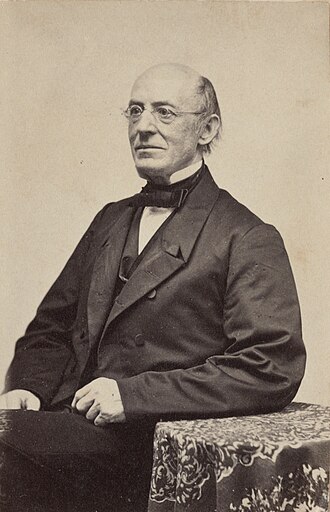
William Lloyd Garrison came to the abolitionist cause from a position of social and economic marginality that distinguished him from most of the movement's other major figures and that shaped both the uncompromising character of his advocacy and the specific form it took. He had no establishment to protect, no class interest to balance against his moral convictions, no social position whose maintenance required him to moderate his public positions. The son of a sailor who had abandoned his family when Garrison was three, raised in poverty in Newburyport by a mother whose religious convictions were among the few stable resources of his childhood, Garrison educated himself through the printing trade that he entered as an apprentice at thirteen and that gave him both the practical tools and the political formation that made The Liberator possible.
The printing trade was the school in which Garrison learned to think, to argue, and to use the printed word as a political instrument. He worked through his teens and twenties as a compositor, editor, and publisher, absorbing through his trade the full range of contemporary political and religious thought and developing the practical understanding of how publications shaped public opinion that formal education could not have provided. By his mid-twenties he was editing papers in Newburyport and then in Boston, developing the voice and the positions that The Liberator would embody from its first issue.
His encounter with the organised antislavery movement came through Benjamin Lundy, a Quaker abolitionist who was editing a paper called the Genius of Universal Emancipation and who recruited Garrison as a co-editor in 1829. Garrison worked with Lundy briefly in Baltimore — where he encountered slavery at closer range than his Massachusetts childhood had allowed — before being imprisoned for libel after calling a Newburyport merchant who was transporting enslaved people a "murderer" in the pages of the paper. He spent forty-nine days in jail, an experience that did nothing to moderate his positions and a great deal to confirm them, before being released after Arthur Tappan paid his fine.
The Liberator: "I Will Be Heard"
The Liberator was founded on 1 January 1831 in a single rented room in Boston, with a hand press, very little money, and the most uncompromising declaration of principle that American journalism had produced. The paper's first issue contained the passage that became the movement's most famous statement of immediatist commitment: "I will be as harsh as truth and as uncompromising as justice. On this subject I do not wish to think, or speak, or write, with moderation. No! No! Tell a man whose house is on fire to give a moderate alarm; tell him to moderately rescue his wife from the hands of the ravisher; tell the mother to gradually extricate her babe from the fire into which it has fallen — but urge me not to use moderation in a cause like the present. I am in earnest — I will not equivocate — I will not excuse — I will not retreat a single inch — AND I WILL BE HEARD."
The capital letters and the absolute certainty were deliberate. Garrison was consciously distinguishing his position from the cautious gradualism that had characterised American antislavery advocacy up to that point — the position that slavery was regrettable but that it should be ended gradually, with compensation to slaveholders, and with the colonisation of freed Black people in Africa or elsewhere. He rejected every element of this programme: gradual emancipation was an insult to those suffering under slavery now; compensation to slaveholders was a reward for a crime; colonisation was a racist solution that treated Black Americans as foreigners in the country they had helped to build. His position was immediate emancipation, without compensation, without colonisation, and with full civil rights for freed Black people as American citizens.
The paper never achieved mass circulation — at its peak it had approximately 3,000 subscribers, a fraction of the circulation that major metropolitan newspapers achieved — but its influence vastly exceeded its numbers. It reached every major abolitionist organiser and every antislavery newspaper editor in the country. It was read by the movement's leaders and used as a reference point for the positions that defined Garrisonian abolitionism. It was hated by the pro-slavery South, whose legislatures passed resolutions demanding that Northern states suppress it, and by the pro-slavery elements of the Northern business class, whose riot in Boston in October 1835 tried to silence it by physical violence. It ran for thirty-five years, from the day of its founding to the ratification of the Thirteenth Amendment, and Garrison wrote and edited virtually every issue.
The American Anti-Slavery Society and the Architecture of a Movement
The founding of the American Anti-Slavery Society in Philadelphia in December 1833 was the moment at which Garrison's abolitionism became a mass movement — when the positions he had been articulating in The Liberator were adopted as the platform of a national organisation with the capacity to recruit, organise, publish, and advocate on a scale that a single newspaper could not achieve. The Society brought together abolitionists from across the North and committed them collectively to the three positions that distinguished Garrisonian abolitionism: immediate emancipation, no compensation to slaveholders, and no colonisation of freed Black people.
The Society's operations over the following decade were remarkable in their scale and their ambition. It founded state and local affiliates that brought the organised antislavery movement to communities across the North. It supported a network of lecturing agents — including in its early years Frederick Douglass, whose career was launched under the Society's auspices — who brought the antislavery argument directly to audiences that had not previously been reached. It produced and distributed antislavery literature on a scale unprecedented in the history of American reform, flooding the country with pamphlets, newspapers, and books in what became known as the Great Postal Campaign of 1835 — a campaign so large that Southern states attempted to block the mail to suppress it.
The Society also demonstrated, through its explicit commitment to Black participation and Black leadership within the movement, that the organised antislavery movement could be genuinely interracial — that the principle it was advocating, that all human beings deserved equal dignity and equal rights, could be applied within the movement's own structures as well as demanded of the society at large. This commitment was imperfect in practice, as it inevitably was in a movement operating within a racially hierarchical society, but it was genuine in its statement and consequential in its effects — most significantly in the platform it provided for Black leaders like Douglass, Charles Lenox Remond, and others whose voices gave the movement its most powerful testimony.
The Boston Mob, Imprisonment, and the Price of Principle
The pro-slavery mob that attacked a Boston antislavery meeting on 21 October 1835, seized Garrison, put a rope around his neck, and dragged him through the streets was a demonstration that the slave power's violence was not confined to the slave states but was present and organised in the supposed heartland of the antislavery movement. The mob was not composed of ruffians or of the social dregs of Boston; it was composed of respectable merchants and businessmen whose commercial ties to the Southern cotton economy made them hostile to abolitionism and who were prepared to use organised violence to silence it. The distinction between "gentlemen of property and standing" who organised the mob and the rougher elements who participated in it was widely noted in contemporary accounts — it was a demonstration that Northern complicity in slavery extended to the social elite as well as to the economic interests whose prosperity depended on slave-grown cotton.
Garrison was rescued by police and spent the night in jail for his own safety — a grotesque irony in which the victim of mob violence was imprisoned while the mob's members went free. He was released the following morning and resumed publication of The Liberator. The incident added a specific, personal experience of violence to his understanding of what the slave power was prepared to do to its opponents, and it added to his public persona the specific moral authority that comes from having been physically attacked for one's convictions and having continued to hold them.
The Constitution, Non-Violence, and the Limits of Garrison's Framework
The public burning of the Constitution on 4 July 1854 was the most theatrical expression of Garrison's fundamental position on the American legal order — the argument that the Constitution of the United States was a pro-slavery document whose protections for the slave system made it complicit in the crime of slavery and incapable of serving as the basis for genuine emancipation. The phrase he used — "a covenant with death and an agreement with hell," drawn from Isaiah's denunciation of Israel's compromises with unjust powers — captured with rhetorical precision the theological and political logic of his position.
The position was genuinely held and logically consistent, but it placed Garrison in an increasingly isolated position as the political landscape shifted in the 1840s and 1850s toward the argument — made most powerfully by Frederick Douglass and by Gerrit Smith's political abolitionism — that the Constitution could be interpreted as an antislavery document and that working through the political system was not merely a compromise with evil but a necessary and legitimate strategy for achieving emancipation. Garrison's non-political position — his conviction that voting and running for office in a system that included slaveholders was a form of moral complicity — was a principled stance but also a practically limiting one, and as the Republican Party developed as a vehicle for antislavery political mobilisation in the 1850s, Garrison's insistence on staying outside the political system became increasingly difficult to sustain as a practical matter even for those who agreed with him in principle.
His commitment to non-violence was similarly principled and similarly limiting. He opposed the use of physical force against slavery — a position that put him in direct conflict with John Brown, whose raid on Harper's Ferry Garrison could not endorse despite his admiration for Brown's commitment to the cause. The movement that Garrison had built included figures whose practical conclusions differed sharply from his own non-violent, non-political framework, and the tensions between Garrison's positions and the more pragmatic, more politically engaged, more willing-to-use-violence positions of other abolitionists were a permanent feature of the movement's internal life.
Douglass, the Rupture, and the Movement's Great Divide
The relationship between Garrison and Frederick Douglass was the most consequential personal and intellectual relationship in the history of the American antislavery movement, and its rupture in the late 1840s was the most consequential split in the movement's history. Douglass had emerged on the abolitionist circuit in 1841 under Garrison's patronage — Garrison had been present at the Nantucket meeting where Douglass first spoke publicly about his experience of slavery, had recognised immediately that Douglass was the most powerful Black voice the movement had yet encountered, and had actively promoted his career in The Liberator and in the AASS lecture network. The relationship was genuinely warm and genuinely collaborative through the early 1840s.
The break came when Douglass moved toward political abolitionism in the late 1840s — toward the position, associated with Gerrit Smith and the Liberty Party, that the Constitution could be interpreted as an antislavery document and that working through the political system was legitimate and necessary. For Garrison, this was not merely a tactical disagreement; it was a fundamental abandonment of the principles on which the movement rested, a capitulation to the argument that the Constitution's protections for slavery could be wished away through reinterpretation. The rupture was personal and painful — Garrison accused Douglass of ingratitude and deception; Douglass accused Garrison of attempting to control the movement's Black voices — and it divided the movement between the Garrisonian wing that maintained non-political moral suasion and the Douglass-Smith wing that engaged directly with electoral politics.
The subsequent history of the movement was largely a vindication of the political wing's strategy — the Republican Party, which grew out of the political abolitionist tradition, was the vehicle through which Abraham Lincoln won the presidency and the Civil War was fought. But Garrison's moral suasion, his thirty-five years of uncompromising journalism, and the mass organisation he had built were the foundation on which the political strategy rested, and the movement's ultimate success was not the triumph of one approach over the other but the product of both working in combination.
The Thirteenth Amendment and the Question of What Enough Looks Like
When the Thirteenth Amendment was ratified in December 1865 and slavery was formally abolished by constitutional amendment, Garrison declared that the American Anti-Slavery Society had accomplished its purpose and should dissolve. The decision was characteristically Garrison — principled, clear, and contested. His argument was straightforward: the Society had been founded to secure the immediate abolition of slavery, slavery had been abolished, and the Society's mission was therefore complete. The fact that the formerly enslaved were still subject to systematic violence, economic exploitation, and the denial of political rights was a serious concern but was the concern of other organisations and other movements, not of the specifically antislavery organisation that he had founded.
The argument was resisted by Wendell Phillips and others who argued that the Society's dissolution was premature — that genuine freedom for Black Americans required not merely the legal abolition of slavery but the enforcement of the civil and political rights that the Fourteenth and Fifteenth Amendments were supposed to secure, and that this work was far from complete. The debate between Garrison and Phillips over the Society's dissolution was in microcosm the larger debate about what the Civil War's results actually meant and what the movement's obligations were in the post-war period.
Garrison won the vote for dissolution, but the subsequent history of Reconstruction — its extraordinary promise and its systematic betrayal — was a demonstration that Phillips had been right about the work remaining to be done. The Thirteenth Amendment was necessary but not sufficient; the legal abolition of slavery was the beginning of the struggle for genuine Black freedom, not its end. This was a truth that Garrison's framework, with its focus on the specific goal of emancipation rather than on the broader transformation of American racial society, was not well-equipped to grapple with.
Legacy: The Man Who Built the Movement From a Rented Room
William Lloyd Garrison died on 24 May 1879, in New York City, at the age of seventy-three. He had spent fifty years in active public life, from his first antislavery journalism in the late 1820s to his final retirement from the public stage in the years after the Thirteenth Amendment. He had founded The Liberator, the American Anti-Slavery Society, and the organised antislavery movement. He had been imprisoned, dragged through the streets of Boston, and confronted with the full range of violence that the slave power and its Northern allies were prepared to deploy against him. He had broken with his most important collaborator, been proven wrong by history about the Constitution, and been proven right about the necessity of immediate emancipation. He had built a movement from nothing — from a rented room and a hand press — into the political force that changed the Constitution of the United States.
His legacy is complicated, as the legacies of movement founders always are, by the gap between the vision that animated the founding and the compromises and contradictions that the long work of building an organisation inevitably produced. His non-political commitment limited the movement's effectiveness in the electoral arena. His rupture with Douglass divided the movement at a critical moment. His dissolution of the AASS was premature. These are real failures, and they are part of the honest account of his career.
But the honest account also includes the founding declaration that he would be heard, and the fact that he was heard — for thirty-five years in The Liberator, for decades from every platform the movement could provide, in every editorial and every speech and every act of public witness that he offered to a country that needed to be told, with harshness and with justice and without equivocation, that what it was doing to four million human beings was wrong and had to stop. He told it that, loudly and consistently and without retreat, for fifty years. The country eventually listened.