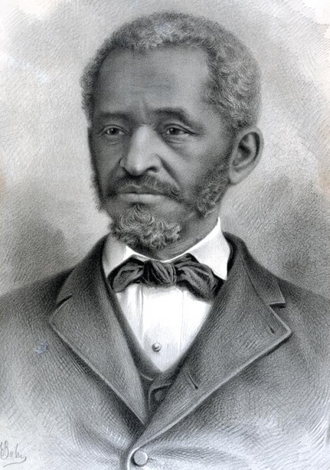
At a Glance
Lexington, Loss, and the Specific Education of a Kentucky Slave
Lexington, Kentucky, in the first half of the nineteenth century was a city of striking contradictions — the most culturally ambitious and intellectually self-conscious city in the antebellum South, home to Transylvania University (one of the first universities west of the Alleghenies), of literary societies and philosophical clubs, of a white elite that cultivated the manners and the tastes of the Virginia gentry while sitting at the centre of one of the most active slave economies in the border South. The horses that made the Bluegrass wealthy and famous were bred and trained by enslaved labour; the hemp and the tobacco that filled the warehouses on Lexington's commercial streets were produced by enslaved workers in the surrounding countryside; and the domestic comfort of the city's white households depended on the unpaid labour of the enslaved people who cooked, cleaned, drove, and maintained them.
Lewis Hayden grew up in this world, and the particular cruelties he experienced within it were among the most common and the most devastating that slavery inflicted: the sale of his first wife and child away from him, the sexual exploitation of his sister by her enslaver, the constant visibility of his own powerlessness in the face of a system whose logic was absolute and whose authority was backed by every instrument of law and social force available in a Kentucky county. He described these losses in his public lectures and in the accounts he gave to abolitionist newspapers with a directness and a specificity that made his testimony unusually powerful — not the general indictment of slavery as an institution but the specific account of specific people whose specific suffering he had witnessed and shared.
His second marriage, to Harriet Bell, and the birth of their son gave him the family that the sale of his first family had destroyed, and the protection of this new family was one of the immediate motivations for the escape that Fairbank and Webster organised in September 1844. The threat that Hayden's enslaver would sell him south — a threat whose probability increased as the enslaver's financial difficulties deepened — meant that the family he had rebuilt was under the same threat as the family he had lost, and the escape that Fairbank and Webster organised was simultaneously his escape from bondage and his attempt to secure the family whose loss he had already experienced once and could not bear to experience again.
The Debt to Fairbank: A Life Organised Around Justification
The knowledge that Calvin Fairbank had spent five years in a Kentucky prison — and would spend twelve more years there after a second arrest in 1851 — as the direct consequence of organising Hayden's escape was a fact that Hayden carried for the rest of his life and that shaped his subsequent career in ways that were both conscious and unconscious. He was not merely a free man who had chosen to use his freedom in service of others; he was a man who had been freed by the sacrifice of another, and whose every act of Underground Railroad work, every rescue operation, every confrontation with the slave catchers who came to his house was in some measure an attempt to justify and to honour what Fairbank had paid for his liberation.
He participated actively in the advocacy for Fairbank's pardon during both imprisonments, writing letters, petitioning Massachusetts officials, and using every connection he had built in the Boston abolitionist community to maintain pressure on the Kentucky authorities. The campaigns were not ultimately successful in securing Fairbank's early release — Fairbank served the full terms with only a few years' remission — but they demonstrated Hayden's understanding of the specific obligation his freedom had imposed on him, and they were part of the broader pattern of loyalty and reciprocity that characterised his public life.
The two men's relationship — the formerly enslaved man and the white conductor who had paid for his freedom with years of imprisonment — was one of the most significant interracial partnerships in the history of American abolitionism, and it was a partnership that operated on terms of genuine mutual respect and genuine mutual obligation. Fairbank acknowledged in his memoir that Hayden had done everything in his power to support the campaign for his release; Hayden acknowledged throughout his public career the specific debt he owed to Fairbank's sacrifice. The relationship was not uncomplicated — the power differential between a white man who chose to risk imprisonment and a Black man who had no other path to freedom than the one Fairbank helped to open was real — but within those complications it was a relationship of genuine human connection and genuine shared commitment.
Beacon Hill, the Station, and the Gunpowder Threat
The house that Hayden and Harriet established at 66 Phillips Street on Beacon Hill became the centre of gravity for Boston's Underground Railroad network and for the Black community's organised resistance to the Fugitive Slave Act. Beacon Hill was home to a substantial Black community — the African Meeting House, the home of the oldest Black church in America, stood nearby — and the neighbourhood's combination of Black institutional density and physical proximity to Boston's commercial and political centre made it both a natural location for Underground Railroad operations and a natural base for the political organising that was inseparable from those operations.
Hayden's station received escaped slaves from multiple directions — from the Underground Railroad routes running north from the mid-Atlantic states, from the maritime network that carried escaped slaves from Southern ports to Boston, and from the direct connections to conductors and organizers across New England who directed people to his house as a place of known safety and known commitment. He and Harriet sheltered, fed, clothed, and cared for people whose conditions when they arrived varied from relatively good to medically critical, and they provided the connections to the broader Boston community — to lawyers, to politicians, to the network of safe houses in Massachusetts and beyond — that could protect people from recapture and help them continue their journeys if necessary.
The gunpowder kegs — reported in multiple contemporary accounts and in the oral tradition of the Boston Black community — were the most dramatic expression of the philosophy that underlay the station's operations. Hayden was not running a charity or a humanitarian organisation; he was running a fortress, and his willingness to defend it with lethal force was not incidental to its character but central to it. The slave catchers who came to Boston looking for escaped slaves were operating under federal law, backed by federal authority, and possessed of a legal right to reclaim the people Hayden was sheltering. Hayden's response was to place against that legal right a more fundamental right — the right of the people he was protecting not to be returned to bondage — and to make clear that he would enforce that right with whatever force was necessary.
The Shadrach Rescue and the Politics of Armed Resistance
The rescue of Shadrach Minkins on 15 February 1851 was the most dramatic and the most consequential of the acts of organised resistance to the Fugitive Slave Act that Hayden participated in, and it established his position as the central figure in Boston's organised opposition to the law. Minkins had been living and working in Boston for approximately a year when he was seized by federal marshals at the coffee house where he worked as a waiter, brought to the federal courthouse in Court Square, and placed in a room while federal officials prepared the paperwork for his return to slavery in Virginia.
Word of the arrest spread rapidly through Boston's Black community, and a crowd gathered outside the courthouse. Hayden organised the group of approximately twenty Black men who pushed through the crowd, broke into the room where Minkins was being held, overpowered the federal marshals, and carried Minkins out of the building. The entire operation took a few minutes. The marshals, outnumbered and unprepared for the speed and the determination of the rescue, did not fire. Minkins was carried through the streets of Boston to a series of safe houses and eventually moved northward through the Underground Railroad network to Montreal, where he lived for the rest of his life as a free man.
The political consequences of the rescue were immediate and significant. President Millard Fillmore demanded prosecution of the rescuers; Senator Daniel Webster, who had supported the Fugitive Slave Act, denounced the rescue as treason. Several men were indicted, including Hayden; the prosecutions ultimately resulted in no convictions, partly because Boston juries were unwilling to convict men who had prevented an escaped slave from being returned to bondage. The rescue demonstrated that the Fugitive Slave Act could not be enforced in Boston against the organised resistance of the city's Black community, and it made Boston the most openly defiant Northern city in its resistance to the law.
Anthony Burns, the 54th Regiment, and the Civil War
The attempted rescue of Anthony Burns in May 1854 — which, unlike the Shadrach rescue, failed, with Burns being returned to slavery under a massive military escort in one of the most humiliating episodes in the history of Boston abolitionism — was a demonstration of the slave power's capacity for escalation when its authority was directly challenged. The federal government mobilised more than a thousand soldiers and police to march Burns through the streets of Boston to the ship that would return him to Virginia, past buildings draped in black mourning cloth and crowds of silent or weeping citizens. The failure of the rescue attempt, in which a deputy marshal was killed, resulted in the prosecution of several participants, including Hayden, whose prosecution again did not result in conviction.
When the Civil War began, Hayden threw himself into the work of Black military recruitment with the same energy and the same directness that had characterised everything else he had done. He was a recruiter for the Massachusetts 54th Regiment — the celebrated Black regiment whose assault on Fort Wagner in July 1863 became one of the defining moments of Black military heroism in the Civil War — and his brother was among the regiment's soldiers. His recruitment work was both a practical contribution to the Union war effort and an argument about Black citizenship and equal rights in the post-war republic: the claim that Black men who fought and died for the United States were entitled to the full rights of American citizenship that had been denied to them in peace.
The Legislature, the Harvard Bequest, and a Life's Completion
Hayden's election to the Massachusetts House of Representatives in 1873 placed him in the company of the very small number of Black Americans who had by that point achieved significant political office in the Northern states. His election reflected both his personal standing in the Boston community — built over nearly three decades of Underground Railroad work, civil resistance, and public advocacy — and the political realignment that Reconstruction had produced in states like Massachusetts, where Republican majorities were increasingly willing to support Black candidates as a statement of principle as well as a matter of electoral calculation.
He served in the legislature with the straightforwardness that had characterised his entire public career, advocating for Black interests and for the education and economic opportunities that Black Massachusetts needed, and using the platform that the office gave him to maintain the visibility of Black concerns in the political process that the country's retreat from Reconstruction was increasingly threatening to remove.
His bequest to Harvard Medical School — establishing a scholarship for Black medical students from the estate he had accumulated over decades of work as a clothing dealer and as a public figure — was one of the most consequential acts of his later life. It reflected the understanding, which had shaped every aspect of his career, that freedom required not merely the absence of slavery but the positive institutions — education, economic opportunity, professional training — that made freedom real. The scholarship was a form of the Dawn Settlement ideal that Josiah Henson had embodied in Ontario, applied to the specific context of Boston's professional educational institutions: the conviction that the liberation of Black people required the creation of Black institutions and the training of Black professionals who could serve Black communities.
Legacy: The Man Who Kept Two Kegs of Gunpowder in His Basement
Lewis Hayden died on 7 April 1889, in Boston, forty-five years after the escape that Calvin Fairbank had paid so dearly to organise. He died having built from that escape one of the most consequential abolitionist careers in Boston's history — as an Underground Railroad conductor, as an organiser of armed resistance to the Fugitive Slave Act, as a Civil War recruiter, as a state legislator, and as a man whose willingness to defend the people he sheltered with gunpowder and a candle was the most literal possible expression of the conviction that freedom was worth dying for.
The gunpowder kegs have become the most famous detail of his story, and they deserve the fame they have received: they were not a theatrical gesture but a statement of moral principle, made by a man who had personal experience of what he was threatening to prevent, and backed by a willingness to act on that threat that the people who heard it correctly understood as genuine. In a movement that sometimes sentimentalised the cause of liberation, Hayden's gunpowder kegs were a reminder that liberation was also, and necessarily, a matter of force — that the slave catchers who came to his house were backed by law and by the coercive power of the state, and that the only effective response to that coercive power was a counter-force credible enough to deter it.
His house on Phillips Street still stands on Beacon Hill — a building that has been designated a historic site in recognition of the role it played in the Underground Railroad and in Boston's organised resistance to the Fugitive Slave Act. The kegs of gunpowder are long gone, but the house remains a physical connection to the man and the moment, and a reminder that the Underground Railroad's most important stations were not merely places of refuge but fortresses of freedom, defended by people who understood precisely what was at stake and who had calculated, with clear eyes and steady hands, what they were prepared to do about it.