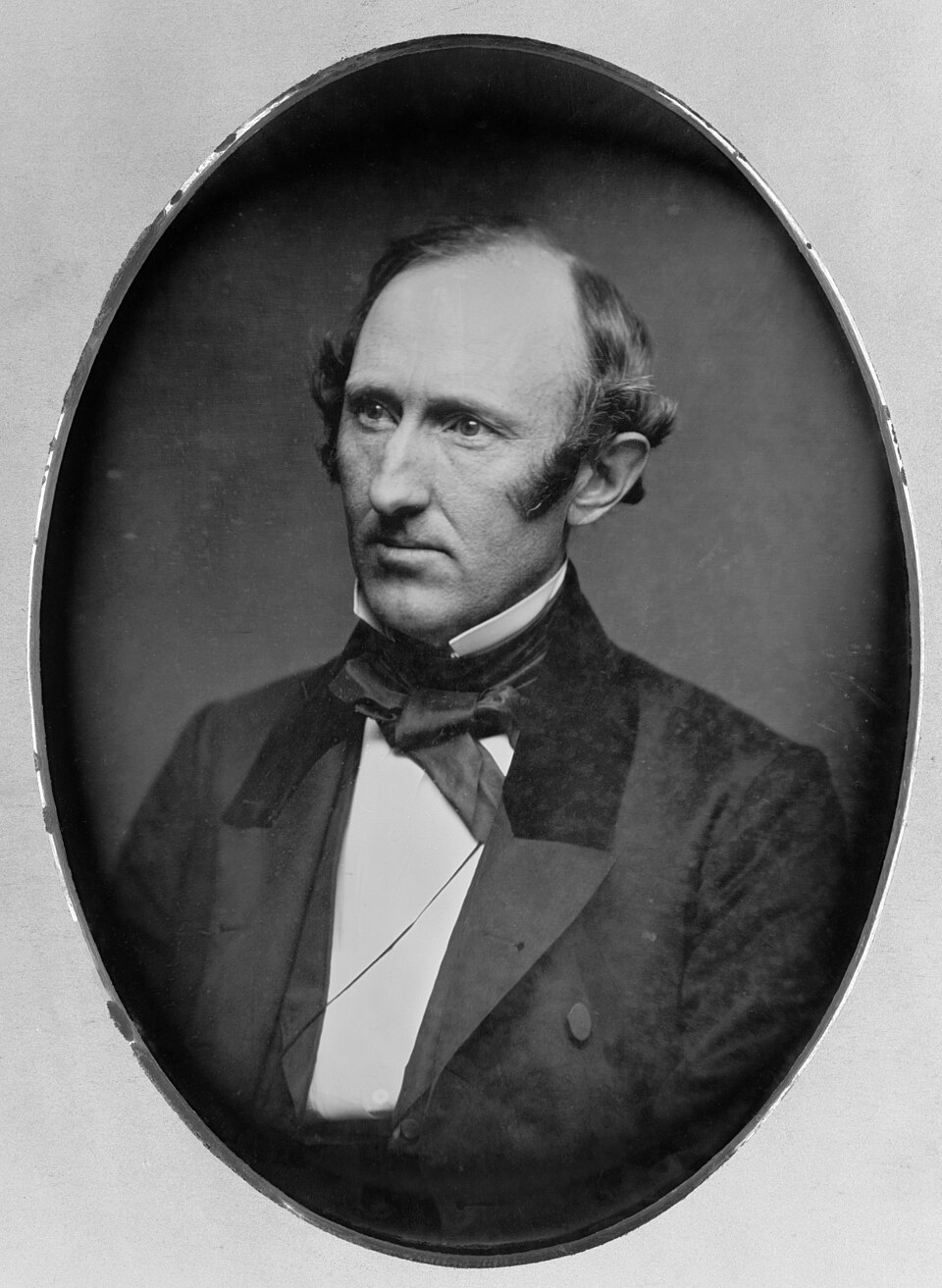
At a Glance
Boston, Harvard, and the Making of a Patrician Radical
Wendell Phillips grew up at the apex of Boston's social hierarchy — in a family whose standing was such that no door in Massachusetts was closed to it, whose connections to Harvard, to the law, to the political establishment, and to the cultural life of New England were as natural as breathing. His father's position as the first mayor of Boston was both a specific honour and a symbol of the family's general standing, and the education he received — Boston Latin School, Harvard College, Harvard Law School — was the education of a man destined for the professional and civic life that his class expected of its best representatives.
The expectation was not unusual, and for the first twenty-six years of his life Phillips appeared to be fulfilling it. He graduated from Harvard, was admitted to the bar, opened a law practice, and moved in the social circles that his background made available. He was by all accounts a young man of considerable gifts — handsome, eloquent, well-read, socially confident — who seemed positioned for exactly the kind of distinguished conventional career that his background prescribed. The abolitionist cause was stirring in Boston in the early 1830s, Garrison had founded The Liberator in 1831, and Phillips was aware of the antislavery movement; but his engagement with it was initially peripheral, the awareness of a cultivated young man with general liberal sympathies rather than the committed engagement of an activist.
The murder of Elijah Lovejoy in November 1837, and the public meeting in Faneuil Hall the following month, changed everything. The transformation it produced in Phillips was not slow or gradual; it was immediate and complete. He walked into Faneuil Hall that afternoon as a young lawyer with liberal sympathies and walked out as an abolitionist who had already committed himself, publicly and irrevocably, to the defence of the principles for which Lovejoy had died. The speed and the completeness of the conversion reflected something that had been developing beneath the surface — a moral seriousness and a capacity for outrage that his conventional social formation had not yet found an adequate object — but the trigger was specific: the sight and sound of an attorney general of Massachusetts comparing a mob that had murdered a newspaper editor for writing against slavery to the heroes of the American Revolution.
The Faneuil Hall Speech: An Impromptu That Launched a Career
The public meeting in Faneuil Hall on 8 December 1837 had been called to address the murder of Elijah Lovejoy and to affirm the principle of freedom of the press. It was a respectable gathering, attended by the citizens and the civic leaders of Boston, and the principal speaker was James T. Austin, the Attorney General of Massachusetts — a figure of considerable authority whose argument, delivered with the confidence of a man accustomed to being taken seriously, was that Lovejoy had been responsible for his own death by refusing to moderate his journalism in the face of the community's expressed displeasure, and that the mob that had killed him was comparable, in its patriotic spirit if not its specific actions, to the Sons of Liberty who had thrown the tea into Boston Harbour.
The argument was morally monstrous, and the audience's response to it — accepting it with the respectful attention that Austin's position commanded — was intolerable to Phillips. He rose from the audience, asked to be heard, and was given the floor. What followed was one of the most celebrated speeches in American history — not celebrated because it was particularly long or particularly formally elaborate, but because it was perfectly targeted, delivered with absolute conviction, and received by an audience that recognised something extraordinary happening in front of them.
Phillips took Austin's historical analogy and reversed it. The Sons of Liberty who had thrown the tea into the harbour, he argued, had been acting in defiance of laws they regarded as illegitimate, in the name of principles they regarded as higher than the positive law. That was precisely what Lovejoy had been doing: defying laws he regarded as unjust, in the name of the principle of press freedom, in the tradition of every Protestant martyr and every civic hero that the New England tradition claimed to honour. Austin had compared the mob to the Sons of Liberty; Phillips compared Lovejoy to them, and left Austin with the choice of repudiating either the analogy or the Sons of Liberty themselves.
The hall erupted. The speech was reported across the country. A twenty-six-year-old unknown had walked into Faneuil Hall and demolished the Attorney General of Massachusetts in front of the citizens of Boston, on the most important political question of the moment, with an argument of such precision and such force that no adequate response was available. It was, in every sense, an emergence: the emergence of a public figure whose gifts matched his convictions and whose willingness to deploy both against the most powerful interests in American society would define the next forty-seven years of his life.
Marriage, Ann Greene, and the Private Foundation of a Public Career
Phillips married Ann Terry Greene in 1837, the same year as the Faneuil Hall speech, and his wife was from the beginning his most important intellectual partner and moral anchor. Ann Greene was already an active abolitionist whose engagement with the cause preceded her husband's, and the marriage was from the beginning a political as well as a personal partnership — two people who shared both a social world and a set of convictions so deeply held that they were prepared to sacrifice the social world in service of the convictions.
The sacrifice was real. Phillips's conversion to abolitionism cost him the social position that his background had given him — the Boston drawing rooms and the professional networks and the civic life that his family's standing had made available were progressively closed to an abolitionist who was prepared to call slavery by its name and demand its immediate abolition. He was not ruined financially, as Thomas Garrett was; he was ruined socially, which was in some respects a more complete form of exclusion for a man of his class. He accepted the exclusion with a combination of equanimity and contempt that reflected both his genuine indifference to the social approval of people he had come to regard as complicit in the nation's great crime and the moral seriousness that Ann Greene's partnership sustained.
Ann was chronically ill for much of their marriage — confined to her room for long periods, unable to participate in the public life that her convictions demanded — but she remained the person whose judgment Phillips trusted above all others and whose encouragement sustained him through the decades of social isolation and political disappointment that the abolitionist career entailed. He rarely made a major public commitment without consulting her, and her influence on the direction and the tone of his advocacy was profound and continuous.
The Voice: What Made Phillips the Movement's Greatest Orator
The qualities that made Wendell Phillips the most celebrated orator in the American antislavery movement — and, by the testimony of those who heard him, one of the greatest public speakers in American history — were not the conventional qualities of the formal orator. He did not thunder; he did not declaim; he did not perform the emotional excesses that some of his contemporaries mistook for passion. He talked, in a voice that was conversational and assured and completely controlled, at a pace that gave his audience time to follow every turn of his argument, with a wit that was devastating when it was deployed and understated enough to be all the more effective for that understatement.
Ralph Waldo Emerson, who heard him many times, called him the most impressive speaker he had ever encountered — a judgment that reflected not merely the quality of the oratory but the quality of the mind behind it. Phillips was genuinely intellectual — not in the academic sense of being primarily interested in ideas for their own sake, but in the sense that his arguments were always grounded in precise thinking about the actual question at issue, in historical evidence marshalled with care, and in the logical precision that his Harvard Law education had given him and that he deployed with absolute consistency. He did not make arguments he had not thought through; he did not appeal to emotions he did not share; he did not say things in public that he was not prepared to defend in private.
The combination of intellectual precision and moral conviction produced a form of oratory that was uniquely effective in the specific context of antebellum abolitionism — a movement that needed to reach educated, sceptical, politically sophisticated audiences who were uncomfortable with the more emotional forms of antislavery advocacy and who could be reached only by arguments that engaged their intelligence as well as their conscience. Phillips engaged both, and the result was the most consistently effective public speaking the movement produced.
Forty-Seven Years: From Lovejoy to Labour
The career that the Faneuil Hall speech launched lasted for forty-seven years, from 1837 to his death in 1884, and it was characterised throughout by the same combination of moral clarity, rhetorical precision, and absolute refusal to accommodate injustice that had made the Faneuil Hall speech so remarkable. He defended the most radical positions the movement took — supporting John Brown's violence before and after Harper's Ferry, demanding the dissolution of the Union before the Civil War on the grounds that a republic half slave and half free was a moral impossibility, pushing for Black suffrage and Black civil rights during Reconstruction with a consistency that most of his contemporaries were unable to sustain.
After emancipation he did not retire from public life or confine his advocacy to the defence of Black rights, though he was consistent and uncompromising on that front throughout the Reconstruction period and into the era of Reconstruction's collapse. He extended his reform activities to labour rights — becoming one of the most prominent advocates for the eight-hour workday and for the rights of organised labour against the power of capital — to women's suffrage, to Native American rights, and to Irish independence. Each of these causes was, in his analysis, an expression of the same fundamental principle: that human beings had inalienable rights to dignity, freedom, and equal treatment, and that no political or economic arrangement that systematically violated those rights deserved to be accepted or accommodated.
His consistency across these causes — which to his contemporaries sometimes seemed like a form of promiscuous radicalism, a refusal to prioritise the most important cause above others — was in his own understanding a logical consequence of taking the principle of human equality seriously. If the principle was genuine, it applied everywhere, to everyone, without exception. Slavery was the most urgent application of the principle in his era because it was the most systematic and the most brutal denial of human dignity that American society practised. But it was not the only application, and the abolition of slavery was not the end of the work — it was the beginning of the application of the same principle to the full range of injustices that American society continued to practise against those without power or privilege.
Legacy: The Patrician Who Used His Class Against Itself
Wendell Phillips died on 2 February 1884, in Boston, Massachusetts, at the age of seventy-two, having spent forty-seven years as the conscience of the American reform movement and its most compelling voice. The social world that his background had made available — the drawing rooms, the clubs, the professional networks of Boston's Protestant elite — had closed to him long before his death, and he did not regret the closure. He had chosen the movement over the class, the principle over the position, and the choice had been absolute and irreversible.
His legacy in the history of American reform is dual: he was the movement's greatest orator, the man whose gifts of expression gave the antislavery cause its most compelling public voice, and he was a living demonstration that the privileges of class and education could be turned against the interests of the class that conferred them. The son of the first mayor of Boston stood in Faneuil Hall and demolished the Attorney General of Massachusetts. The Harvard lawyer argued that the Constitution of the United States should be burned rather than used to perpetuate slavery. The Boston Brahmin told his own class that it was complicit in the nation's great crime and demanded that it act accordingly. These were not the expected uses of a patrician education; they were the most radical uses to which such an education could be put, and Phillips put it to them with a consistency and a courage that the movement he served recognised and honoured throughout his long career.