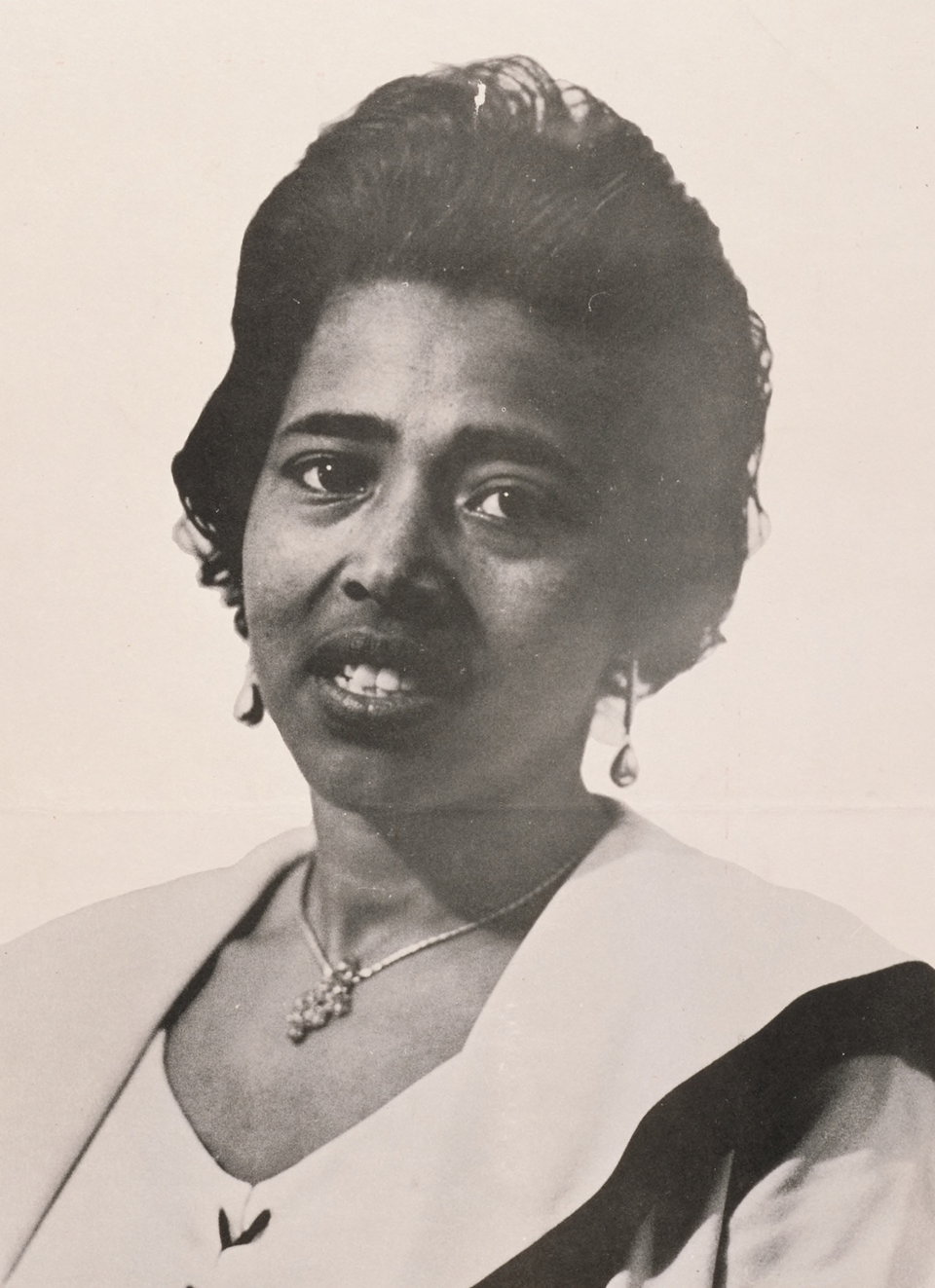
At a Glance
The World That Formed Her: Black Women in Apartheid South Africa
To understand Victoria Grey-Adams's significance it is necessary first to understand the conditions of Black women's lives in South Africa in the 1940s and 1950s — the conditions of triple oppression that defined those lives and that made the political organising she was part of both urgently necessary and extraordinarily difficult. Black women in apartheid South Africa were oppressed as Black people in a white supremacist state, as workers in a capitalist economy that extracted maximum value from their labour while denying them the protections and rights that white workers received, and as women in a patriarchal social order that the apartheid state reinforced and the liberation movement did not always successfully challenge. These three forms of oppression were not separate but interlocking — each reinforced and was reinforced by the others in ways that made the conditions of Black women's lives uniquely constrained and uniquely demanding.
The domestic service sector, which employed a very large proportion of Black women in urban South Africa, was one of the most exploitative labour arrangements in the country: workers lived in backyard rooms in white suburban homes, were separated from their own families for weeks at a time, were paid poverty wages, had no legal protection against arbitrary dismissal, and were subject to the pass law controls that governed the movement of all urban Africans. The women who did this work — and who simultaneously organised politically, built community structures, raised children often largely alone while their husbands worked in distant mines or factories, and maintained the social fabric of township life — were exercising a form of daily heroism that the liberation movement's historiography has not always adequately recognised.
The ANC Women's League in the late 1940s and 1950s was attempting to build on this existing capacity for resilience and community-building and to translate it into organised political power. The challenge was considerable: women who were exhausted by the demands of paid and unpaid labour, who faced the particular vulnerability of township life — the violence, the housing insecurity, the constant threat of removal under the Group Areas Act — and who existed in a political culture that often treated their participation as secondary to the main business of male political leadership. Grey-Adams was one of the organisers who worked within and against these constraints to build something remarkable.
The ANC Women's League and the Federation of South African Women
The ANC Women's League had its origins in the Bantu Women's League, which had been established in 1918 and had participated in the early anti-pass campaigns of the 1910s. It was reconstituted as the ANC Women's League in the early 1940s, and it operated within the ANC's organisational structure as the women's wing of the liberation movement. By the late 1940s, under the influence of the ANC's Programme of Action and the more assertive mass politics of the Defiance Campaign era, the Women's League was beginning to develop into a more active and more independent political body — one that maintained its organisational connection to the ANC while developing its own programme around the specific conditions and demands of women.
The Federation of South African Women, founded in April 1954, was a different kind of organisation: a multi-racial women's coalition that brought together women from the ANC's network — the Women's League, the Congress of Democrats, the South African Indian Congress, the Coloured People's Congress — in a body that could organise specifically around women's issues across the racial lines that the apartheid system was designed to make impassable. The Federation's founding conference adopted a Women's Charter that articulated the demands of South African women with a breadth and a clarity that the predominantly male liberation movement's documents did not always match: it addressed not only political rights and racial equality but women's right to maternity leave, equal pay, access to education, and the right to own property — demands that were radical in the context of 1950s South Africa not only because of apartheid but because of the patriarchal assumptions that apartheid and liberal society shared.
Grey-Adams worked within both of these structures — the Women's League and the Federation — building the political networks and the organisational capacity that made the anti-pass campaign possible. This work required operating in every community that could be reached: in township civic meetings and church halls, in the domestic workers' networks that connected women employed in white suburbs, in the informal gathering places of township social life. It required translating political analysis into terms that connected with women's immediate experience — explaining what the extension of passes to women would mean in concrete, daily, practical terms for the women whose cooperation and commitment the campaign needed, and building from that understanding the willingness to act collectively in ways that carried significant personal risk.
The Anti-Pass Campaign: Women's Mass Resistance in the 1950s
The apartheid government's decision to extend the pass law system to African women was announced in the early 1950s and implemented progressively through the decade. The passes that African men had been required to carry — the dompas, the document that defined their legal right to be in a given urban area and that could at any moment be used to arrest them, fine them, and remove them from the city — were being extended to women, and the women's movement understood immediately and clearly what this extension meant: it would give the state a new instrument of control over women's labour and movement, would subject women to the arbitrary authority of the pass-checking police, would separate more women from their families through arrest and removal, and would complete the system of racial labour control by extending it to the entire African adult population regardless of gender.
The campaign against this extension was organised over several years, building through local demonstrations and marches — in Winburg, in Lichtenburg, in Zeerust, in Port Elizabeth, in Johannesburg — toward the national culmination of 9 August 1956. Each local action was its own act of political courage: women who marched against the passes in their towns and townships faced arrest, fines, and the attention of the security police; they faced the opposition of men in their own communities who did not always support women's political autonomy; and they faced the practical difficulty of organising collective action among people who were time-poor, geographically dispersed, and without access to the communication technologies that contemporary organising takes for granted. Grey-Adams's organising work operated in this environment — in the gap between the political vision of what was needed and the practical reality of what was possible, working to close that gap by sustained engagement with the women whose participation was required.
The pass book burning and surrender actions of the 1950s — in which women publicly tore up or handed in their passes rather than carry them — were among the most visually powerful acts of the anti-pass campaign, and they were made possible by the organising work that built the community solidarity and the individual courage that such actions required. Public defiance of the pass laws was an act that could result in arrest and imprisonment, and the women who performed it were doing so with full awareness of the consequences. The willingness to accept those consequences was itself a political statement: that the indignity of the pass law was worse than the indignity of arrest, that collective resistance was worth the personal cost, that the women of South Africa would not accept the extension of a system they had not accepted for the men who lived alongside them.
9 August 1956: The March on the Union Buildings
The march on the Union Buildings in Pretoria on 9 August 1956 was the culminating act of the anti-pass campaign — the moment when the sustained organising work of the previous years was translated into a mass demonstration of a scale and a character that the apartheid government, and the watching world, could not ignore. More than twenty thousand women travelled to Pretoria from across South Africa — from the Cape, from Natal, from the Transvaal, from the Orange Free State — by bus, by train, by any means available, to gather outside the seat of the apartheid government and present their petition.
The march was organised with a discipline and a dignity that were themselves political statements. The women gathered in silence outside the Union Buildings — the seat of executive power, the building that the apartheid government used as the symbol of its authority — and stood for thirty minutes in quiet but unmistakable defiance before the four leaders, Lilian Ngoyi, Helen Joseph, Rahima Moosa, and Sophia Williams-de Bruyn, delivered the petition with its more than one hundred thousand signatures. The song that rose from the crowd — "Wathint' Abafazi, Wathint' imbokodo!" — "You strike a woman, you strike a rock!" — became the anthem of the South African women's movement and one of the most famous political chants in the history of African liberation.
The march did not immediately achieve its practical objective: the apartheid government did not withdraw the pass law extension, and passes were eventually issued to women throughout the country. But its political significance was not diminished by the failure to achieve the immediate demand. It demonstrated that South African women were a political force capable of national mass action; it produced an image of collective women's power that resonated across the continent and beyond; and it established 9 August as a date of permanent significance in South African political culture — a date that is now commemorated every year as National Women's Day. The march was possible because of the organising work of women like Victoria Grey-Adams, who built the networks, recruited the participants, and sustained the political commitment without which no march, however well led, can take place.
The Liberation Movement's Women's Tradition and Its Contested Legacy
Victoria Grey-Adams's career situates her within a tradition of Black women's political organisation in South Africa that extends from the Bantu Women's League of 1918 through the Women's League of the 1940s and 1950s, through Lilian Ngoyi's presidency of the Women's League and of the FSAW, through the women's organisations of the UDF years — through Albertina Sisulu's long decades of organising while her husband was on Robben Island, through Dorothy Nyembe's fifteen years of imprisonment, through Frances Baard's trade union and anti-pass work, through Ida Mntwana's presidency of the Women's League — to the democratic South Africa that the struggle produced. It is a tradition of sustained, often overlooked, organisationally demanding political work that built the women's dimension of the liberation movement from the bottom up.
The legacy of this tradition in democratic South Africa is contested and complicated. The constitution that the liberation movement negotiated guarantees gender equality with a specificity and a force that few constitutions in the world match; the proportion of women in the South African Parliament and in senior government positions is among the highest in Africa; and the political culture of the ANC has, at least formally, committed itself to gender equality as a constitutional and organisational value. But the persistence of catastrophic rates of gender-based violence, the continuing economic subordination of women, the failure to consistently hold men in positions of power accountable for gendered misconduct, and the gap between constitutional aspiration and daily social reality — these are measures of the incompleteness of the transformation that the liberation struggle, at its best, promised to produce.
Understanding Grey-Adams's contribution — and the contribution of the women's movement she was part of — requires holding both of these realities simultaneously: the genuine achievement of a political tradition that changed the country and the continuing work that the change it made possible has not yet completed. She was one of the builders of a foundation. What gets built on that foundation is the responsibility of subsequent generations, and the question of whether they are building well is still, in the third decade of South African democracy, urgently open.