At a Glance
Groutville and the World It Was
Groutville is a small settlement on the Natal sugar coast, a few kilometres from the town of Stanger, in the landscape of rolling hills and cane fields that characterises that part of KwaZulu-Natal. It was named for the American Board missionary Aldin Grout, who established a mission station there in the nineteenth century, and it had developed by the early twentieth century into a settled African community with a church, a school, and the kind of institutional infrastructure that mission-station communities typically built. The Luthuli family had deep roots there — Albert Luthuli had been chief of the Umvoti Mission Reserve, as the Groutville community was formally known, before his involvement in the ANC led the apartheid government to depose him from the chieftaincy in 1952.
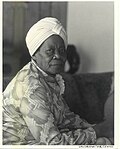
Nokukhanya Bhengu came to Groutville through her marriage to Albert Luthuli in 1927, and she spent nearly seven decades there — the farm at Groutville was her home for most of her life, the community there was her community, and the landscape of the Natal sugar coast was the physical world in which her contribution to the liberation struggle was made. Her contribution was not made on a public stage or in a courtroom or in a march or in a prison cell. It was made in the daily management of a household that the apartheid state was systematically trying to destroy, in the nursing of children and of community, in the maintenance of the social world that kept the Groutville ANC network alive through the years of Albert's restriction.
She had trained as a nurse before her marriage — a professional formation that gave her practical skills in health and community care and an institutional identity that was independent of her role as Albert's wife. Her nursing was not simply a professional credential; it was a practice, a daily engagement with the physical and emotional needs of the people around her, and it was continuous with the political ethics of the household she managed. The domestic and the political were not separate in the Groutville household: they were the same thing, expressed in different registers.
Albert Luthuli's Public Life and Its Private Costs
Albert Luthuli became president of the ANC in 1952 — the same year the apartheid government first banned him, recognising in his election to the ANC's highest office a development that the state regarded as a threat worth addressing immediately. The banning order that removed him from the ANC's presidency before he had properly begun it was the apartheid state's attempt to neutralise the threat that organised Black political leadership represented to its racial order. The order failed in its immediate purpose — the ANC refused to accept the banning as a resignation and maintained Luthuli as its president — but it succeeded in confining him to Groutville and restricting the practical exercise of his leadership for the rest of his life.
The Defiance Campaign of 1952, which the ANC launched the same year that Luthuli was elected president, built the organisation's membership from under ten thousand to more than one hundred thousand and established the mass action framework that would characterise the liberation movement's strategy through the decade. Luthuli was the face and the moral authority of this campaign — the man who articulated its philosophy of nonviolent resistance with a Christian ethical clarity that gave the movement an international intelligibility that pure political language would not have achieved. His 1952 statement, written after the government deposed him from his chieftaincy in an attempt to force him to choose between the ANC and his traditional position, was one of the defining documents of the liberation movement: "Who Will Deny Us the Right to Move in Freedom? Who Will Deny Us Equal Access to Justice? Who Will Say Nay?" — a declaration of commitment to the liberation struggle that gave up security for conviction.
But what Luthuli's public life required in private was a domestic world — a household, a family, a community of relationships — that continued to function while he was being banned and restricted and prevented from doing the public work that gave his life its public significance. This domestic world was Nokukhanya's creation and her responsibility. She managed the farm. She raised the seven children. She maintained the community relationships that kept the Groutville network alive. She received the visitors who came to consult with the banned ANC president in the only way that was legally possible — at the Groutville farm, within the geographic restrictions of the banning order. She was the institution that made Albert's continued public presence possible even when the state was doing everything in its power to make it impossible.
Seventeen Years: The Duration of a Domestic Sentence
Albert Luthuli's banning lasted, in various forms, from 1952 until his death in 1967 — seventeen years. The banning orders were not uniform across this period: there were initial orders, renewals, periods of slightly less restriction, and the tightest confinement that came with the declaration of the state of emergency in 1960 and the escalating repression of the post-Sharpeville period. But the basic structure was consistent throughout: he was confined to the Groutville district, prevented from attending meetings or gatherings, unable to travel without permission, and subjected to the daily harassment of a security apparatus that took particular interest in the ANC's president.
The seventeen years of banning were seventeen years during which the Groutville household was under extraordinary pressure. The security police surveillance was continuous — visitors were followed, letters were intercepted, the farm was watched. The financial pressures of maintaining a household while the ANC's president was unable to work normally were real and recurring. The social pressures on the children of a banned person — the knowledge that their father was a target, that association with the family could have consequences, that the normal social world of Natal's African community was complicated by the political status of their household — were part of the daily reality of growing up at Groutville.
Nokukhanya managed all of this. She maintained the farm's agricultural work, which provided the household's food and some of its income. She worked as a nurse in the community, providing the professional services and the income that the banning's restrictions on Albert's work required her to substitute for. She raised the seven children through their schooling and their various lives with the care and the stability that children require even — especially — when the political world around them is unstable. And she maintained the household's social and political connections: the visitors who came, the messages that needed to be carried, the community relationships that kept the Groutville ANC presence alive even as the banning orders tried to sever it from the broader movement.
The Nobel and What It Cost
In October 1960, Albert Luthuli was awarded the Nobel Peace Prize — the first African to receive it, an international recognition of extraordinary significance for the liberation movement and for the philosophy of nonviolent resistance that he embodied. The award came during a period of acute repression: Sharpeville had happened in March, the ANC had been banned in April, the state of emergency had been declared, thousands of activists had been detained. The apartheid government's response to the Nobel announcement was grudging — it eventually permitted Luthuli to travel to Oslo to collect the prize, but under conditions that made the permission feel like its own form of restriction.
The Nobel recognition brought the name of Albert Luthuli to international audiences who had not previously known it, and it brought international attention to the South African liberation struggle at a moment when that attention could contribute to the building of the international solidarity movement that would eventually help force the apartheid state to negotiate. The prize was not simply an honour to an individual; it was a political event, a statement by the international community about the legitimacy of the South African liberation struggle and the illegitimacy of the apartheid state's response to it.
Behind the Nobel laureate's Oslo acceptance speech — behind the moral clarity and the rhetorical dignity that made it one of the great acceptance addresses in the prize's history — was the Groutville household that had made his continued political presence possible through eight years of banning at the point of the prize. Nokukhanya was not in Oslo. She was at Groutville, managing the farm and the household and the family. The Nobel was his, as the historical record has it. The conditions that made it possible were in significant part hers.
Death, Survival, and the Democratic Arrival
Albert Luthuli died on 21 July 1967, struck by a train on a bridge near Stanger. He was sixty-nine years old. The circumstances of his death were never fully clarified — the questions of what he was doing on the bridge, whether he had heard the train, whether his failing eyesight was a factor, and whether the apartheid state's medical care had contributed to the outcome were raised at the time and never definitively answered. The state called it an accident. The liberation movement was more uncertain.
Nokukhanya survived him by nearly thirty years. She was sixty-two when he died. She lived through the remainder of the apartheid era — through the Soweto uprising of 1976, through the state of emergency years of the 1980s, through the unbanning of the ANC in 1990 and the negotiations that produced the democratic constitution. She was ninety-one years old when she died in 1996, two years after the democratic elections that brought the ANC to power and that represented the fruition of the work that the Groutville household had sustained through the banning years.
She did not simply survive; she witnessed. She saw the country that had banned her husband, had restricted him to a farm in Groutville for seventeen years, had given him a Nobel Prize and continued to ban him anyway — she saw that country become a democratic state governed by the organisation he had led. She saw Nelson Mandela inaugurated as president. She saw the Freedom Charter's principles — "South Africa belongs to all who live in it" — enacted in a democratic constitution. The arc of her life, from 1905 in the Natal midlands to 1996 in the democratic South Africa, traced the full length of the liberation struggle that her domestic courage had helped to sustain.
Legacy: The Invisible That Was Indispensable
Nokukhanya Luthuli's legacy asks a question of the historical record rather than offering an easy answer to one. The question it asks is: what do we include in the history of a liberation movement? If we include only the public figures — the speakers, the organisers, the prisoners, the exiles — we produce a history that is accurate about the prominent and silent about the essential. The domestic labour that sustained the movement's most important households, the community labour that kept its networks alive in periods of repression, the nursing and farming and child-rearing and social maintenance that made it possible for the public figures to do their public work: these were not peripheral to the liberation struggle but integral to it, and the people who did them deserve to be part of its history.
Nokukhanya Luthuli was a nurse, a farmer, a community leader, a mother of seven, and the person whose sustained domestic and social labour made the Nobel laureate's continued public presence possible through seventeen years of banning. The apartheid state tried to destroy the Luthuli household as an instrument of political neutralisation. It failed, in significant part because Nokukhanya would not allow it to succeed. That is a form of resistance — quiet, domestic, continuous, unspectacular — and it deserves its place in the record of the South African liberation struggle.