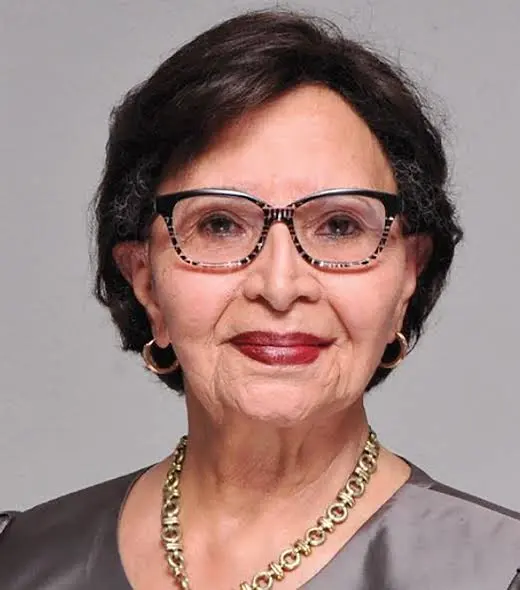
At a Glance
Johannesburg, the Coloured Community, and the Congress Tradition
Sophia Williams was born in Johannesburg in 1938, in the Coloured community of the Witwatersrand — a community that the apartheid system had created as a distinct racial category, classified between the African majority and the white minority in the elaborate racial hierarchy that the apartheid state constructed and maintained. Growing up in this community meant growing up in a world of specific contradictions: subject to racial discrimination that was similar in kind if different in degree from the discrimination the African majority faced, possessed of a political tradition that was both distinct from and connected to the broader liberation movement, navigating an identity that the apartheid state insisted was a fixed racial category and that the Congress Alliance insisted was a political construction that solidarity could transcend.
The Congress Alliance's non-racial politics offered the Coloured community a political framework that rejected the racial categorisation on which apartheid depended. The Freedom Charter's declaration that "South Africa belongs to all who live in it" was, for Coloured activists like Sophia Williams, both a political programme and a personal statement — the assertion that the category into which the apartheid state had placed them did not determine their political identity, that they could choose to commit themselves to the liberation of all South Africans rather than to the advancement of any particular racially defined group.
Her involvement in the Congress of Democrats — the COD, which brought together non-African activists committed to the Congress Alliance — was the organisational expression of this commitment. The COD's membership included both white and Coloured members, and its existence within the Congress Alliance embodied the principle that liberation from apartheid required solidarity across the racial lines that apartheid enforced rather than the accommodation of those lines through separate communal organisations.
18 Years Old at the Front of Twenty Thousand
On 9 August 1956, Sophia Williams was eighteen years old. She stood at the front of a march of approximately twenty thousand women — women who had come from across the Transvaal to present a petition of one hundred thousand signatures against the extension of the pass laws to African women. She stood there alongside Lilian Ngoyi, the dominant personality of the ANC Women's League and the person whose voice and presence gave the march its emotional intensity; alongside Helen Joseph, the British-born social worker and Congress of Democrats activist who was one of the march's principal organisers; and alongside Rahima Moosa, the Transvaal Indian Congress activist who represented the Indian community's engagement with the women's movement.
The four women at the front of the march were not chosen randomly. Their selection was deliberate, and their composition — African, English/white, Indian, Coloured — was a statement about what the liberation movement believed it was doing and who it believed it was doing it for. The march was against the pass laws, which would most directly affect African women, but it was led by women of four different racial communities to demonstrate that the campaign was not simply an African women's campaign but an expression of the principle that the freedom of all South Africans was indivisible. The four women walking together embodied this principle in the most concrete human terms available.
Sophia Williams was the youngest of the four. She was a teenager — old enough to understand what she was doing and why, young enough that her presence represented the future as much as the present, the generation that would carry the struggle into its next phase. The photograph of the four women at the front of the march — one of the most reproduced images of the anti-apartheid struggle — shows her alongside the others, a young woman among older women, a Coloured activist among African, white, and Indian comrades, a human expression of the political argument for which they were all, in their different ways, making their lives available.
The Petition, the Absent Prime Minister, and the Song
The Women's March had a specific practical purpose: to present a petition of one hundred thousand signatures to Prime Minister J.G. Strijdom, demanding the withdrawal of the government's decision to extend the pass laws to African women. The pass laws were the cornerstone of the apartheid state's control of African labour movement — the system by which the movement of African people was regulated through the requirement to carry and produce a pass document on demand, the violation of which was a criminal offence. Their extension to women was experienced by the women's movement as a direct attack on African women's freedom, an attempt to attach women to the migrant labour system in the same way their husbands and fathers had been attached to it for generations.
When the four women arrived at the Union Buildings with the petition and the twenty thousand marchers behind them, they found that Prime Minister Strijdom had absented himself rather than receive them. He was not there. They left the petition in his office — one hundred thousand signatures, the collected demands of women across the Transvaal who had taken the time to add their names to the record of their refusal to accept what the government was doing. And then the women waited, standing in silence for thirty minutes before the Union Buildings, and then they sang.
"Wathint' Abafazi, Wathint' Imbokodo" — "You strike a woman, you strike a rock." The song rang out across the terraces of the Union Buildings, carried by twenty thousand voices, led by Lilian Ngoyi's voice above them all. Sophia Williams was among those voices. She was eighteen years old, at the front of twenty thousand women, singing the song that has become the anthem of South African women's resistance, while the Prime Minister hid from them in whatever part of the building he had retreated to.
The Non-Racial Argument Made Flesh
The Women's March of 9 August 1956 is remembered primarily as an African women's event — as the demonstration organised by the ANC Women's League and the Federation of South African Women against the extension of the pass laws to African women. This memory is not wrong, but it is incomplete. The march was organised by and for and with women of multiple racial communities, and the non-racial character of its leadership — the four women at its front — was not incidental but central to what the march was trying to demonstrate.
Sophia Williams's presence at the front of the march was the clearest possible expression of the Congress Alliance's non-racial principle: that the liberation of South Africa was not the project of any single racial community but the shared project of all who committed themselves to it. Her racial classification as Coloured — the specific category that the apartheid system had created to place between African and white — did not define her political identity. Her commitment to the liberation movement defined it, and her presence at the front of the Women's March was the physical expression of that commitment in the most public and the most consequential forum available in 1956.
The apartheid state's response to the Women's March was to extend the pass laws to African women anyway — the demonstration had not achieved its immediate practical objective. But the demonstration had done something more durable: it had shown that twenty thousand women could be organised, could march to Pretoria, could present themselves at the Union Buildings without fear, could sing a song of defiance loud enough to fill the valley below the Union Buildings. Sophia Williams, eighteen years old, was part of that showing. She was one of the people who made the demonstration possible, and her presence at the front of it made it the demonstration it was rather than something smaller.
Legacy: The Youngest at the Front and What That Meant
Sophia Williams-de Bruyn's legacy is primarily the Women's March — the event at which she was present, at whose front she stood, and whose memory she carries as one of its four named leaders. The march is commemorated annually on 9 August, National Women's Day in South Africa, and her name and image appear in those commemorations alongside those of Ngoyi, Joseph, and Moosa. The four women are remembered together, as they marched together, as the collective face of one of the most important demonstrations in the history of the South African liberation movement.
Her specific contribution to the march's legacy is the non-racial dimension that her presence embodied. The Women's March would have been significant even if it had been led entirely by African women, because the political cause it was fighting for — the right of African women to live without the pass law system — was just and important. But the march it actually was — led by African, white, Indian, and Coloured women together — made a larger argument about what the liberation movement was and what it was fighting for. Sophia Williams, at eighteen, at the front of twenty thousand, was the human embodiment of that larger argument.
She was the youngest of the four. She represented the future as much as the present. She lived to see that future come — imperfectly, incompletely, but unmistakably — in the democratic South Africa that the Women's March and the liberation struggle it was part of helped to create. National Women's Day is on 9 August because she and the women who marched with her stood in front of the Union Buildings on that date in 1956 and refused to be silent. That is a permanent contribution, and it is hers.