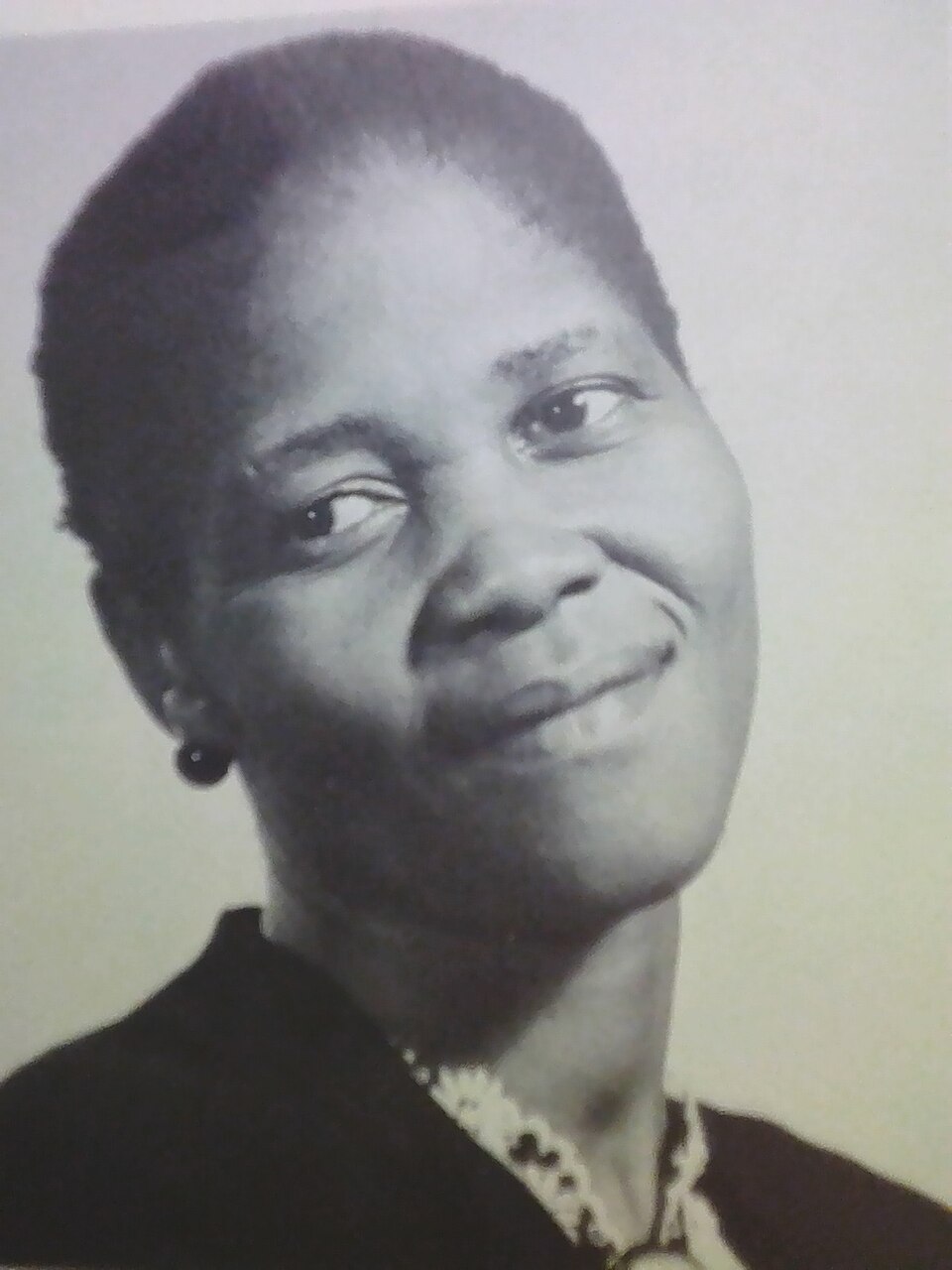
At a Glance
Pretoria and Poverty: The Formation of a Leader
Lilian Masediba Ngoyi was born on 25 September 1911 in Pretoria — the administrative capital of the Union of South Africa, the city of the Union Buildings on whose steps the women's movement would one day make its most dramatic statement. She was born into poverty, into the African working class of the Transvaal, into a world in which the options available to a Black girl were severely circumscribed by the racial and gender hierarchies of the segregationist system that apartheid would later formalise and intensify. She left school early — education for African children was not free and was not compulsory, and the economic pressures of the family made early entry into the labour market a necessity rather than a choice.
She moved to Johannesburg and found work as a garment worker — one of the few industrial occupations available to African women in the urban economy of the Witwatersrand. The garment industry of Johannesburg employed large numbers of women of all racial groups, and it had an organised union tradition that was, by South African standards, relatively progressive on questions of race. The Garment Workers Union, in which Lilian Ngoyi became active, was one of the unions that made serious efforts to organise across racial lines and that exposed its members to a political culture in which collective action and the assertion of workers' rights were normal rather than deviant.
The union was Ngoyi's political school. She learned in the union meetings and the shop floor discussions and the strike committees what collective organisation could achieve — that the conditions that individual workers endured and accepted as inevitable could be changed if enough people refused to accept them together. She learned how to speak in public, how to move an audience, how to translate personal experience and shared grievance into the kind of political energy that could sustain a campaign. These were skills that she would apply on a far larger stage than any union meeting could provide.
The Women's League and the Voice That Filled the Township
Lilian Ngoyi joined the ANC Women's League in the early 1950s and rose rapidly to its leadership — elected president in 1953 in recognition of an organisational capacity and a personal authority that everyone who encountered her immediately recognised. She was not a theorist or a programme developer; she was an organiser and a speaker, a woman whose ability to communicate with other women — to speak to them in terms that connected directly with their lived experience and that transformed that experience into political consciousness — was exceptional in the way that all genuinely great political speaking is exceptional: it was not a technique but a presence, not a skill but a personality expressing itself in the most direct possible way.
People who heard Lilian Ngoyi speak describe the experience in terms that go beyond the ordinary assessment of political oratory. She could fill a township hall with the force of her voice and her conviction. She could take an audience of tired women — women who had worked all day, who had domestic responsibilities waiting for them at home, who had a thousand reasons to be distracted or disengaged — and hold them completely, speaking to them about the pass laws and the Women's League and the liberation movement in terms that made the political personal and the personal political in ways that persuaded rather than harangued, that brought people along rather than driving them. She was, by the assessment of everyone who experienced it, the greatest orator the South African women's movement ever produced.
This gift was inseparable from the content it served. Ngoyi was not a great speaker about nothing; she was a great speaker about something she believed in completely, drawing on her own experience of poverty and discrimination and the labour movement to give her words a grounding in lived reality that purely ideological speaking could not achieve. The women she spoke to recognised themselves in what she said, and that recognition was the foundation of the political commitment she was building.
The International Stage: Switzerland, China, and the World
In 1955, Lilian Ngoyi attended the World Congress of Mothers in Lausanne, Switzerland — one of the first Black South African women to travel internationally as a political representative of the liberation movement. The experience of leaving South Africa, of seeing how women organised in other countries, of presenting the South African women's movement to an international audience, and of hearing the international movement's expressions of solidarity with the anti-apartheid struggle, was transformative. She subsequently visited Britain, the Soviet Union, China, Romania, and other countries, returning to South Africa with a sense of the international dimensions of the liberation struggle that enriched her understanding of what they were fighting for and why it mattered beyond South Africa's borders.
The apartheid government's response to her international travel was immediate: her passport was confiscated on her return, and she was permanently prevented from travelling abroad again. The government understood that the international connections she had made and the solidarity she had expressed and received were dangerous — that the liberation movement's capacity to mobilise international pressure against apartheid was one of the most effective challenges to the system's legitimacy, and that figures like Ngoyi who could represent the movement convincingly on the international stage needed to be confined to South Africa.
The confiscation of her passport was one of the first in the sequence of official measures through which the apartheid state would progressively restrict and confine Lilian Ngoyi over the following quarter century. It was a measure that could not prevent what she had already done — the relationships she had built, the international attention she had drawn to the South African women's movement — but it could prevent her from doing it again, and the government was determined to limit the damage she could do to its international standing.
9 August 1956: The Day the Women Came to Pretoria
The Women's March of 9 August 1956 was the culmination of years of organisation against the extension of the pass laws to African women, and Lilian Ngoyi was its dominant personality. The march brought approximately twenty thousand women to the Union Buildings in Pretoria — women from Johannesburg, from the townships of the Rand, from the small towns of the Transvaal, many of them having travelled for hours to be present. They came in the colours of the ANC — the green, black, and gold — and in the saris and the dresses and the domestic worker uniforms of the various communities and classes of women that the Congress Alliance represented.
Ngoyi stood at the front of the march alongside Helen Joseph, Rahima Moosa, and Sophia Williams. She was the tallest of the four women physically and the largest presence in every other sense — the person whose voice and whose certainty gave the march its character. When the four women went to Prime Minister Strijdom's office to deliver the petition of one hundred thousand signatures and found that he had absented himself rather than receive them, it was Ngoyi who led the response: the standing silence of thirty minutes in which twenty thousand women stood without speaking in front of the Union Buildings, and then the singing.
The song — "Wathint' Abafazi, Wathint' Imbokodo, Uzokufa" — "You strike a woman, you strike a rock, you will be crushed" — was improvised or adapted on the day, in response to the Prime Minister's absence, as a statement of the women's determination and their refusal to be dismissed. Ngoyi led it. The singing of twenty thousand women on the terraces of the Union Buildings in Pretoria on 9 August 1956 is one of the defining sounds of the South African liberation movement, and it is inseparable from Lilian Ngoyi's voice. 9 August is now National Women's Day in South Africa. The march is commemorated every year. And Lilian Ngoyi is its most iconic figure — the woman who made the day what it was.
The Treason Trial: Five Years in the Courts
On 5 December 1956 — less than four months after the Women's March — Lilian Ngoyi was among the 156 people arrested in the pre-dawn raids that inaugurated the Treason Trial. The apartheid government charged the leadership and many activists of the Congress Alliance with high treason, alleging that their involvement in the Congress of the People and their adoption of the Freedom Charter constituted an organised attempt to overthrow the state by violent means. Ngoyi, as president of both the ANC Women's League and FEDSAW, and as one of the most visible figures in the Congress Alliance's mass campaigns, was an obvious target.
The Treason Trial ran for more than four years — the accused were required to appear in court repeatedly, were subject to bail conditions and other restrictions, and were unable to devote themselves fully to the political work they would otherwise have been doing. For Ngoyi, whose effectiveness depended on her ability to speak publicly, to organise, and to move through the townships where she had built the Women's League's networks, the restrictions of the trial period were a significant constraint on her political contribution. The state's strategy was transparent: using the legal process itself — regardless of the outcome — as an instrument for neutralising the most effective activists.
The state's case collapsed and the remaining accused, including Ngoyi, were acquitted in March 1961. The acquittal was a legal victory but it came after years of restriction, and the subsequent banning orders that the government imposed on her were a continuation of the same strategy by different means: having failed to convict her through the courts, the state would confine her through administrative measures that required no judicial process and admitted of no appeal.
The Long Silence: Banning, House Arrest, and the Years of Confinement
The banning order that the apartheid government imposed on Lilian Ngoyi in 1963 was the beginning of a seventeen-year sentence imposed without trial, without charge, without the procedural constraints that even the apartheid legal system's political prosecutions required. The banning order prohibited her from attending gatherings of any kind — which was defined broadly enough to make virtually any form of social contact outside the immediate family technically illegal. It prohibited her from being quoted in any publication. It prohibited her from communicating with other banned persons. And it ultimately led to a house arrest order that confined her to her home in Orlando, Soweto, during specified hours.
The practical effect of these restrictions on a woman whose political effectiveness was entirely dependent on her ability to speak in public, to organise, and to maintain contact with the networks she had built, was devastating. Lilian Ngoyi — the woman who had spoken to twenty thousand women at the Union Buildings, who had addressed crowds in townships across the Transvaal, who had represented the South African women's movement at the World Congress of Mothers in Switzerland — was confined to a house in Orlando, Soweto, prohibited from speaking and from being heard.
She endured the confinement with the dignity that had characterised everything else in her life — not without bitterness, not without the recognition of what was being done to her and why, but without the collapse into despair that the state's strategy of isolation was designed to produce. The women's movement she had built continued, in diminished form, without her public voice. The organisations she had led survived the banning years. And her reputation — the memory of what she had done and what she had said and what she had represented — continued to circulate through the townships and through the political culture of the liberation movement in ways that the banning orders could not reach.
Death and the Final Irony
Lilian Ngoyi's final banning order expired on 22 February 1980. She had been under banning orders of various forms for seventeen years. She was sixty-eight years old. She died on 13 March 1980 — nineteen days after the lifting of her last restriction, nineteen days into the freedom that the state had denied her for most of the last two decades of her life.
The timing of her death — so close to the end of her banning, as if her body had been waiting for the legal freedom before it allowed itself to stop — gave her story a shape that no political narrative could have manufactured. She had spent seventeen years being prevented from doing what she was born to do, and she died as she was finally being allowed to do it again. The state had imprisoned her without walls and had held her until almost the end, and then in the last weeks had let her go, and she had not survived the letting go.
Her funeral in Orlando attracted thousands — the movement that had been deprived of her voice for seventeen years came to say goodbye, and the farewell was enormous. She was buried in Orlando Cemetery, in the Soweto she had organised and loved, in the city that had been both the arena of her greatest work and the place of her longest confinement.
Legacy: The Rock That Would Not Break
Lilian Ngoyi's legacy rests on three things that are each, individually, sufficient to secure a place in the history of the South African liberation movement. She was the greatest public speaker the women's anti-apartheid movement produced — a voice and a presence that moved people at a level beyond the merely rational and that built the political consciousness that sustained mass action. She was the organiser and the dominant personality of the Women's March of 9 August 1956 — the day that is now National Women's Day in South Africa, the day that gave the women's movement its most enduring symbol and its most defiant anthem. And she was a woman who endured seventeen years of banning and house arrest without breaking — who was confined and silenced by a state that knew exactly how dangerous she was, and who survived that confinement with her dignity and her commitment intact.
The song she led on 9 August 1956 — "Wathint' Abafazi, Wathint' Imbokodo" — "You strike a woman, you strike a rock" — became the defining statement of the South African women's movement and one of the most recognisable political songs in the country's history. It is sung at Women's Day commemorations every year, and every time it is sung, it carries Lilian Ngoyi's voice inside it — the voice of the woman who led twenty thousand women in singing it on the steps of the Union Buildings while the Prime Minister hid from them in his office. That is not a small thing to leave behind.