At a Glance
SACTU and the Political Labour Movement
The South African Congress of Trade Unions was formed in 1955 as the labour federation aligned with the Congress Alliance — the organisational expression of the liberation movement's commitment to organising the working class as a political as well as an industrial force. SACTU brought together African trade unions that had been excluded from the mainstream of South African industrial relations by the racial structure of the labour movement, and it aligned them explicitly with the ANC, the Indian congresses, the Congress of Democrats, and the other organisations of the Congress Alliance.
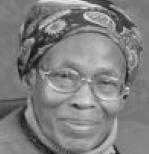
Rita Ndzanga and her husband Lawrence were among SACTU's most active members in the Johannesburg area, building the worker organisation that connected the labour movement's industrial campaigns to the broader liberation struggle. SACTU's approach — that trade union work and political work were inseparable, that organising workers for better wages and conditions was inseparable from organising them for liberation from the racial order that determined their conditions — was the approach that the independent trade union movement of the 1970s and 1980s would eventually develop into the more powerful organisational form of COSATU. But in the 1950s and 1960s, SACTU was the organisational vehicle for this approach, and its members — including Rita Ndzanga — were doing the foundational work that later generations would build on.
The security apparatus understood the political significance of SACTU and directed sustained attention at destroying it. The overlapping membership of SACTU and the ANC underground made SACTU networks a target for the security police's attempts to identify and penetrate the ANC's clandestine structures, and the ninety-day detentions of 1969 — which swept up Rita and Lawrence Ndzanga along with many other SACTU and ANC activists — were the most comprehensive assault on the SACTU-ANC network in the Johannesburg area in the late 1960s.
1969: The First Detention and What It Cost
The ninety-day detention that Rita Ndzanga experienced in 1969 was a systematic assault on her physical and psychological integrity designed to extract information about the SACTU and ANC networks she was part of. The methods used by the security police in ninety-day detentions in this period are well documented: physical assault, sleep deprivation, extended interrogation, isolation from family and legal counsel, and the sustained psychological pressure of indefinite detention without charge. The combination was designed to break the detainee's resistance and produce the information that would enable further arrests.
Rita Ndzanga did not provide that information. She survived the detention without breaking, without giving the security police the names and the operational details that they were seeking. This was not a passive experience; it was an active resistance, maintained through conditions that were specifically calibrated to prevent exactly that resistance. The personal cost of this resistance — in physical injury, in psychological damage, in the disruption of her family life — was real and lasting. But the consequence she chose to accept was the cost of the resistance rather than the cost of compliance.
Her husband Lawrence was detained at the same time and went through the same process. The shared experience of detention — separate, incommunicado, each interrogated about the other and about the networks they shared — was both an additional form of pressure on each individual and a demonstration of the security apparatus's understanding of the couple's combined significance to the SACTU-ANC network.
1977: The Year the State Killed Lawrence
Lawrence Ndzanga died in police custody in 1977. He was detained in the same year that Steve Biko was killed in detention — the year that the apartheid security state's use of custody as an instrument of murder was most nakedly demonstrated to the world. Biko's death drew international attention that Lawrence's did not, because Biko was already internationally known through his Black Consciousness movement and because the circumstances of his death were documented in ways that made denial impossible. Lawrence Ndzanga's death was part of the same pattern — the pattern of detainees dying in custody under circumstances that the security police attributed to natural causes and that the evidence consistently contradicted — but it received far less attention.
For Rita, the death of Lawrence was the apartheid state's most direct and most personal assault on her. It killed the person she had built her life with, the person who had shared her political commitments and her organisational work, the person whose detention in 1969 she had survived alongside her own. The state had subjected her to torture in 1969, had detained her again in 1976, and had now killed her husband. The response it might have expected — the withdrawal into grief, the abandonment of the political work that had made her a target — was the response she refused to give.
She continued. She continued her trade union work, within the constraints of the banning orders that restricted her formal participation. She maintained her connections to the labour movement and the liberation movement. She refused to allow the state's violence to produce the political outcome the violence was designed to produce. This is not a small thing. It is, in the context of what she had experienced and what she had lost, an act of extraordinary will.
The Pattern of Persecution and the Nature of Resilience
Rita Ndzanga's experience — detained in 1969, detained again in 1976, husband killed in detention in 1977, banned and restricted throughout — was not unique in the South African liberation movement. The pattern of repeated detention, of banning, of the killing of family members: these were standard tools of the apartheid security apparatus's campaign against the labour movement and the ANC underground, and many of the movement's members experienced variations of the same pattern.
What makes each individual experience significant is not its uniqueness but its specificity — the particular person, in the particular circumstances, making the particular choices that shaped their response to the system's violence. Rita Ndzanga's choices — to continue, to refuse to be stopped, to maintain her political commitments through detention and torture and the death of her husband — were her own, and they were made at real personal cost and with full knowledge of what continuation meant.
The question of resilience — of what allows some people to maintain commitment under conditions that break others — does not have a simple answer. It is probably a combination of personal character, of political conviction, of the social relationships that sustain individual commitment, and of the particular way in which individuals understand the relationship between their personal suffering and the political purpose it serves. For Rita Ndzanga, the continued work was both a tribute to Lawrence — who had died in custody rather than abandon what he believed in — and an expression of her own understanding that the alternative to continuing was allowing the system to win, and that allowing the system to win was not a choice she was prepared to make.
Legacy: The Labour Movement's Quiet Heroes
Rita Ndzanga died in 2019 at the age of eighty-six. She had outlived Lawrence, outlived the apartheid system, outlived many of the comrades who had been detained with her in 1969. She received recognition in the post-apartheid era for her contribution to the liberation struggle, but she was never as celebrated as the most iconic figures of the movement — her story was part of the labour movement's history rather than the more visible political history that dominates the popular account of the liberation struggle.
This relative obscurity reflects a broader pattern in how the liberation struggle is remembered: the trade union organisers, the SACTU members who built the labour movement's structures in the 1950s and 1960s, the women who organise in factories rather than speaking on public platforms — these figures appear less frequently in the historical record than the lawyers and the generals and the martyrs whose stories are more dramatically legible. But the labour movement that eventually produced COSATU and that became one of the liberation struggle's most important organisational pillars was built on the work of people like Rita Ndzanga, in the decades before COSATU existed, in conditions that were genuinely dangerous.
She built those foundations at personal cost that she continued to accept even after the cost became as severe as it could be. That is the record that deserves to be in the history.