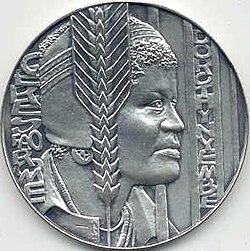
At a Glance
Natal, the Women's League, and the Formation of an Uncompromising Activist
Dorothy Nyembe was formed politically in the Natal of the late 1940s and early 1950s — a province with its own distinctive liberation politics, shaped by the large Indian community whose Congress tradition went back to Gandhi, by the Zulu traditional political institutions that gave Natal's African politics a specific character, and by the particular brutality that the sugar industry's labour system imposed on the African working-class communities of the coastal lowlands and the interior. The ANC Women's League in Natal was one of the organisation's most active provincial women's structures, drawing on both the Indian Congress women's tradition and the African community networks that the League had been building since its founding in 1948.
Nyembe became involved in this political world in the years when the Youth League's pressure was transforming the ANC from a moderate petitioners' organisation into a mass movement committed to direct action, and when the Women's League was developing its own analysis of how apartheid's specific impact on women — the destruction of family life through the migrant labour system, the denial of the pass books that restricted women's independent mobility, the impossibility of building stable households under the conditions of urban apartheid — required specifically gendered political responses alongside the broader liberation movement's programme.
Her involvement in the organisation of the 1956 Women's March was part of this broader pattern of commitment. The march — which brought approximately twenty thousand women to Pretoria to protest the extension of the pass laws to women — required months of organisational preparation in every province, and in Natal the Women's League's branch structures were the primary vehicle through which delegates were recruited, organised, and transported. Nyembe was among the Natal women who made the journey, who stood in the Union Buildings amphitheatre, and who experienced the specific political consciousness that comes from collective public action at scale — the understanding that you are not alone, that the conditions you are fighting are felt by thousands of others, and that collective action is possible even in the face of a state that is determined to prevent it.
The Banning of the ANC, MK, and the Move to Clandestine Work
The Sharpeville massacre of March 1960 and the subsequent banning of the ANC in April of that year created the conditions in which activists across South Africa faced a choice: retreat to safer forms of engagement, go into exile, or move into the underground work that the movement required if it was to maintain any organisational presence inside the country. For many women, the choice was complicated by family responsibilities — by children who needed parents, by households that depended on the wages of women who might be imprisoned if they continued their political work, by the specific vulnerabilities that come from being a woman in a system that combined racial oppression with gender subordination.
Nyembe made her choice without apparent hesitation. When Umkhonto we Sizwe was established in 1961 and began building the Natal MK network, she was part of the support structure that the network required. The specific work she did — sheltering MK operatives, storing weapons and materials — was not the work that the liberation movement's histories tend to celebrate, because it was invisible work, work that succeeded precisely by leaving no trace. A safe house that is never discovered, an operative who is never caught because she was successfully sheltered, weapons that are never found because they were stored securely — none of these leave a record in the way that a speech, a trial, or an imprisonment does. The work is visible only when it fails, when the police discover the safe house or find the weapons, which is precisely what happened to Nyembe in 1968.
Her arrest was part of the security police's systematic effort to roll up MK's Natal support networks in the years following the Rivonia arrests. The Rivonia documents had provided the security police with a comprehensive picture of MK's national structure, and the years between 1963 and 1968 saw a sustained effort to identify and arrest every node of the network that the Rivonia intelligence had revealed. Nyembe was among the activists caught in this effort — her safe house activities and weapons storage identified through the security police's intelligence work — and her arrest in 1968 led to her conviction and the fifteen-year sentence that followed.
Fifteen Years: The Price of Providing Safe Houses
The fifteen-year sentence that Nyembe received was one of the longest served by a woman in the liberation struggle, and its length reflected both the severity of the apartheid state's view of her activities and its determination to deter others from providing the same kind of support to MK's operations. The sentence was designed not only to punish but to communicate: this is what happens to people who shelter guerrillas and store weapons. The deterrent effect on potential supporters of the movement was part of the political calculation behind such sentencing.
What the apartheid state could not calculate was the effect of the sentence on Nyembe herself, and on the political symbolism she would acquire through serving it. Women who served long sentences in the liberation struggle had a particular moral authority within the movement — an authority based not on theoretical commitment but on demonstrated willingness to pay the full price of that commitment, to accept the consequences without recanting or compromising. Nyembe served every year of her fifteen-year sentence without, so far as the record shows, seeking reduction through cooperation with the authorities or through political recantation. She was released in 1984, having served the full term, with the same commitments she had held when she entered prison.
The conditions of her imprisonment — in the apartheid prison system, as a Black woman, serving a long sentence for political offences — were harsh in ways that the historical record does not always capture. The apartheid prison system maintained racial and gender hierarchies that imposed specific additional burdens on Black women political prisoners: the inferior conditions compared to white prisoners, the separation from family for extended periods, the constant surveillance and management that the prison system imposed, and the absence of the political community that the Robben Island prisoners had built among themselves. Nyembe navigated fifteen years of this without breaking, and her emergence from prison in 1984 as a woman still committed to the struggle she had entered prison for was itself a political statement of considerable force.
Return, the UDF Period, and the Transition
Nyembe was released in 1984, four years before the end of the Robben Island prisoners' sentences, and returned to Natal in the middle of the most violent period of the liberation movement's internal conflict. The 1980s were a time of intense political violence in KwaZulu-Natal — the conflict between ANC and UDF supporters on one side and Inkatha Freedom Party supporters on the other was killing hundreds of people annually, and the political work of building the liberation movement's Natal structures in this environment was conducted against a background of constant threat and actual violence.
She resumed her Women's League work and her involvement in ANC structures, contributing the authority of her imprisonment and her decades of commitment to the movement's work in Natal. The specific dynamics of post-apartheid Natal politics — the ANC-Inkatha conflict, the violence of the transitional period, the specific challenges of rebuilding democratic institutions in a province where the political violence of the 1980s and early 1990s had left deep wounds — were the context in which her post-prison work occurred. She lived to see the 1994 elections, to cast her vote, and to see the democratic South Africa that her sheltering of MK guerrillas and her fifteen years in prison had contributed to building. She died in 1998.
Legacy
Dorothy Nyembe's legacy is partly the legacy of the women who provided the liberation movement's logistical infrastructure — the safe house operators, the weapons storers, the people who made the movement's clandestine operations possible by taking the risks that operational security required. This work is systematically underrepresented in the histories of the liberation struggle, which tend to focus on the planners and commanders and political leaders rather than on the people who made their operations possible. Nyembe was both a leader — as ANC Women's League president in Natal she was a genuinely prominent figure in the provincial movement — and a logistical supporter, and her story encompasses both dimensions.
Her fifteen-year sentence is one of the longest served by a woman in the liberation struggle's history, and the fact that she served it without recanting or compromising gives it a moral weight that is not diminished by the relative obscurity of her post-prison years. She paid the full price of her commitments, returned to the work she had been doing when she was arrested, and died in the democratic South Africa that her commitment had helped create. The histories have not done justice to her contribution, and the correction of that injustice is an ongoing obligation of South African democratic memory.