At a Glance
Cradock, the Calata Family, and Three Generations of the ANC
Cradock is a small town in the Eastern Cape — in the Karoo, the dry semi-desert interior of the province that the apartheid system had made one of the most economically marginal regions in South Africa. The town's African community lived in the township of Lingelihle on its outskirts, in the conditions of poverty, overcrowding, and racial restriction that were common to township communities across the country but that the specific isolation and economic deprivation of the Karoo made particularly acute. It was not an obvious centre of political power — not Johannesburg with its mines and its density of political networks, not Cape Town with its universities and its Indian Congress tradition, not Durban with its port and its labour movement. But the Eastern Cape had a tradition of liberation movement resistance that went back as far as any, and Cradock was part of that tradition through the specific legacy of James Calata and the specific organising of Matthew Goniwe.
James Calata — Fort's grandfather — had been one of the ANC's most significant early leaders. An Anglican minister based in Cradock, he had combined his religious vocation with a political commitment to the liberation of African people that found expression in his work as ANC Secretary-General from 1936 to 1949. In that role he had built the ANC's first serious mass membership infrastructure, established the Youth League that would later be transformed by Mandela and the other 1940s radicals, and composed the music that became part of the organisation's cultural and ceremonial life. He had built the ANC in the Eastern Cape, and his grandson grew up in the community that this legacy had shaped.
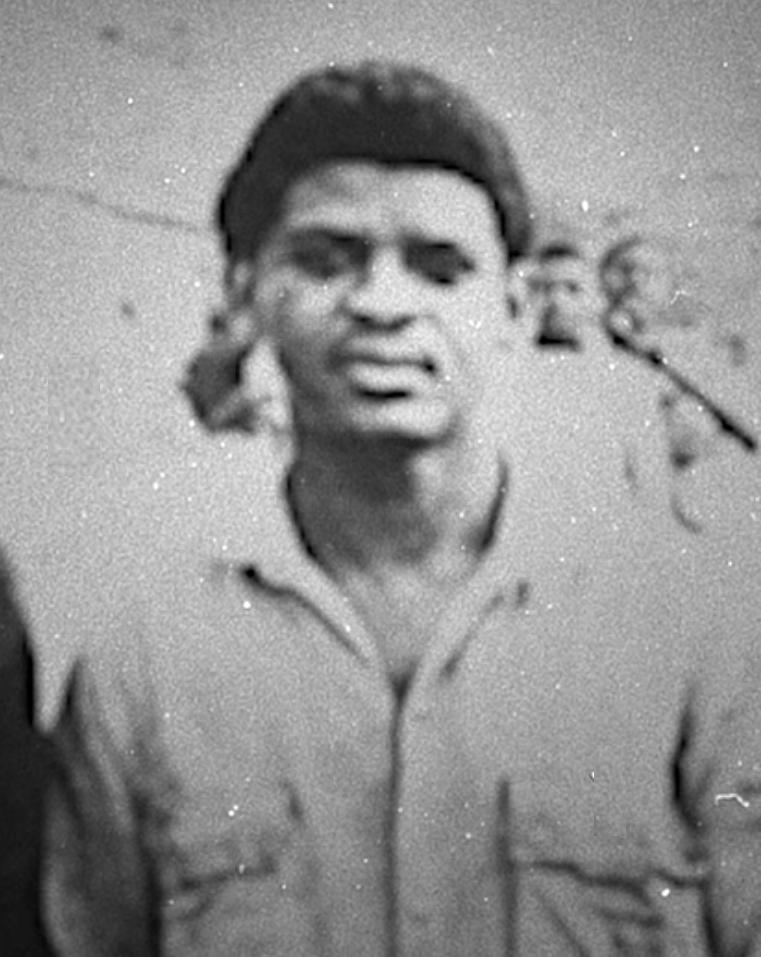
Fort Calata came of political age in the early 1980s, at a moment when the Eastern Cape was producing some of the most innovative and effective community organising in the country. Matthew Goniwe, a teacher and ANC activist who had been imprisoned on Robben Island and had returned to Cradock with both the organisational discipline of the island's political education and the radical civic vision that the community's conditions demanded, was building CRADORA — the Cradock Residents' Association — into a model of community democracy that was attracting attention across the region. Fort was among Goniwe's closest collaborators, bringing to the work both his family's deep ANC roots and his own engagement with the community through his role as a church organist and his connections to the township's social and religious life.
The Cradock Model: Street Committees and People's Power
The civic movement that Goniwe and Calata and their colleagues built in Cradock in the early 1980s was not merely another branch of the UDF's national network. It was a specific organisational experiment — the Cradock model — that drew on the ANC's traditions of mass mobilisation while addressing the specific conditions and needs of a small Eastern Cape township in ways that the national movement's more abstract frameworks sometimes failed to do. The street committee system that CRADORA developed — dividing the township into small geographic units, each with its own committee responsible for the immediate needs and concerns of the residents in those streets — built genuine grassroots democratic participation rather than the top-down mobilisation that much political organising defaulted to.
The model worked because it connected the liberation movement's political programme to the immediate material concerns of the community. The street committees addressed not only the political demands of the anti-apartheid movement — the release of political prisoners, the unbanning of the ANC, the end of the state of emergency — but the day-to-day problems of the township: poor housing, inadequate services, the behavior of local councillors, the conditions in the schools. By making the liberation movement relevant to people's daily lives in this direct way, the Cradock civic movement built a depth of community support that was more resilient under pressure than movements that focused only on the national political demands.
The security police understood the threat that this model represented. CRADORA's effectiveness was visible and documented — it was being written about in academic and activist publications, being replicated in other Eastern Cape towns, and was being discussed within the UDF as a model for the national movement. The decision to kill Goniwe and his three colleagues was not impulsive; it was a calculated assessment that the Cradock civic movement, with its specific combination of organisational effectiveness and community roots, was sufficiently dangerous to warrant the political and legal risks of assassination.
27 June 1985: The Abduction and the Murders
On the evening of 27 June 1985, Fort Calata, Matthew Goniwe, Sparrow Mkhonto, and Sicelo Mhlauli left Port Elizabeth to drive back to Cradock after attending a UDF regional meeting. They did not arrive. Their vehicle was found abandoned. Days later, their bodies were discovered near Bluewater Bay, outside Port Elizabeth — showing the marks of severe torture and having been partially burned, in what the security police had presumably intended to prevent identification of the remains and the method of killing.
The discovery of the bodies, and the evidence of torture they showed, transformed the murders from a security operation into a public political crisis. The funerals of the Cradock Four became major political events — attended by tens of thousands of people from across the Eastern Cape, accompanied by the singing and the political speeches that the apartheid government's attempts to restrict funeral gatherings could not entirely prevent. The photographs of the funerals, of the mourning communities, of the coffins carried through the streets of Cradock and Port Elizabeth, circulated internationally and contributed to the mounting pressure on the apartheid state that the 1985 emergency was attempting to contain.
The apartheid state denied responsibility and claimed for years that the murders were the work of criminal elements or political opponents within the liberation movement. The evidence that the security forces were responsible — evidence that the TRC eventually assembled and documented — took years to establish definitively, in part because the perpetrators had destroyed documents and in part because the apartheid security apparatus had invested significantly in concealing its methods. A signal found years later, in which a South African Defence Force general authorised the "permanent removal from society" of Goniwe, was the most direct documentary evidence of official sanction for the murder — a piece of paper authorising the killing of a community organiser in terms that left no room for the fiction that the security forces were acting in self-defence or without instruction.
Nomonde Calata, the TRC, and the Cry That Was Heard
When the Truth and Reconciliation Commission began its work in 1996, one of its earliest and most significant decisions was to begin with the testimony of victims rather than perpetrators — to establish, in the public record and in the public consciousness, what had been done to South African people before turning to the question of who had done it and whether they deserved amnesty. Nomonde Calata's testimony about the murder of her husband Fort was among the first testimony given, and it became one of the Commission's defining moments.
She described the evening she learned of his disappearance, the days of uncertainty, the discovery of the bodies. At a particular moment in her testimony she was overcome — she gave a cry that silenced the room, that was simultaneously a personal expression of grief and a statement about what the apartheid state had taken from her and from the community. Archbishop Tutu, presiding over the hearing, called a recess. The cry was recorded. It was broadcast on South African television and radio, and clips of it circulated internationally. Composer Philip Glass was moved to incorporate recordings of it into a musical work.
The TRC process has been both celebrated and critiqued in the decades since its completion — celebrated for creating a public record of the violations and for the genuine catharsis that the testimony process provided, and critiqued for prioritising reconciliation over accountability and for failing to fully address the economic dimensions of apartheid's injustice. Whatever its limitations, Nomonde Calata's testimony gave South African society something that no other mechanism could have provided: a specific, embodied account of what the murder of Fort Calata had meant to the people who loved him. The cry was not testimony to an abstract wrong. It was testimony to a specific person who had been taken, and to what his absence meant.
Legacy
Fort Calata's legacy is inseparable from the legacy of the Cradock Four — the four men whose murders together became one of the defining symbols of the apartheid state's use of assassination against the liberation movement in the 1980s. But his individual legacy is also worth preserving separately: the legacy of a twenty-nine-year-old church organist and community organiser in a small Eastern Cape town, whose grandfather had built the ANC in the same community, and whose commitment to continuing that work was the specific reason the security police killed him.
The three-generation arc — James Calata building the ANC in Cradock in the 1930s and 1940s, the organisation surviving the banning and the repression, Fort Calata organising in the same community forty years later — is one of the most direct illustrations of what the liberation struggle required of the communities it drew on: not occasional heroism but sustained generational commitment, the passing of the baton from grandparent to grandchild, the acceptance that the struggle would outlast any individual and that each generation would have to pay its own price for continuing it.
Fort Calata paid that price at twenty-nine. The democratic South Africa that his grandfather worked to build and that he continued to build stands as the answer to the question of whether the price was worth it. The question is not fully answered yet.