At a Glance
Newcastle and the Inheritance of Indenture
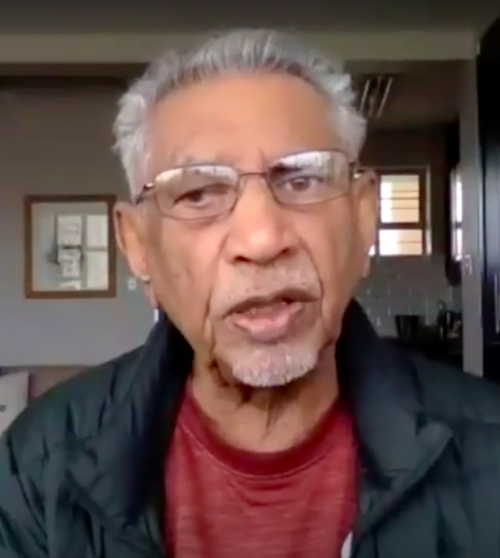
Mac Maharaj was born on 22 July 1935 in Newcastle, a coal-mining town in the northern Natal midlands. His family background was one that shaped his political consciousness before any formal political education: the descendant of indentured Indian labourers brought to Natal by the British colonial administration in the second half of the nineteenth century to work the sugar plantations after the Zulu people refused the terms of contract labour the colonial economy required. The indenture system was a form of bonded labour that differed from chattel slavery primarily in its formal time limit — labourers were bound for five years, then nominally free — but that shared with slavery the essential character of compelled labour under conditions not of the worker's choosing.
The world of Natal's Indian community in the 1930s and 1940s was a world shaped by the memory of indenture, by the accumulated political traditions of Gandhi's early South African campaigns, and by the ongoing experience of racial discrimination under the segregationist and then apartheid systems. The Indian community was concentrated in Natal, was subject to specific forms of racial legislation targeting it — the Indians Act, the Group Areas Act, the land laws that restricted where Indians could own property — and had developed, through the Natal Indian Congress and the Transvaal Indian Congress, some of the most sophisticated political organisations in South Africa.
Mac grew up in this environment and was shaped by it, and he took from it the combination of political consciousness and practical intelligence that would characterise everything he subsequently did. A scholarship took him to Britain for university study, and Britain in the 1950s — the Britain of the Labour Party, the Communist Party of Great Britain, the anti-colonial movement, the intellectual culture of the London left — provided the theoretical education that his Newcastle upbringing had not. He joined the Communist Party in Britain and returned to South Africa with both a political framework and a set of organisational skills that the liberation movement would find extremely valuable.
Robben Island and the Manuscript That Survived
Mac Maharaj was arrested in 1964, tortured during interrogation, and sentenced to twelve years on Robben Island. The torture he endured was the security police's standard attempt to extract information about the MK networks and the underground — physical pressure designed to break the detainee's resistance and produce the names and the operational details that would enable further arrests. Mac did not give them what they wanted. He survived the interrogation with his political commitment and his personal integrity intact, and he went to Robben Island carrying both.
On Robben Island, in the maximum security section alongside the Rivonia prisoners, Mac Maharaj was the organiser and the operational mind behind one of the most remarkable acts of cultural and political preservation in the history of South African imprisonment. Nelson Mandela was writing his autobiography — dictating to fellow prisoners, writing in the cell, accumulating the manuscript of what would eventually become Long Walk to Freedom. The manuscript needed to get off the island before the prison authorities discovered it; if discovered, it would be confiscated, and Mandela would face additional disciplinary consequences.
The plan that Mac organised involved multiple stages of concealment. Prisoners transcribed the manuscript in handwriting small enough that pages of text could be compressed into tiny spaces. The compressed transcriptions were hidden inside the false bottoms of containers — matchboxes, tins, packages — that were being taken off the island by prisoners who were being released or by visitors whose possessions were not searched with sufficient care to find material hidden with sufficient ingenuity. The operation was conducted with the same operational discipline that Mac would later apply to Operation Vula — the patient attention to detail, the management of information within the group, the continuous awareness of the surveillance environment and how to work around it.
The manuscript survived. It left Robben Island in pieces, was reassembled outside, and was eventually secured in archives in Britain where it remained until the democratic transition made its publication possible. Long Walk to Freedom, published in 1994, exists because Mac Maharaj organised its survival on Robben Island. That is not an incidental footnote to his career; it is one of the most significant single contributions any individual made to the cultural legacy of the South African liberation movement.
Operation Vula: The Last Underground
Operation Vula — the name derived from the Zulu word meaning "open" or "unlock" — was conceived in 1988 as the ANC's response to a strategic problem that Oliver Tambo and the ANC leadership had been wrestling with for years. The ANC's external mission had built an impressive organisational structure in exile, but the underground networks inside South Africa had been repeatedly penetrated and destroyed by the security apparatus. The Internal ANC and the UDF provided a mass political presence inside the country, but MK's capacity to operate there was severely degraded. If the negotiations that were beginning to seem possible were to produce an outcome that served the liberation movement's interests, the ANC needed to have a credible military and political presence inside South Africa — not just to fight, but to demonstrate to the apartheid government that the military option had not been abandoned, and that the pressure for a genuine democratic settlement was backed by operational capacity as well as political will.
Tambo tasked Mac Maharaj and Siphiwe Nyanda with building that presence. The operation required Mac to re-enter South Africa clandestinely — using false identity documents, establishing himself in a cover identity, and building an underground network while living among the people the security apparatus was hunting. He entered South Africa in 1988 and spent the next two years running what was, by any operational standard, one of the most sophisticated clandestine operations on the African continent.
The communications system that Vula developed was its most remarkable technical achievement. Using encrypted computer-to-computer communications — technology that in 1988 was barely available commercially and that the apartheid security apparatus's signals intelligence capability was not equipped to decrypt — the operation maintained direct communication between the Vula network inside South Africa and the ANC's external mission in Lusaka. Encrypted messages were transmitted through channels that appeared to be ordinary commercial communications. The security forces were simultaneously conducting the negotiations that would eventually produce the democratic transition and trying to find the underground network that was maintaining itself inside the country they controlled, and for two years they could not find it.
The Arrest, the Political Crisis, and the Questions It Raised
When Operation Vula was blown in July 1990 — following the arrest of a courier whose information led to a cascade of further arrests — it created an immediate political crisis for the ANC. The unbanning of the ANC had occurred in February 1990. The ANC and the National Party government were engaged in negotiations. The public image of the ANC was of an organisation that had committed itself to the negotiated path to democracy. And the security forces had just discovered that the ANC had been running a sophisticated underground military operation inside South Africa throughout the period of negotiations — an operation commanded by a senior ANC official who had entered the country clandestinely and lived there for two years under a false identity.
The apartheid government used the discovery to challenge the ANC's good faith in the negotiations — to argue that the ANC was negotiating with one hand while maintaining a military underground with the other. The ANC's response was that Operation Vula had been authorised before the negotiations began and had not been terminated because the movement needed to retain its options until a genuine democratic outcome was secured. The debate about whether Vula represented a bad-faith violation of the negotiating process or a legitimate insurance policy for a movement that could not yet trust that the negotiations would succeed was one of the most significant political arguments of the transition period, and it was not fully resolved in either direction.
Mac Maharaj was arrested, detained, and interrogated. The state attempted to prosecute him and other Vula operatives, but the charges eventually collapsed — the state could not establish the evidentiary basis for conviction that it needed. He was released and re-entered the political mainstream as one of the ANC's senior figures, his Vula career adding rather than detracting from his authority within the movement, which understood what he had done and why.
CODESA and the Architecture of the Transition
Mac Maharaj's role in the Convention for a Democratic South Africa — the multi-party negotiating forum that produced the constitutional framework for the democratic transition — was as one of the ANC's principal negotiators, bringing to the table the combination of strategic intelligence, knowledge of the security dimensions of the transition, and personal standing within the ANC that the negotiating role required. He was not the most public face of the ANC's negotiating team — that role belonged primarily to Cyril Ramaphosa — but he was one of the most important contributors to the substance of the negotiations, particularly on the security and intelligence dimensions that his own experience equipped him uniquely to address.
The negotiations required a kind of political intelligence that was different from but related to the operational intelligence that had made him effective in the underground: the ability to read the intentions of the other side, to understand what was non-negotiable and what was available for compromise, to maintain the ANC's strategic objectives while finding the formulations that made agreement possible. Mac's combination of theoretical grounding, practical experience, and personal toughness — forged through Robben Island and Operation Vula — made him a formidable presence at the negotiating table.
Legacy: The Operational Mind of the Liberation Struggle
Mac Maharaj's legacy is the legacy of operational intelligence in the service of liberation — the application of extraordinary organisational and strategic capacity to the practical work of keeping the liberation movement alive and effective through the most dangerous and most complex period of its history. He is not primarily a public orator or a mass mobiliser or a political theorist, though he is thoughtful on all these dimensions. He is primarily a doer — someone whose contribution was in the things he organised, built, and executed rather than in the things he said.
The Robben Island manuscript operation, the encrypted communications system of Operation Vula, the clandestine two-year presence inside apartheid South Africa — these are achievements that require a particular combination of courage, intelligence, and operational discipline that very few people possess. Mac Maharaj possessed all three in abundance, and he deployed them consistently in the service of the liberation movement over a career that spanned four decades and touched some of the most consequential moments in South African history.
The democratic South Africa that emerged from the transition is, in part, a product of Operation Vula — of the ANC's decision to maintain its underground capacity and its military options during the negotiations, ensuring that the apartheid government negotiated with a movement that had genuine leverage rather than with an organisation that had unilaterally disarmed. Whether one views this as strategic wisdom or as an ethical complication of the negotiated transition, it shaped the outcome. Mac Maharaj shaped it. That is his enduring contribution.