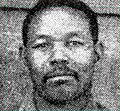
At a Glance
The Eastern Cape, SACTU, and the Trade Union Foundation
The Eastern Cape had a distinctive place in the geography of South African liberation politics. It was the region that had produced more ANC leaders than any other — Mandela, Tambo, Govan Mbeki, Raymond Mhlaba, Vuyisile Mini, and dozens of others whose careers shaped the movement's direction over half a century. This was not accidental. The Eastern Cape's particular combination of mission school education, a relatively long history of organised African political activity, the industrial economy of Port Elizabeth and East London with its large and concentrated Black working class, and the Xhosa-speaking community's political traditions produced the conditions in which liberation movement organising could take hold and develop.
Wilton Mkwayi was formed in this environment. His work with SACTU — the South African Congress of Trade Unions — placed him in the heart of the Eastern Cape's industrial labour movement, organising workers in the Port Elizabeth area's automotive and manufacturing industries, building the union structures that gave Black workers a collective voice and a political identity that connected their workplace experience to the broader liberation movement. SACTU's work was inseparable from the ANC's — the two organisations shared membership, shared politics, and shared the understanding that the racial capitalism of apartheid could only be challenged through the combined force of political and industrial organisation.
This combination of trade union and political work gave Mkwayi a practical organisational capacity that was exactly what the liberation movement needed as it moved toward armed struggle in the early 1960s. The skills of building clandestine networks, maintaining security, recruiting and training people for underground work, and sustaining organisational structures under conditions of surveillance and repression — these are the same skills whether the organisation in question is a trade union operating under hostile labour law or an underground military network operating under the Terrorism Act. Mkwayi brought both sets of skills to the MK structures he was organising.
China, Military Training, and the Return to Armed Struggle
The decision by the ANC and MK to send cadres for military training abroad was part of the strategic shift that followed the banning of the ANC in 1960 and the formation of Umkhonto we Sizwe in 1961. The South African liberation movement had no military tradition — it had been, for its first five decades, a movement of petitions, delegations, and non-violent civil disobedience. When the decision was made to move to sabotage and eventually to guerrilla warfare, the movement needed people who understood military organisation, weapons, explosives, and the theory and practice of insurgency.
Mkwayi was among those sent for training in the People's Republic of China, which was at that time providing military training and support to a number of African liberation movements as part of its Cold War competition with the Soviet Union and the Western powers. The training he received in China was designed to prepare guerrilla fighters for the kind of rural insurgency that Mao's revolution had pioneered, and while the South African context was very different from the Chinese one — urbanised, industrialised, with a very different class structure and racial geography — the military skills and organisational principles he learned were directly applicable to the clandestine work he would be doing on his return.
He returned to South Africa as a trained operative, ready to contribute to the MK structures that were being built. His arrival coincided with the most active period of MK's early sabotage campaign, and he was rapidly integrated into the movement's operational leadership. His combination of trade union organising experience and military training made him particularly valuable in the Eastern Cape, where the ANC's community base was strongest and where the MK networks needed people who could move between the above-ground community structures and the underground cells.
After Rivonia: The Decision to Stay and Rebuild
The Rivonia arrests of 11 July 1963 were a catastrophic blow to MK's internal structures. The South African security forces, using information from informers within the movement, had identified Liliesleaf Farm as the location of MK's High Command and had moved with devastating precision. Mandela, Sisulu, Govan Mbeki, Ahmed Kathrada, Andrew Mlangeni, Elias Motsoaledi, and their comrades were taken in a single operation. The documents found at the farm — including the Rivonia papers — provided the prosecution with the evidence it needed to seek the death penalty.
Mkwayi was not among those arrested at Liliesleaf. Whether he had not been present or had escaped is a matter that the historical record does not fully clarify. What is clear is that in the immediate aftermath of the arrests, he was one of the very few surviving members of MK's internal leadership, and he faced a decision about what to do with that position. The option of going into exile — escaping to Zambia or Tanzania or one of the other frontline states where the ANC was building its external structures — was available. Many other activists made that choice in 1963 and 1964, and their decision was understandable given the level of repression inside South Africa.
Mkwayi chose to stay. He assumed command of whatever remained of MK's internal structures after the Rivonia arrests and attempted to rebuild the underground networks that the security forces had shattered. This decision reflected both his political commitment and his assessment — which subsequent events suggest was overly optimistic — that the movement could maintain an effective internal armed presence even in the aftermath of Rivonia. The security forces were hunting for him specifically. They knew that someone had escaped the Rivonia net and was attempting to rebuild, and they had the resources and the will to find him. It took them until 1964, but they found him.
The Little Rivonia Trial and Life Imprisonment
Mkwayi's arrest in 1964 and his subsequent trial — which became known in liberation movement history as the "Little Rivonia Trial" — demonstrated the apartheid government's determination to imprison the entire surviving internal leadership of MK. The charges against him included sabotage, the furthering of the aims of the ANC, and the organising of military operations — charges that carried sentences ranging from long-term imprisonment to death. The prosecution sought a life sentence. The court obliged.
His co-accused in the Little Rivonia Trial included Laloo Chiba, who would also go to Robben Island and who would maintain the same quiet commitment through his years of imprisonment that characterised Mkwayi's own experience. The trial was less internationally prominent than the Rivonia Trial — partly because it came after the main Rivonia verdict had already been delivered, and partly because Mkwayi was less internationally known than Mandela or Sisulu — but it was part of the same systematic process of legal suppression through which the apartheid government was attempting to permanently remove the liberation movement's internal leadership from the political arena.
The sentence of life imprisonment meant Robben Island. Mkwayi joined the community of imprisoned ANC leaders — Mandela, Sisulu, Govan Mbeki, and the other Rivonia trialists — that was becoming one of the most remarkable collections of political prisoners in the world. He would spend twenty-five years there.
Twenty-Five Years: Robben Island and the Prison Community
The Robben Island prisoner community was not a passive collection of men waiting for release. It was an active political and intellectual community that debated strategy, organised internal structures, maintained the ANC's organisational culture, educated its members, and attempted to influence the movement's direction even from within the prison walls. The senior prisoners — Mandela, Sisulu, Govan Mbeki — were the dominant figures in this community, but figures like Mkwayi contributed their experience and their particular organisational knowledge to the collective work.
Mkwayi's particular contribution to the Robben Island community was rooted in his Eastern Cape ANC background and his SACTU experience — the grassroots organisational knowledge of how to build and sustain structures in working-class communities. This knowledge was valuable in the prison community itself, which faced its own organisational challenges of maintaining collective purpose, managing internal disputes, and sustaining the political education that kept the movement's culture alive through the years of confinement.
Through the 1970s and 1980s, as new prisoners arrived — the post-Soweto generation, the Black Consciousness activists, the UDF-aligned activists of the 1980s — the Robben Island community expanded and its internal debates intensified. The older prisoners from the Rivonia generation engaged the newer arrivals in debates about the ANC's strategic direction, about the relationship between the armed struggle and the internal mass movement, about the question of negotiations. Mkwayi participated in these debates from the position of someone who had commanded MK's internal structures and who understood from direct experience the challenges of sustaining an armed resistance inside South Africa.
Release and the Last Chapter
Mkwayi was released from Robben Island in 1989, the year before Mandela, as part of the sequence of pre-negotiation releases through which the De Klerk government was signalling its willingness to consider a negotiated transition. He returned to public life and the ANC's emerging above-ground structures, contributing his experience and his networks to the transition period. The democratic election of 1994 — in which he voted for the first time in his life, at the age of seventy-one — represented the vindication of the decision he had made in 1963 to stay inside South Africa and attempt to rebuild the movement, a decision that had cost him twenty-five years of his life.
He died in 2004, a year after Walter Sisulu, one of the last survivors of the group that had led MK's internal operations in the early 1960s. His death was marked respectfully by the ANC and by the South African government, but without the international prominence that attended the deaths of the more celebrated Rivonia trialists. That disproportion in recognition is itself a form of historical information: it tells us something about how liberation movement histories are constructed, what they choose to celebrate, and whose contributions tend to be absorbed into the background of the more famous figures rather than acknowledged in their own right.
Legacy
Wilton Mkwayi's legacy is the legacy of someone who made the hardest possible decision — to stay and fight when escape was available — and who paid the full price for that decision without complaint and without the international recognition that might have softened the cost. He commanded MK's internal structures in the most dangerous possible period, after Rivonia had destroyed the organisation's leadership, and he attempted to rebuild under conditions that made survival, let alone rebuilding, extraordinarily difficult. He was caught, imprisoned, and held for twenty-five years. He emerged and contributed to the democratic transition. He voted. He died a free South African citizen.
The armed struggle he attempted to sustain after Rivonia did not succeed in its immediate objectives — the apartheid state was not overthrown by MK's internal operations in 1963 or 1964 or in the years that followed. But the decisions he and others made in that period — to maintain armed resistance, to demonstrate that the liberation movement could not be suppressed by any level of repression — were part of the longer strategic calculation that eventually produced the conditions for a negotiated transition. His contribution to that outcome, made at the cost of a quarter century of his life, is part of the story of how South Africa's democracy came to be.