At a Glance
The Bush University and the Consciousness It Produced
The University of the North at Turfloop — established in 1959 as part of the apartheid government's "separate development" policy that created separate universities for each of the racial and ethnic groups the state had defined — was designed to be an instrument of control as much as of education. The ethnic universities, sometimes called "bush universities" in contemptuous recognition of their rural locations and their inferior resources, were supposed to provide just enough tertiary education to supply the apartheid system with the African teachers, nurses, and civil servants it needed while keeping African students separate from the intellectual and political ferment of the English-speaking liberal universities.
The apartheid planners had miscalculated. By concentrating the most politically conscious young Black South Africans in the same institutions, the ethnic university system inadvertently created the conditions for the development of Black Consciousness — the intellectual and political movement that Steve Biko was building through SASO precisely in these universities. Turfloop was one of the most important sites of Black Consciousness development, and Onkgopotse Tiro was one of its most consequential products.
The Black Consciousness philosophy that Tiro absorbed and embodied at Turfloop was centrally concerned with the psychological dimensions of oppression — with the ways in which apartheid had not only materially dispossessed Black South Africans but had colonised their minds, had made them see themselves through the eyes of the oppressor, had produced the kind of self-doubt and self-deprecation that made resistance seem futile before it was attempted. Black Consciousness was the attempt to reverse this psychological colonisation — to build in Black people the consciousness of their own worth, their own history, their own capacity for liberation, that the apartheid system was systematically designed to destroy. It was, in Biko's formulation, "the realisation by the Black man of the need to rally together with his brothers around the cause of their oppression."
29 April 1972: The Speech That Changed Everything
The graduation ceremony at the University of the North on 29 April 1972 was supposed to be what graduation ceremonies always are — a celebration of academic achievement, a moment of formal recognition in which the institution's authority confers credentials on its students and in which the students' families gather to witness the ceremony with pride. The white rector, the government officials, the distinguished guests: they were there to perform the ritual of academic legitimacy, to present the ethnic university system as an institution of genuine educational merit rather than what it was — a mechanism for providing inferior education to people the state regarded as inferior.
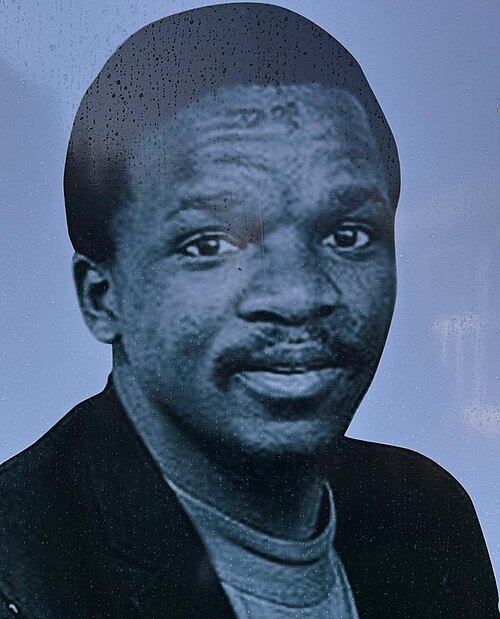
Onkgopotse Tiro's graduation address shattered this performance. Speaking as SRC president — in the role that entitled him to address the ceremony — he delivered a speech that named, plainly and publicly and in the formal register of academic address, what the conditions of the university actually were. He spoke about the humiliations of apartheid education — the white professors who addressed Black students by their first names while expecting to be addressed as "Professor," the inferior resources of the ethnic universities compared to the white institutions, the paternalism of white authority over Black academic life, the fundamental contradiction of an institution claiming to educate its students while denying their full humanity. He spoke in the language of Black Consciousness — of dignity, of self-respect, of the refusal to accept the psychological as well as the material conditions that apartheid imposed.
The rector attempted to stop the speech. Tiro continued. The speech was completed. The audience — the Black students and their families — heard everything. The white officials heard everything. The expulsion that followed within days was the authoritarian institution's inevitable response to a challenge it could not answer on the merits, but the response was too late. The speech had been delivered. The words had been heard. The consciousness they expressed had been publicly validated in the one space — the formal academic ceremony — where the apartheid university system had most carefully constructed its performance of legitimacy, and the performance had been interrupted by the truth.
The Expulsion and the Wave It Triggered
Tiro's expulsion from Turfloop was the apartheid university administration's attempt to contain the damage that his speech had done to the institution's claim to legitimacy. The logic of the expulsion was punitive — it was designed to demonstrate that challenging the racial order of the university had consequences, to deter other students from similar acts, and to remove Tiro from the campus before his continued presence could sustain the political energy his speech had generated.
The logic failed. The expulsion triggered the student solidarity response that the administration had hoped to prevent. Turfloop's students went on strike in protest. The strike spread to the University of Zululand at Ngoye, to the University of Durban-Westville, to other Black universities, and then into the secondary schools. The protests of 1972, triggered by the Turfloop expulsion, swept through Black South Africa's educational institutions in a wave of resistance that demonstrated how deeply the conditions Tiro had named resonated with students across the country.
The 1972 student protests were not the Soweto uprising — they did not produce the iconic images, the mass casualties, or the sustained international attention that 16 June 1976 would generate. But they were the same phenomenon at an earlier stage: the same Black Consciousness-infused student generation, the same refusal to accept the conditions of apartheid education, the same willingness to absorb the institutional consequences of resistance rather than remain silent. The Soweto generation of 1976 was in secondary school in 1972, watching the Turfloop events, absorbing their lessons, being formed by them. Tiro's speech and its aftermath were part of the political education that produced the students who rose on 16 June 1976.
Gaborone, 1 February 1974: The State's Final Answer
Onkgopotse Tiro went to Botswana after his banning, continuing to teach and to maintain his political connections. He was in Gaborone, the Botswana capital, working as a teacher at the Botswana Secondary School of Commerce, when the parcel bomb arrived. It exploded in his hands on 1 February 1974. He was twenty-eight years old — two years past the graduation ceremony that had made him famous, two years of exile and teaching and continued political commitment, two years during which the apartheid security apparatus had been tracking him in Botswana and preparing the operation that would end his life.
The parcel bomb was the apartheid state's chosen instrument for the assassination of activists in exile in neighbouring countries — the same method that was used against other Black Consciousness figures in the same period, and that would be used against Ruth First in Mozambique eight years later. It was an instrument of particular cowardice: it required no confrontation, it left no witness, and it allowed the state to deny responsibility while its effects were unambiguous. The South African government denied any involvement in Tiro's death. The denial was not believed.
The decision to assassinate him was itself a statement — a statement by the apartheid security state that a twenty-seven-year-old teacher in Gaborone, banned from South Africa, was still sufficiently dangerous to require killing. What made him dangerous was not a military capacity or an organisational infrastructure; it was an idea — the idea that Black people had the right to dignity, the right to speak truth about the conditions of their lives, and the right to refuse the psychological colonisation that the apartheid system required for its maintenance. The state recognised this idea as a threat and responded with murder. In doing so it confirmed what Tiro had said in his graduation address: that the apartheid system's claim to legitimate authority rested on a foundation of violence and deception that could not survive honest description.
Legacy: The Speech and the Life It Represents
Onkgopotse Tiro's life was twenty-eight years long. The graduation address was approximately fifteen minutes of that life. And yet the address is the centre of gravity around which his historical significance organises itself — the moment when the full meaning of Black Consciousness expressed itself in a single act of public courage that the apartheid system found intolerable and that the liberation movement found inspiring.
The address matters because it was both a particular historical event and a model — a demonstration of what individual courage looked like in conditions of institutional power, of how a single person speaking honestly in a formal space could shatter the performance of legitimacy that institutional authority depends on. The rector's attempt to stop the speech only made the point more forcefully: the institution could not hear what Tiro was saying and remain what it claimed to be. The attempt to silence him was the admission that what he was saying was true.
His assassination matters because of what it reveals about the apartheid state's understanding of the threat that Black Consciousness represented. The state killed Biko in detention in 1977, killed Tiro with a parcel bomb in 1974, and killed others through different methods across the decade. The pattern of assassinations is the record of what the state found most dangerous — not armed insurrection, not military operations, but the development of Black consciousness, the refusal of psychological colonisation, the assertion of Black dignity in the face of a system that required its denial.
Tiro stood up at a graduation ceremony and told the truth about apartheid education. He was expelled, banned, exiled, and killed. He was twenty-eight years old. The apartheid state sent a parcel bomb to a young teacher in Botswana because it was afraid of what he represented. The fear was justified. The ideas he carried survived him, were carried forward by the generation of 1976 and the generations that followed, and contributed to the consciousness that eventually dismantled the system that had killed him.