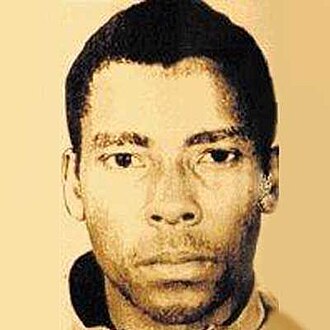
At a Glance
Growing Up Under Apartheid in Natal in the 1970s and Early 1980s
Andrew Zondo was born in 1966 — the year after the Rivonia trialists were sent to Robben Island, the year that the apartheid state appeared, to many observers inside and outside South Africa, to have successfully contained the liberation movement. He grew up in KwaZulu-Natal in the conditions that the apartheid economy and the apartheid state had created for Black South Africans in Natal: township housing, inferior Bantu Education schooling, the daily indignities of the pass system, the restricted economic opportunities, and the ever-present police and military presence that was the apartheid state's visible face in Black communities.
The Natal of his childhood and early adolescence was also, however, a place of significant political ferment. The Soweto uprising of 1976 — when students across South Africa rose up against the imposition of Afrikaans as a medium of instruction, and the apartheid security forces responded with bullets, killing hundreds — had transformed the political consciousness of an entire generation of young Black South Africans. Hector Pieterson, photographed dying in the arms of a fellow student, became one of the defining images of apartheid's violence; Tsietsi Mashinini and the other student leaders became models of youth activism that resonated across the country. The movement that emerged from 1976 — younger, more militant, shaped by Steve Biko's Black Consciousness philosophy as well as by the ANC's traditions — was the political world into which Zondo was growing.
The Black Consciousness movement's insistence on psychological liberation — on the need for Black South Africans to shed the internalized inferiority that centuries of racial oppression had imposed and to act from a position of self-defined dignity and agency — spoke directly to young people like Zondo who had grown up entirely within the apartheid system and who had no memory of the pre-Sharpeville ANC's more cautious politics. The combination of Black Consciousness's psychological framework and the ANC's organisational tradition, mediated through the United Democratic Front that was formed in 1983, created a political environment in which young Black South Africans in Natal were increasingly committed to resistance and increasingly willing to take personal risks in its service.
The Maseru Raid and the Decision to Act
The South African Defence Force's raid on Maseru on 9 December 1982 was one of a series of cross-border operations that the apartheid state conducted against ANC structures in neighbouring countries throughout the early 1980s — a strategy of regional destabilisation that the apartheid government pursued simultaneously with its internal repression. The strategy was explicit and systematic: the apartheid state sought to deny the ANC safe bases in the Frontline States by attacking those bases directly, by funding and arming insurgent movements like Renamo in Mozambique and UNITA in Angola, and by applying economic and diplomatic pressure to force neighbouring governments to expel or constrain ANC structures on their territory.
The Maseru raid killed forty-two people, including women and children who had no involvement in ANC military activities. For many young Black South Africans, the raid was experienced not simply as a military operation against ANC combatants but as a statement about who counted and who did not — about the apartheid state's willingness to kill African people, including civilians, without restraint or accountability, while its international supporters in the West continued to provide it with diplomatic cover and economic engagement. The rage that the raid generated was not merely political; it was the rage of people who understood themselves to be targets of a state that had declared their lives expendable.
Zondo has stated — in his trial testimony and in the statement from the dock that became his most widely quoted utterance — that the Maseru raid was the direct motivation for the Amanzimtoti bombing. He did not frame his action as a strategic calculation about how best to advance the liberation movement's goals; he framed it as a response — a retaliation, a demonstration that the apartheid state's violence would not go unanswered. This framing matters for understanding what Zondo did and why, but it does not resolve the moral questions his action raises, because the people who died at Amanzimtoti were not the people who planned or carried out the Maseru raid.
The Amanzimtoti Bombing, the Trial, and the Statement from the Dock
On 23 December 1984, Andrew Zondo placed a limpet mine in a rubbish bin outside the Sanlam shopping centre in Amanzimtoti, a coastal town south of Durban, and set it to detonate during the Christmas shopping rush — when the centre would be at its most crowded and the death toll at its highest. Five people died. Seventeen were injured. The victims were ordinary South Africans — white South Africans, who as a community were the political beneficiaries of apartheid but who as individuals had no direct role in the SADF's cross-border operations or in the political decisions that produced the Maseru raid.
He was arrested, tried, and convicted of murder and terrorism. The trial was conducted in the atmosphere of the mid-1980s South African emergency — a period of extreme political violence in which the apartheid state was detaining thousands without trial, deploying the army in the townships, and using torture systematically in its interrogation of political prisoners. His defence lawyers argued, as they were obliged to argue, about the political context that had produced his action, and Zondo himself chose to speak from the dock in terms that went beyond legal defence to political statement.
His statement — that he had acted not from racial hatred but in direct response to the Maseru raid, that the apartheid state's violence had produced his violence, that he accepted the consequences of his action and asked only that the world understand its causes — was widely circulated in the international anti-apartheid press and became an important document in the international debate about the moral status of the armed struggle against apartheid. The statement was not a justification for killing civilians; it was an explanation of the conditions that had produced a teenager willing to kill civilians. Whether those conditions constitute justification is a question that the statement raises without resolving, and that South African society has continued to wrestle with in the decades since.
Execution, Memory, and the Contested Commemoration
Andrew Zondo was hanged at Pretoria Central Prison on 9 June 1985. He was nineteen years old. His execution provoked protests from the international anti-apartheid movement, which pointed to the youth of the condemned, the political context of his action, and the apartheid state's use of the death penalty against political opponents as evidence that the South African legal system was a tool of political suppression rather than a framework of justice. The ANC in exile acknowledged him as a member and martyr while simultaneously grappling with the fact that his action had violated MK's stated policy of avoiding civilian casualties — a policy that the leadership had difficulty enforcing as the internal resistance intensified and younger, more radicalised members acted independently.
The Truth and Reconciliation Commission, which between 1996 and 1998 took testimony about the gross human rights violations of the apartheid era from both perpetrators and victims, grappled with cases like Zondo's as some of its most difficult. The Commission's framework — which offered amnesty to perpetrators who made full disclosure of politically motivated acts and could demonstrate a proportionate relationship between their actions and their political objectives — was designed to deal with the spectrum of violence that the apartheid era had produced, from the systematic torture and assassination programmes of the security forces to individual acts like the Amanzimtoti bombing. Zondo was dead and could not apply for amnesty; the people who had sent him into that shopping centre — if anyone had explicitly directed him — were separately accountable.
His legacy sits uncomfortably in South African public memory. Streets and schools named after liberation figures tend to be named after people whose actions fit more easily into a narrative of principled resistance — people like Solomon Mahlangu, whose MK operation was similarly contested but who became a more straightforward martyr figure, or the Rivonia trialists, whose conviction and imprisonment allowed the apartheid state to create them as symbols without the moral complexity of civilian deaths. Zondo's story is harder to accommodate because it requires holding simultaneously the understanding of what the apartheid state had done to produce him and the acknowledgement of what he did to people who had no direct part in those acts.
The Broader Question: Youth, State Violence, and the Limits of Armed Resistance
Andrew Zondo's story is ultimately about the relationship between state violence and the violence it generates in those who experience it — about what happens to young people who grow up watching the state kill their community's members with impunity and who conclude, at an age when the moral framework for evaluating consequences is still being formed, that the only meaningful response is violence in return. The apartheid state created the conditions that produced him, and then it hanged him for what those conditions had made him.
This is not to say that what he did was right — that the five people who died at Amanzimtoti deserved to die, or that their deaths advanced the liberation struggle's goals in ways that justified their cost. It is to say that moral responsibility for political violence is not simply located in the individual who commits it, that the apartheid state's violence created the conditions from which Zondo's violence emerged, and that any honest reckoning with his story requires holding all of this simultaneously — the wrongness of what he did, the conditions that produced it, and the state's own responsibility for those conditions.
South Africa's post-apartheid democracy was built, in part, on the commitment to understand violence of this kind in its full context — to neither celebrate it uncritically nor condemn it without acknowledging the political conditions that generated it. That commitment is difficult to sustain, especially for the families of those who died at Amanzimtoti, and the debates about how to remember Andrew Zondo — whether and how to commemorate him, what his story means for the history of the liberation struggle — are ongoing and unresolved. They are also, in their very difficulty, evidence that South Africa is taking seriously the obligation to understand what apartheid did to the people it oppressed.