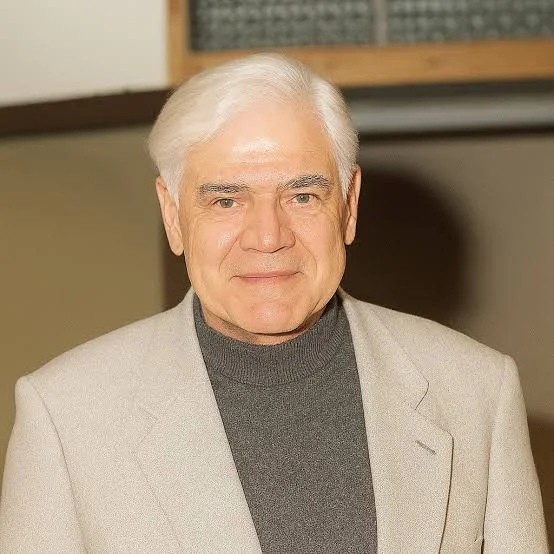
At a Glance
Acre and the Making of a Palestinian Intellectual
Ibrahim Abu-Lughod was born in 1929 in Acre — the ancient walled port city of northern Palestine that Ghassan Kanafani also called home. Acre was one of the most historically layered cities in the Levant: Phoenician, Greek, Crusader, Ottoman, Arab — a place whose every stone told a story of the successive civilisations that had inhabited it, and whose Arab Muslim and Christian communities in the twentieth century lived in a city that was simultaneously ancient and modern, deeply rooted in its Ottoman past and increasingly engaged with the currents of modernist thought that were reshaping Arab intellectual life.
His family were of the established Acre notable class — the kind of educated, civic-minded Muslim family that provided the Arab city's lawyers, teachers, government officials, and community leaders. Abu-Lughod grew up in an environment where serious intellectual engagement was expected and where the political crisis of Palestine — the Mandate, the Zionist project, the question of what the Arab future would be — was the constant subject of adult conversation and growing concern. He was nineteen years old in 1948 when Acre fell and his family was expelled, joining the mass of Palestinian refugees who were driven from their homes in the first Arab-Israeli war.
The expulsion from Acre shaped Abu-Lughod's intellectual project in the most direct possible way: he became the scholar who would document, analyse, and argue against the displacement that had been done to his people. This was not the only thing he did — his scholarship ranged across Arab intellectual history, political science, and comparative politics — but it was the organising commitment that gave his entire career its direction and its urgency. He was not a scholar who encountered the Palestinian question as an academic problem; he was a Palestinian who encountered the academic world as the most powerful available tool for making the Palestinian case in the arenas where that case needed to be made.
Princeton and the American Academy: Building Palestinian Scholarly Authority
Abu-Lughod's path to Princeton — where he completed his doctorate in political science in 1957, becoming one of the first Palestinians to receive an Ivy League PhD — was the path of a young man who understood that the Palestinian case needed to be made in the language and the forums that the Western world respected. The Arab world had been arguing its case through political rhetoric and military force; what it had not done, systematically and rigorously, was build the scholarly foundation of documented analysis and peer-reviewed argument that would make the Palestinian case credible in Western academic and policy discourse.
Abu-Lughod's academic career at Northwestern University, where he taught from 1967 to 1993, was precisely this project — the construction of Palestinian scholarly authority in the American academy. He was not the only Arab scholar in American universities, but he was among the most persistent and most effective in combining scholarly rigour with political commitment: producing work that met the highest standards of American political science while simultaneously advancing the Palestinian case through the analytical frameworks that scholarship provided.
His 1971 edited volume The Transformation of Palestine was the foundational academic collection on the 1948 displacement — the first rigorous scholarly examination of what had happened to Palestinian society in 1948, drawing on documentary sources, demographic analysis, and comparative historical scholarship to establish the evidentiary basis for understanding the Nakba as a systematic process of dispossession rather than the result of Arab decision to flee as Israeli official history claimed. The volume set the scholarly agenda for Palestinian historical studies for the subsequent decades and provided the academic grounding for the political arguments about Palestinian rights that the PLO was making in diplomatic forums.
The Palestine National Council and PLO Politics
Alongside his Northwestern career, Abu-Lughod served as a member of the Palestine National Council — the PLO's parliament in exile — and as a political adviser to the PLO leadership. This dual role — American professor and Palestinian political figure — was not without tension: his presence in the American academy required navigating the political sensitivities of an institution that was not always comfortable with faculty who were simultaneously senior officials of an organisation that the United States government designated as terrorist. Abu-Lughod managed this navigation with considerable skill, maintaining both his academic credibility and his political engagement without sacrificing either to the other.
His PLO advisory role drew on precisely the analytical qualities his academic career had developed: the ability to assess political situations with rigour, to identify the structural constraints that limited Palestinian options, and to articulate the Palestinian case in language that Western interlocutors could engage with rather than dismiss. He was among the PLO advisers who argued most consistently for a political strategy oriented toward international law and human rights frameworks rather than purely toward armed struggle — not because he rejected the legitimacy of Palestinian armed resistance but because he understood that the long-term Palestinian interest required building the kind of international political legitimacy that scholarship and diplomacy could provide in ways that military operations could not.
He also engaged directly with Israeli academics and peace movement figures at a time when such engagement was politically controversial within the Palestinian movement — participating in early track-two diplomatic efforts that attempted to build the political relationships that an eventual settlement would require. His willingness to engage while maintaining firm positions on Palestinian rights reflected both his analytical sophistication and his personal seriousness about achieving results rather than simply performing resistance.
Return to Palestine: Building Birzeit
When the Oslo Accords of 1993 opened the possibility of returning to the Palestinian territories, Abu-Lughod did what he had always said he believed in: he went back. Not to a comfortable position in the Palestinian Authority bureaucracy — the kind of role that might have been available to a man of his academic distinction and PLO connections — but to Birzeit University in the West Bank, the Palestinian academic institution that had survived Israeli military closures and the occupation's systematic obstruction of Palestinian higher education to become the most significant centre of Palestinian university life.
His decision to return to Birzeit rather than accept a more prestigious or comfortable position reflected the same commitment that had characterised his entire career: the conviction that Palestinian national development required building institutions — universities, research centres, intellectual communities — that would give a future Palestinian state the human and organisational capital it needed to function. He had spent decades arguing from Northwestern that Palestinian liberation required more than military or political victory; it required the development of Palestinian society's capacity for self-governance, and university education was a central part of that capacity.
At Birzeit he worked to build the research and academic infrastructure that the university needed to develop from an undergraduate teaching college into a genuine research university — attracting scholars, developing graduate programmes, and building the intellectual life that Palestinian students and society deserved. It was patient, unglamorous institutional work, the academic equivalent of Ahn Chang-ho's conviction that liberation required building the people who could sustain it, and Abu-Lughod pursued it with the same seriousness he had brought to everything else.
Death and the Return to Acre
Ibrahim Abu-Lughod died in Ramallah on 23 May 2001 — of a heart attack, at seventy-one, in the West Bank he had returned to eight years earlier. He was buried in Acre — the city he had been expelled from fifty-three years before, in 1948, when he was nineteen years old. The burial in Acre was not merely a personal choice but a political statement: the man who had spent his entire academic and political career arguing for the Palestinian right of return was returned in death to the home that his lifetime of political work had not been sufficient to secure in life.
His wife Janet Abu-Lughod — one of the most important American urban sociologists of the twentieth century, whose work on Cairo and on global cities was a foundational contribution to urban studies — survived him by twelve years, continuing her own distinguished scholarly work until her death in 2013. Their daughter Lila Abu-Lughod, an anthropologist at Columbia University whose work on Arab women and cultural politics has been widely read and debated, has maintained the family's tradition of combining serious scholarship with political engagement on Palestinian and Arab issues.
Legacy: The Scholar Who Made the Palestinian Case Academically Credible
Ibrahim Abu-Lughod's most important contribution to the Palestinian cause was not any single political act or scholarly work but the cumulative effect of a career that established Palestinian academic authority in the Western academy — that demonstrated, over thirty years at Northwestern and subsequently at Birzeit, that the Palestinian case could be made with the rigour and documentation that the academic world demanded and that political advocacy alone could not provide.
The generation of Palestinian scholars who came after him — in Middle East studies, in the emerging field of settler colonial studies, in the political science of occupation and resistance — built on the foundations he helped lay. The shift in Western academic discourse on the Israeli-Palestinian conflict across the 1980s, 1990s, and 2000s — the emergence of serious scholarly engagement with Palestinian history, rights, and political claims in mainstream American and European academic publications — was not solely his achievement, but he was among those who made it possible.
His return to Palestine and burial in Acre gave his life a formal completeness that the political situation might have prevented: the refugee who was expelled at nineteen came back, eventually, to the city he had never stopped calling home. That the return was in a coffin rather than a living body was the final measure of what the Palestinian exile generation had lost and never fully recovered — but it was still a return, and it was still Acre, and Ibrahim Abu-Lughod had earned it.