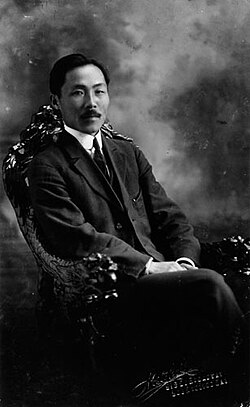
At a Glance
Gangseo Origins: A Farmer's Son in a Dying Kingdom
Ahn Chang-ho was born in 1878 in the Gangseo district of Pyongan Province — the northwestern region of the Korean peninsula that runs along the Chinese border and that had, by the late nineteenth century, become one of the most Christianised and educationally active parts of Korea, partly through the work of American Presbyterian missionaries who had established schools and medical facilities across the region. His family were farmers of modest means, and his early education was the traditional Confucian curriculum of the Korean village school — the seodang — supplemented by his encounter, in adolescence, with the Protestant Christianity that was transforming the intellectual and social life of northwestern Korea.
The Korea that Ahn grew up in was a kingdom under existential pressure. The Joseon Dynasty, which had governed the peninsula for five centuries, was confronting the simultaneous encroachment of Chinese, Russian, and Japanese imperial power in an international environment where Korean sovereignty was treated by the major powers as a negotiating chip rather than a right. The reform movement that was attempting to modernise Korean government and society — the Gabo Reforms of 1894–1895, the Independence Club of the late 1890s — was producing a new generation of Korean political thinkers who understood that the country faced a choice between self-strengthening and subjugation, and that the time available for making that choice was rapidly contracting.
Ahn came to Seoul as a young man in the late 1890s and was drawn into the Independence Club — the organisation founded by Seo Jae-pil (Philip Jaisohn) that was the most significant forum for modernist nationalist political thought in the final years of independent Korea. The club's activities exposed him to the ideas of democratic governance, civic education, and national self-strengthening that would define his intellectual framework for the rest of his life. He also received a more systematic education through the Gusaeng Academy, a school run by Protestant missionaries, that deepened his engagement with both Western educational methods and Christian ethics. These two streams — Confucian moral cultivation and Protestant civic Christianity — combined in Ahn's thought into a distinctive synthesis: the conviction that personal moral transformation and civic institutional development were inseparable from and prerequisite to national political liberation.
America and the Overseas Korean Community
In 1902, Ahn Chang-ho emigrated to the United States — one of the first waves of Korean labour migrants to California, who had come to work in agriculture and who constituted the embryonic Korean-American community that would become a significant base for the independence movement over the following decades. He settled in the Los Angeles area, and his response to the conditions he found there was characteristic: rather than simply surviving as an individual immigrant, he immediately began organising. He founded a Korean language school, established a Korean community organisation, and began building the social infrastructure — mutual aid, education, shared civic identity — that he believed the Korean community needed to maintain its dignity and solidarity in a foreign country.
In 1905 he founded the Gongnip Hyeophoe — the Mutual Assistance Society — in San Francisco, one of the earliest Korean political organisations in the United States. The organisation was explicitly nationalist as well as mutual aid: it maintained connections with the independence movement in Korea, disseminated political information among Korean immigrants, and provided the overseas community with a framework for thinking about its relationship to the national liberation struggle happening on the other side of the Pacific. This work in the overseas community was not peripheral to Ahn's nationalist project but central to it: he understood from early in his career that the Korean independence movement would need to sustain itself across multiple countries and multiple decades, and that the Korean diaspora communities in the United States, China, Manchuria, and Siberia were potential resources of enormous importance if they could be organised effectively.
He also encountered, in America, the practical realities of democratic civic life — the institutions, habits, and social capital that sustained self-governance in a functioning democracy — and was deeply influenced by what he observed. Not uncritically: he was aware of American racism, of the gap between democratic ideals and racial practice, and of the specific challenges facing Korean immigrants in a country that classified them as racially ineligible for citizenship. But the model of civic association — of voluntary organisations built on shared commitment to common purposes, governed by transparent rules, sustained by member participation — became central to his vision of what a free Korea would need to build.
The Sinminhoe and the New People's Movement
Ahn returned to Korea in 1907 — at the critical moment when the Japanese had forced the abdication of Emperor Gojong and were progressively dismantling Korean sovereignty in preparation for the formal annexation that would come in 1910. He founded the Sinminhoe — the New People's Association — as a secret underground organisation dedicated to the long-term project of Korean national self-strengthening. The Sinminhoe was not primarily an organisation for immediate armed resistance: it was a network dedicated to education, economic development, and the cultivation of the civic character that Ahn believed independence required. It established schools, supported Korean-owned businesses, published educational materials, and built the organisational networks that would sustain the independence movement through the dark decades of colonial rule to come.
The Sinminhoe represented Ahn's political philosophy in organisational form: the conviction that the path to independence ran through the transformation of Korean society from within — through education, through the development of capable and honest leadership, through the cultivation of civic solidarity that would make collective action possible. This approach was in tension with more militant currents in the independence movement that favoured immediate armed resistance to Japanese rule, and the tension would run through Korean nationalist politics for the entire colonial period. Ahn's position was not that violence was always wrong but that undisciplined, premature violence without a sufficient organisational and human foundation was counterproductive — that it gave the Japanese pretexts for repression without advancing the conditions for genuine liberation.
The 105-Man Incident of 1911 — a Japanese fabrication in which over a hundred Korean nationalists, many of them connected to the Sinminhoe network, were arrested on false charges of plotting to assassinate Governor-General Terauchi — effectively destroyed the Sinminhoe. Ahn was among those arrested, though he was eventually released. The incident demonstrated the impossibility of maintaining an open nationalist organisation in colonial Korea and forced the independence movement to reorganise around clandestine networks and overseas bases.
The Heungsadan: Education as Revolution
After the destruction of the Sinminhoe and a period in which he worked with Korean communities in China and Manchuria, Ahn Chang-ho returned to the United States and in 1913 founded the Heungsadan — the Young Korean Academy — in San Francisco. The Heungsadan was the most enduring organisational creation of his life, and the one that most completely embodied his political philosophy. It was not a conventional political organisation but a civic education and character-development association: its members committed to a programme of personal moral cultivation — honesty, diligence, courage, public service — and to the practical development of the skills and knowledge that a free Korea would need its citizens to possess.
The Heungsadan's programme was grounded in Ahn's central conviction that the most fundamental problem facing Korea was not simply the Japanese occupation — which was a symptom — but the condition of the Korean people themselves: their habits of deference to authority, their tendency toward factionalism and distrust, their insufficient development of the civic virtues and practical competencies that democratic self-governance required. Liberation from Japanese rule without the prior cultivation of these qualities would, in his view, produce not genuine freedom but merely a change of rulers — authority exercised by Koreans over Koreans in the same patterns of hierarchy and distrust that had made Korea vulnerable to Japanese conquest in the first place.
This argument made Ahn one of the most intellectually serious but also most politically controversial figures in the independence movement. His critics — and there were many — accused him of prioritising character-building over action, of being too patient, of providing justification for inaction by insisting that the Korean people were not yet ready for independence. Ahn's response was that he was not arguing for passivity but for the right kind of activity: systematic, disciplined, long-term institution-building rather than sporadic gestures of heroic resistance that felt satisfying but did not advance the conditions for genuine liberation.
Shanghai and the Provisional Government
The March First Movement of 1919 — the mass popular uprising across Korea in which millions of Koreans publicly demanded independence from Japanese rule, and in which Japanese suppression killed thousands — transformed the political landscape of the independence movement. The scale of the uprising demonstrated beyond any reasonable doubt that the Korean people wanted independence; the Japanese response demonstrated that they would not grant it without being compelled. The movement's aftermath produced the Shanghai Korean Provisional Government — an exile government established in the French Concession of Shanghai that attempted to provide unified political leadership for the independence movement across its many dispersed factions.
Ahn Chang-ho was a central figure in the Provisional Government — serving as its Secretary of the Interior and later as Acting Premier. His role was primarily organisational and educational: maintaining the government's institutional coherence, mediating between the factional rivalries that perpetually threatened to destroy the exile leadership's effectiveness, and continuing the work of civic education and character development that he regarded as inseparable from the political project. He was also the Provisional Government's most compelling public speaker — his addresses to Korean audiences in Shanghai and across the diaspora were celebrated for their combination of moral depth and practical urgency, their ability to sustain commitment and solidarity among people living in difficult conditions far from their homeland.
The Provisional Government was a fractious and often dysfunctional institution — riven by ideological disagreements between nationalists, socialists, and communists; by personal rivalries between strong-willed leaders with incompatible visions of the movement's direction; and by the chronic financial precariousness of an exile government without tax revenue or territory. Ahn's efforts to create a more unified and effective organisation were only partially successful, and he was periodically frustrated by the factionalism that he regarded as the independence movement's most serious internal enemy — and as evidence of precisely the civic deficiencies that he had spent his life trying to correct.
Repeated Arrest and the Long Cost of Resistance
Ahn Chang-ho was arrested by the Japanese colonial authorities four times across his career — in 1911, 1919, 1932, and 1937. Each arrest reflected the Japanese authorities' recognition of his importance to the independence movement; each imprisonment imposed costs on his health that accumulated across the decades. The 1932 arrest was particularly unjust even by the standards of colonial repression: Ahn was arrested in the aftermath of Yun Bong-gil's bomb attack at the Hongkew Park ceremony in Shanghai — an attack that Ahn had no involvement in planning or executing, but that the Japanese used as a pretext to round up Korean independence leaders across Shanghai.
His final arrest in 1937 — as Japan's full-scale invasion of China began and the colonial authorities intensified repression of any Korean nationalist activity — came when his health was already seriously compromised by the cumulative effects of his earlier imprisonments and the hardships of decades of exile and underground organising. He was released in 1938 when it became clear that he was dying, and he died in a Seoul hospital on 10 March 1938, with Korea still under Japanese rule and independence still thirteen years away.
Legacy: The Nation-Builder Who Never Saw His Nation Free
Ahn Chang-ho's legacy is simultaneously straightforward and deeply contested. The straightforward part: he was one of the most important organisers and educators of the Korean independence movement, who built institutions that outlasted his life and whose emphasis on civic education left a permanent mark on Korean approaches to national development. The Heungsadan organisation he founded in 1913 remains active more than a century later. His writings on honesty, self-discipline, and civic responsibility are among the most widely read texts in Korean ethical and political thought.
The contested part is his central argument — that Korean independence required prior Korean self-transformation — which has never stopped being debated. Critics then and now have argued that this position functioned as a conservative brake on the independence movement, that it placed the burden of liberation on the colonised rather than the colonisers, that it was used to justify inaction and to criticise more militant resistance strategies that, whatever their costs, at least imposed real pressure on Japanese colonial rule. Supporters argue that Ahn was right that liberation without institutional foundation produces fragile freedom, and that postcolonial Korea's struggles with governance, civic culture, and democratic consolidation vindicate his insistence that political independence and civic development must go together.
Both positions find evidence in the historical record. What is not in dispute is the quality of the man: his personal integrity, his tireless organisational energy, his willingness to sacrifice comfort and safety for his commitments, his ability to inspire loyalty and sustained effort among the Koreans who worked with him across three continents and four decades. He died having never achieved the immediate goal — Korean independence — but having built much of the human and institutional foundation on which that independence, when it came, would rest. Korea has honoured him for it, and continues to argue about what he meant.